
Silent epidemic in the heart of Central Africa
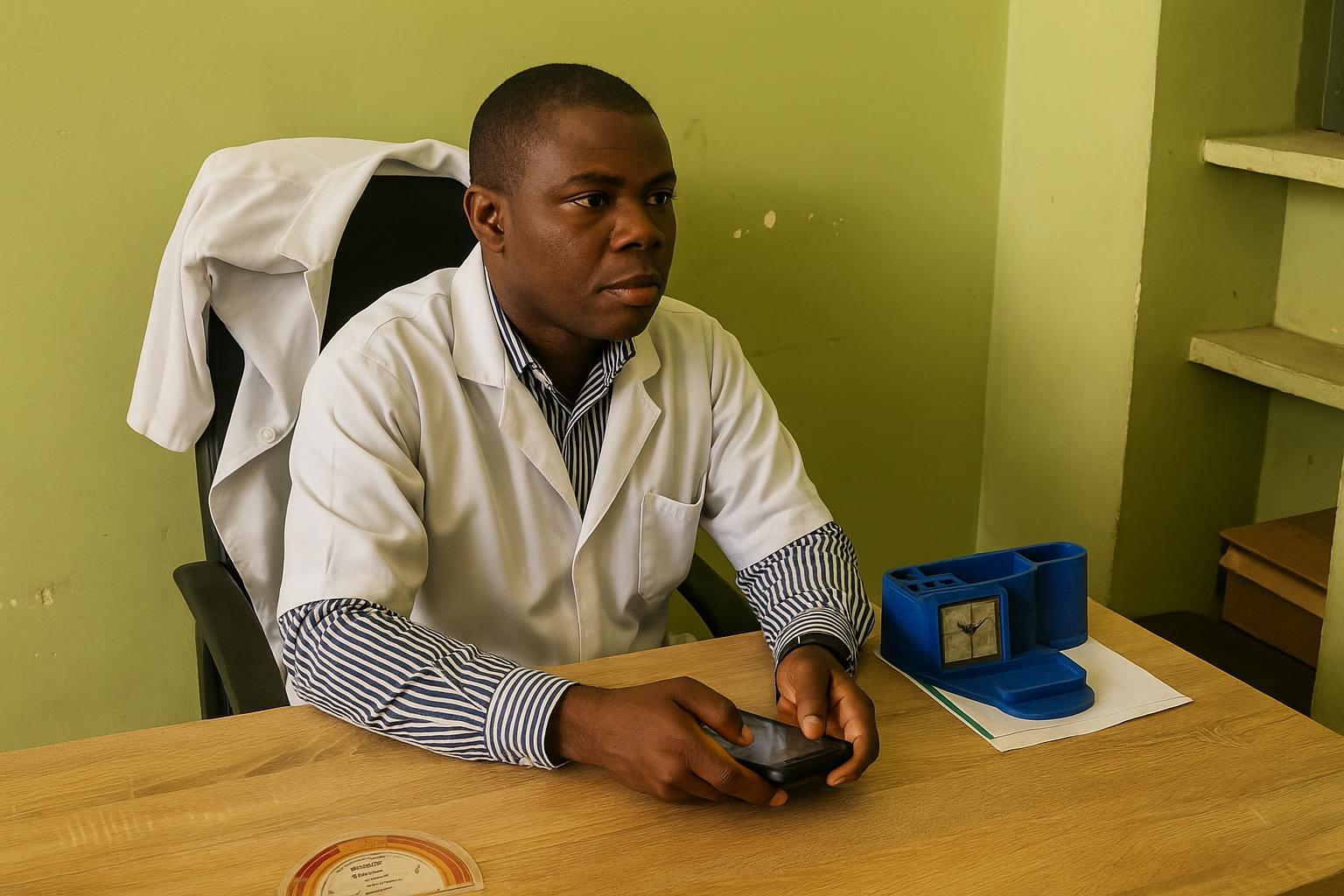
From Brazzaville’s bustling Marché Total to the smaller stalls that dot the banks of the Oubangui, Congolese shoppers are increasingly tempted by fast-food snacks fried in reused oil and sugar-laden beverages that promise instant energy. This dietary shift has fuelled a worrying rise in overweight and obesity: the World Health Organization estimates the adult prevalence in Congo-Brazzaville has almost doubled since the early 2000s. Endocrinologist Dr. Louzolo Kimbembe observes that the phenomenon no longer spares rural districts, where imported processed goods now compete with cassava, plantain and river fish. “Our hospitals treat hypertension and type-2 diabetes every day; obesity sits at the root of these conditions,” he explains, adding that preventive action is less costly than long-term treatment.
Chu-B specialist prescribes a cultural rethink
Speaking to the Congolese Information Agency, Dr. Kimbembe, who heads the metabolism unit at Brazzaville University Hospital, insists that the fight against excess weight begins on the plate. Reducing refined sugars, saturated fats and repeated deep-frying is, in his words, “the simplest medicine within everyone’s reach.” Instead, he recommends grilling, steaming or simmering to preserve vitamins and limit caloric overload. Congolese households are invited to place fish centre stage at least four times a week, rely on poultry twice and reserve red meat for special occasions. The approach does not demonise food but reinstates moderation as an expression of self-respect, the physician stresses.
Reinventing staples without losing identity
Traditional dishes such as saka-saka, pondu or mbika are cherished markers of national identity, yet their modern preparation often involves excess palm oil and salted peanut paste. Culinary researcher Angèle Ngoma notes that pre-colonial recipes were lighter, with more wild herbs and less added fat. Adapting ancestral know-how to contemporary kitchens therefore requires only subtle adjustments: shorter simmer times, lean cuts and measured seasoning. Dr. Kimbembe’s call to favour whole-grain foufou, stone-ground maize and locally grown fruit echoes this quest for authenticity. Apples, watermelon and avocado—cultivars increasingly available from Plateaux and Niari farms—offer fibre and unsaturated lipids while keeping total sugar low.
À retenir: lifestyle, not diet, drives success
Several studies conducted at Marien Ngouabi University suggest that physical inactivity compounds the dietary problem. Urban residents spend over nine hours a day seated, twice the figure recorded in 1995. Public-private initiatives such as weekend aerobics on Boulevard Denis Sassou Nguesso or community walks in Pointe-Noire are beginning to re-introduce movement into daily routines. According to a 2022 survey by the Ministry of Sports and Physical Education, participants in these programmes reduced their body-mass index by an average of 1.8 points in six months. The message is clear: an occasional salad cannot compensate for a sedentary week; sustainable weight control weaves nutrition, exercise and mental well-being into a single fabric.
Le point économique et juridique sur la nutrition
Health economists at the Central Bank of Central African States estimate that non-communicable diseases linked to obesity cost the Congolese economy nearly 1.4 % of GDP in lost productivity and healthcare expenses. In response, Parliament adopted in 2021 a law mandating clearer nutritional labelling on packaged foods and capping trans-fat content. The Ministry of Trade now accompanies importers during compliance checks at the Pointe-Noire port, an effort welcomed by consumer associations. For agro-business entrepreneurs, the shift creates openings: fortified cassava flour, low-sodium smoked fish and omega-rich oil blends already populate supermarket shelves. By aligning public health priorities with local value chains, Congo-Brazzaville turns a challenge into a lever for diversification set out in the National Development Plan 2022-2026.
Safeguarding the next generation
Paediatric clinics in Djiri report that one child in ten is overweight, a figure unheard-of two decades ago. Paediatrician Dr. Émilienne Samba warns that early-onset obesity often persists into adulthood, amplifying cardiovascular risk. Schools have begun to act: the Education Ministry’s “Cantine équilibrée” pilot serves brown rice, grilled tilapia and seasonal fruit to 5 000 pupils, while a complementary curriculum teaches portion control. Parents, teachers and health professionals alike recognise that habits formed before age twelve shape lifelong trajectories. As Brazzaville positions itself as a regional hub for medical training, experts argue that disseminating accurate nutritional information may prove as strategic as building new clinics.
Charting a balanced future
The Congolese encounter with modernity need not be synonymous with expanding waistlines. By recovering the nutrient density of traditional produce, embracing moderate consumption of animal protein and embedding daily movement into urban design, the nation can temper the rise of obesity without renouncing its culinary soul. Dr. Kimbembe believes the tide is already turning, citing heightened media coverage and the growing presence of dietitians in public hospitals. “Equilibrium is not deprivation; it is harmony,” he remarks. In that spirit, the country’s collective health may well hinge on the simple choices made in open-air markets each morning. The convergence of medical advice, economic incentives and cultural pride offers a roadmap toward slimmer statistics and stronger communities.
