
Setting the Stage for March 2026
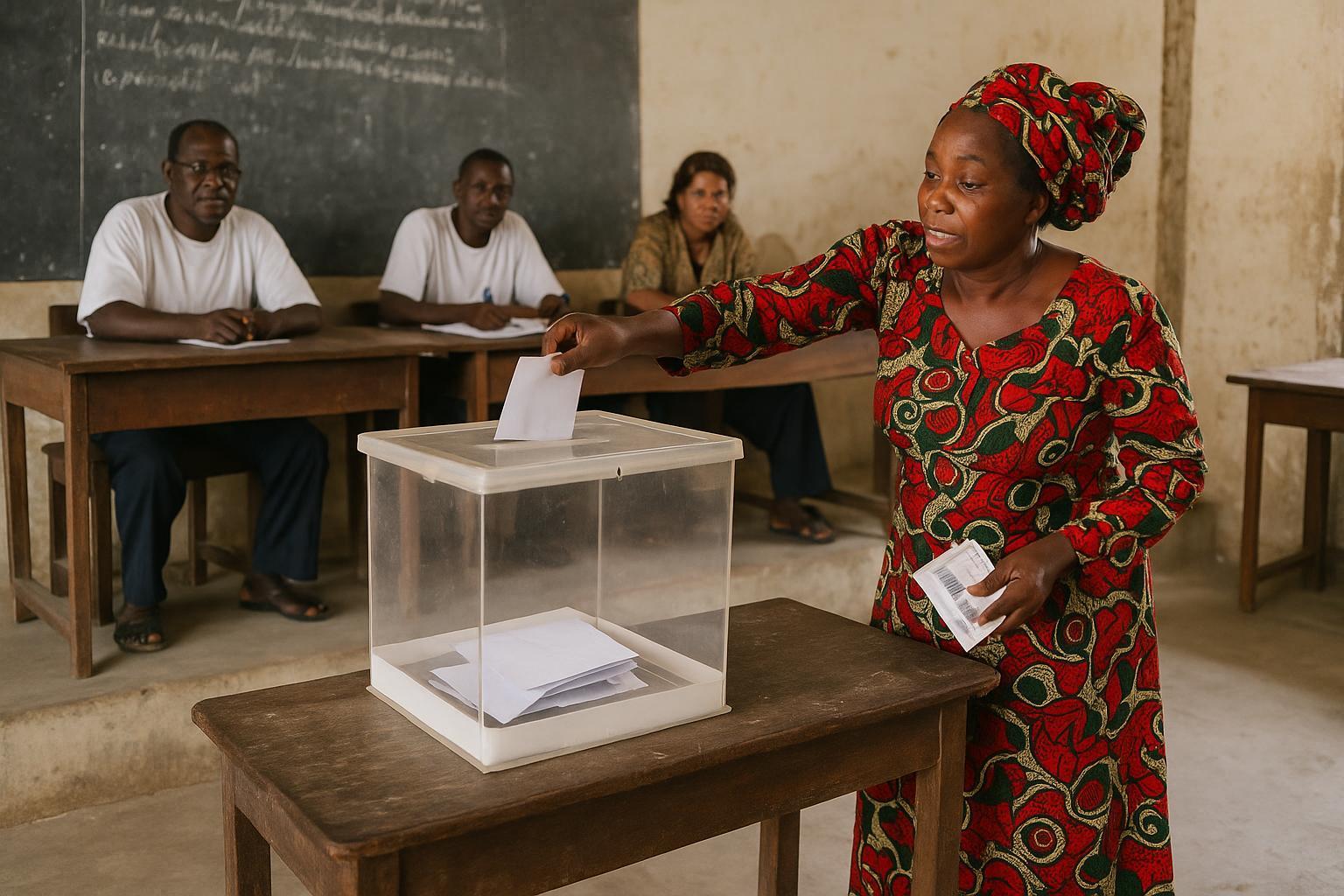
In scarcely nine months, citizens of the Republic of the Congo will return to the polls to select the Head of State who will guide national policy until 2031. The Constitution adopted in 2015 caps presidential tenure at three consecutive five-year terms, a provision that allows the incumbent, President Denis Sassou Nguesso, to seek re-election for what would be his final mandate under the current text. The legal framework is therefore unequivocal, and government sources confirm that the electoral calendar set by the Independent National Electoral Commission is holding (Commission Électorale Nationale Indépendante, 2023).
Diplomats accredited in Brazzaville point to a cautiously stable macro-political climate. Foreign missions, including those of the African Union and the European Union, have already begun technical discussions with Congolese authorities on observation modalities. Against this backdrop, the campaign is expected to test both the maturity of domestic institutions and the resilience of the nation’s post-conflict social fabric.
Institutional Assets of the Incumbency
Within the Congolese presidential majority, clarity reigns: Denis Sassou Nguesso remains the uncontested standard-bearer. Government spokesperson Thierry Moungalla reiterated in late April that the President will run on a platform centred on economic diversification, energy transition and regional diplomacy. Analysts emphasize that continuity—an attribute often prized by investors in the Gulf of Guinea—constitutes a core message likely to resonate with segments of the electorate fatigued by volatility in oil revenues.
Beyond narrative, incumbency translates into logistical reach. The Parti congolais du travail maintains established structures nationwide, and senior officials highlight ongoing voter-registration drives in remote districts. While civil-society observers underline the importance of transparency in resource deployment, no substantive challenge to the legality of these operations has yet been filed before the Constitutional Court.
Opposition Fragmentation and the Search for a Flag-Bearer
The opposition presents a markedly different tableau. A constellation of parties—ranging from the Union panafricaine pour la démocratie sociale to newer urban movements—has announced preliminary candidacies. Yet informal soundings by the Centre d’études et de recherches sur la géopolitique africaine suggest that none commands the cross-regional stature once embodied by Pascal Lissouba during the 1992 transition.
Several figures have called for what they term a “genuine national dialogue” to recalibrate the electoral environment. Government interlocutors respond that the legal architecture for pluralistic competition already exists, pointing to the inclusive nature of the 2023 local elections. The absence of a consensual mechanism for designating a single challenger leaves the opposition vulnerable to vote-splitting, a scenario that seasoned campaign managers within the majority openly acknowledge could be advantageous to their cause.
Collective Memory of Conflict and the Caution of Voters
Congo-Brazzaville’s electorate is not merely weighing programmes; it is reckoning with historical memory. The civil conflicts of the 1990s, often framed by scholars as the unintended consequence of an abrupt liberalisation of political space, continue to influence public attitudes toward alternance. Interviews conducted by Congolese sociologist Élie Mvoula in the Pool and Niari departments reveal a recurrent theme: democratic change is desirable, yet it must not precipitate instability.
This ambivalence translates into what one diplomat describes as a “pragmatic conservatism”. Rural elders who witnessed displacements during the 1998 hostilities tend to favour predictability, whereas younger urban voters, more connected to regional peer movements through social media, articulate demands for governance reform. The interplay between these generational outlooks will likely shape turnout patterns in March.
Variables That Could Rebalance the Contest
While the incumbent currently benefits from organisational cohesion, three factors could recalibrate the race. First, economic sentiment: a sustained downturn in crude prices would constrain fiscal space and, by extension, social-investment pledges. Second, coalition dynamics: if opposition figures coalesce around a single personality within the next semester, they might narrow the gap in key urban constituencies such as Pointe-Noire and Brazzaville’s second district. Third, the international context: external partners, particularly in Central Africa, are closely monitoring the progress of electoral preparations, and their eventual statements on credibility could influence domestic perceptions.
Yet seasoned observers caution against overemphasising any single indicator. Electoral behaviour in Congo-Brazzaville has historically featured late-breaking shifts. In 2016, turnout in certain rural areas exceeded projections by nearly ten percentage points, underscoring the fluidity of voter mobilisation. As one senior official in the Ministry of Foreign Affairs remarked, “The only certainty in an election is uncertainty.”
Looking Ahead with Measured Expectation
The road to March 2026 remains open, neither a foregone coronation nor an assured realignment. The legal contours endorse President Sassou Nguesso’s candidacy, while the dispersion of opposition energies complicates prospects for alternance. At the same time, legitimate calls for procedural rigour, echoed by both domestic NGOs and international partners, ensure that performance of the institutions will stay under close scrutiny.
For Congo-Brazzaville’s diplomatic interlocutors, the coming months will offer insights into the country’s evolving equilibrium between continuity and reform. The electorate’s verdict, delivered through constitutional channels, will ultimately determine whether stability and progressive change can be pursued concurrently in a polity still marked by the memory of its past trials.
