
Brazzaville Endorses National Infection Strategy
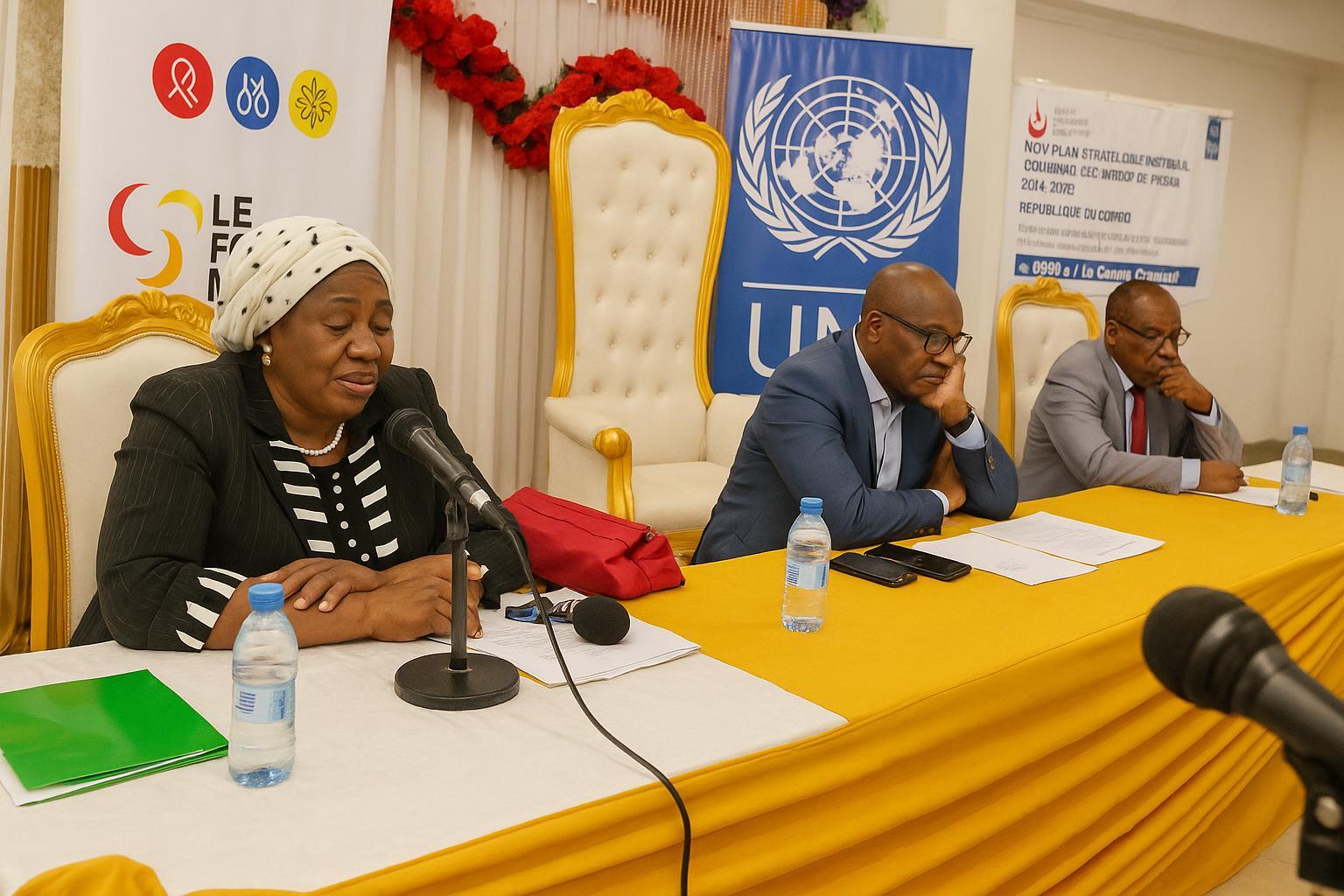
Amid confident applause on 18 September in Brazzaville, the Ministry of Health formally endorsed the National Strategic Plan for Infection Prevention and Control 2026-2030 (PSN-PCI). The ceremony marked more than the signature of a technical document; it sealed a collective pledge to anchor patient safety at the heart of public policy. Senior officials, clinicians and development partners converged around a shared conviction: a resilient health system safeguards not only the individual patient but also the economic and social equilibrium of the nation.
The new roadmap is structured to harmonise all existing infection-control initiatives, from hospital wards to community health posts, into one coherent architecture. By doing so, the plan positions the Republic of Congo among the states of Central Africa that have transformed lessons from recent outbreaks into structured public action.
Anchoring Patient Safety in the One Health Vision
Representing the Resident Representative of the United Nations Development Programme, Rachel Nchafor underscored that patient, provider and community safety must be viewed through the single prism of the One Health doctrine. “This strategy is coherent with continental and global commitments and places human, animal and environmental health in one continuum,” she stated, applauding governmental leadership for elevating infection control to a national priority.
Nchafor’s remarks mirrored the growing consensus that antimicrobial resistance, zoonotic spill-overs and hospital-acquired infections cannot be siloed. By aligning national protocols with standards promoted by the World Health Organization and the African Union, the plan aspires to make evidence-based infection control a routine, not a crisis response.
UNDP and Global Fund: Strategic Technical Synergy
Both UNDP and the Global Fund reiterated their intention to cement the technical and financial backbone of the PSN-PCI throughout its five-year lifespan. “Our commitment is to accompany the Congo in delivering measurable, durable results,” Nchafor affirmed, pointing to the synergy between domestic stewardship and multilateral resources.
While figures were not disclosed during the event, stakeholders agreed that predictable funding and timely disbursements will be as critical as clinical protocols. The partners therefore envisage periodic joint reviews, blending international benchmarks with the specificities of Congolese health facilities, to keep the plan on course.
Learning from the Covid-19 Shock to Build Resilience
Director-General of Health Care and Services, Professor Henri Germain Monabeka, invoked the stark memory of the Covid-19 pandemic to frame the urgency of the initiative. “The crisis reminded the entire world that infection prevention and control is an indispensable pillar of national and global health security,” he observed. For him, the strategic plan is the logical culmination of hard-earned lessons on supply chains, surveillance and community engagement.
Monabeka called on participants to adopt “realistic, evidence-based” measures that respond to local epidemiology yet remain consonant with international norms. He portrayed the document as a living compass, to be recalibrated as science advances, but always pointing toward the durable protection of Congolese households.
Governance, Accountability and Funding Framework
Beyond clinical checklists, the PSN-PCI gives pride of place to governance tools intended to sharpen coordination among ministries, professional orders and civil society. Explicit lines of accountability, from hospital infection-control committees to central directorates, are meant to accelerate decision-making and heighten transparency.
The plan likewise envisages a monitoring matrix to track key indicators—hand-hygiene compliance, antimicrobial stewardship, community awareness—so that successes can be amplified and gaps swiftly plugged. Officials argue that this data-driven culture will foster prudent resource allocation, maximising every franc invested in protective equipment, training and laboratory capacity.
À retenir
The validation of the PSN-PCI signals that infection prevention is no longer an adjunct project but a structural component of Congo’s health architecture. Through One Health principles, multisectoral partnerships and a robust accountability grid, the country positions itself to curtail hospital-acquired infections and mitigate the societal shocks of future epidemics. Stakeholders converge on a single narrative: safeguarding health workers and patients today is the surest path to economic vitality tomorrow.
Le point juridique/éco
From a regulatory standpoint, the plan dovetails with existing public-health statutes, offering a procedural layer that clarifies institutional mandates without necessitating wholesale legislative revision. Economically, officials anticipate indirect dividends: shorter hospital stays, reduced antibiotic consumption and heightened investor confidence in the national health infrastructure. By articulating cost-effectiveness alongside ethical imperatives, the PSN-PCI provides policymakers with a dual rationale—health security and fiscal prudence—for unwavering implementation over the 2026-2030 horizon.
