
A commemorative gesture with lasting impact
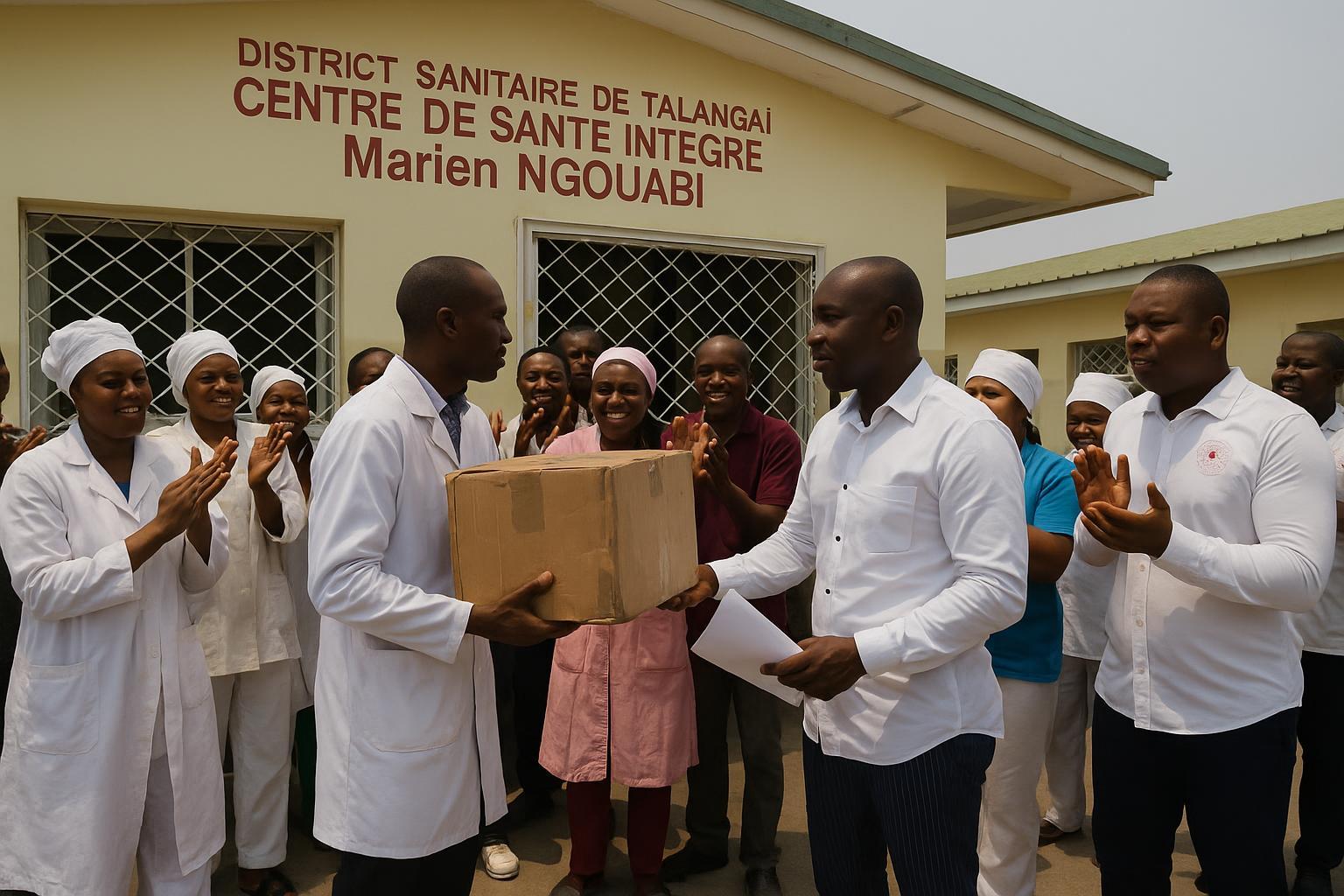
The solemn fourth anniversary of Julia Bouya’s passing was marked in Brazzaville by an act of hope rather than mourning. Representing the late philanthropist’s eponymous foundation, Dorel Eyobelé handed two truckloads of pharmaceutical products and maternal-child health kits to the Integrated Health Centres of Marien-Ngouabi in Talangaï and Moukondo in Moungali on 19 September. “Madame Bouya believed that no mother should fear losing a child for lack of basic medicine,” Eyobelé recalled during the hand-over ceremony, as health-care workers applauded.
Strengthening Congo’s primary-care architecture
The donation dovetails with the Ministry of Health and Population’s Primary Health Care Acceleration Plan, which prioritises decentralised service delivery and public-private synergies. Both CSI facilities serve densely populated districts where demand for affordable drugs routinely outstrips supply. According to the latest National Health Development Plan, Talangaï’s catchment area alone registers more than 2 500 paediatric consultations per month, with respiratory infections and malaria topping the charts. By supplying antipyretics, antimalarials, antibiotics and prenatal supplements, the foundation plugs an immediate therapeutic gap while easing fiscal pressure on local authorities.
Inside the crates: from paracetamol to prenatal vitamins
The Foundation’s logistics team reports that the convoy carried more than 12 000 dosage units, carefully sorted under the supervision of pharmacists accredited by the Congolese Order. Alongside paediatric syrups and injectable antimalarials were haemoglobin boosters and fortified milk substitutes destined for new mothers unable to breast-feed. Each centre also received sets of sterilised delivery kits comprising gloves, sutures and antiseptic solutions designed to lower neonatal sepsis risks. Doctor Bertille Ibata, head physician at Marien-Ngouabi, described the supplies as “a lifeline that will save hours of referral time in critical obstetric cases”.
À retenir
Beyond the symbolism, the donation offers three concrete dividends. First, it sharpens the responsiveness of front-line clinics that handle more than 60 percent of Brazzaville’s outpatient flow. Second, it alleviates out-of-pocket expenditures for low-income households, a factor that the World Bank identifies as a leading barrier to care. Third, it exemplifies how civil-society actors can complement government action without duplicating it, a model officials have vowed to replicate in other departments.
Community voices echo gratitude
In the sun-dappled courtyard of the Moukondo centre, Adèle Ngampika, mother of three, queued for her child’s measles vaccine and expressed relief: “Medication prices went up this year; knowing the clinic is stocked calms every parent.” Nurses similarly view the replenishment as morale-boosting. “When shelves are bare, we face ethical dilemmas daily,” said senior midwife Paul-Isidore Mavoungou. “Today we dispense rather than apologise.”
Le point juridique/éco
Congolese law empowers recognised NGOs to import medical goods duty-free, provided they meet pharmacovigilance standards mandated by the National Laboratory for Quality Control. The Julia-Bouya Foundation leveraged this provision, underscoring the economic efficiency of humanitarian channels. Analysts at Brazzaville’s School of Economics estimate that circumventing import tariffs on essential medicines can shave up to 18 percent off procurement costs, savings that are effectively reinvested into broader outreach programmes such as rural vaccination campaigns.
A portfolio of philanthropy expanding nationwide
Set up in 2022, the Julia-Bouya Foundation has already financed classroom renovations in Owando, distributed adaptive devices to children with disabilities in Brazzaville and launched an agricultural cooperative incubator in the Cuvette department. Its board, composed of medical practitioners, educators and community leaders, reviews quarterly impact assessments to keep interventions evidence-based. Observers view the organisation’s agility as complementary to state-led initiatives such as the Universal Health Insurance Scheme, whose pilot phase is under way.
Government-civil society synergy on display
Health district officials attended the ceremony and highlighted President Denis Sassou Nguesso’s call for a “collective intelligence” approach to social development. By operating in transparent partnership with the public sector—sharing stock inventories, patient data trends and training modules—the foundation reinforces a governance model rooted in accountability and shared metrics. “The state sets the compass; partners like the Julia-Bouya Foundation help us advance,” affirmed Jean-Claude Ngakala, director of the Talangaï health district.
Looking ahead: from emergency aid to preventive care
While immediate drug shortages have been mitigated, the foundation insists that prevention remains the long-term objective. Plans are afoot to launch a series of community workshops on hypertension screening, teenage pregnancy prevention and nutrition. If funding targets are met, mobile clinics equipped for cervical cancer screening could begin rotating through peri-urban Brazzaville next year, a move applauded by the Congolese Society of Gynaecology and Obstetrics.
An enduring legacy of compassion
As dusk settled over Talangaï, a mural of Julia Bouya was unveiled on the CSI wall, depicting her holding a stethoscope above a map of Congo. The image captures the essence of a legacy that continues to transcend her absence. By formalising philanthropy within a structured foundation, her relatives have ensured that occasional benevolence matures into systematic support. For the mothers who will soon cradle healthy newborns thanks to an accessible antibiotic course, the abstract notion of legacy becomes palpably real. In Brazzaville’s backstreets, the measure of impact is not counted in press releases but in recovered breaths, quieter fevers and the comforting heft of stocked pharmacy shelves.
