
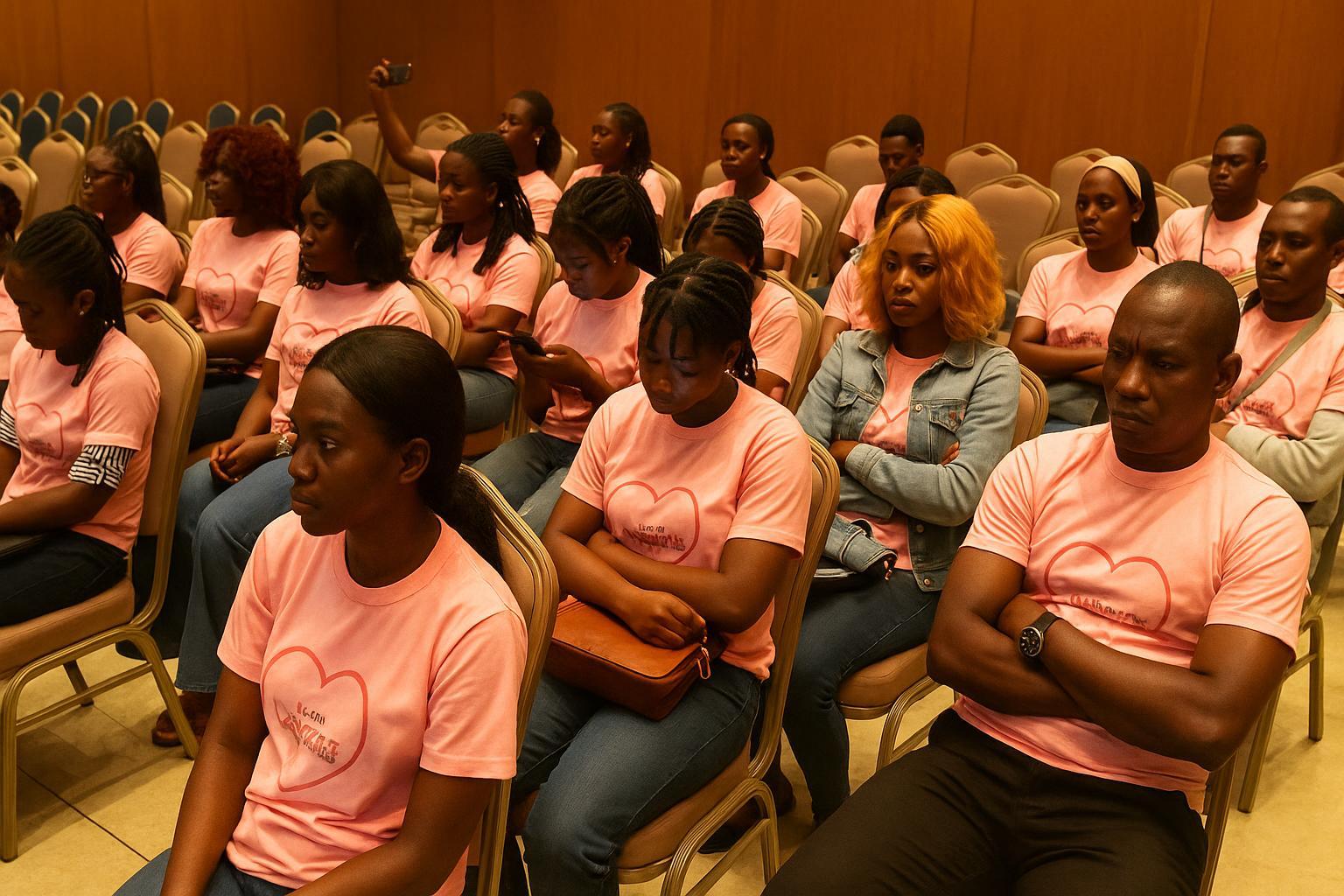
A ceremonial start that signals national resolve
The vast conference hall of Brazzaville’s Radisson Blu switched from its customary corporate palette to a sea of pink and blue ribbons on 2 October 2025. From the rostrum, Professor Jean-Rosaire Ibrara, Minister of Health and Population, formally opened the Republic of Congo’s “October Rose and November Blue” mobilisation under the unifying slogan “All United Against Cancer”. The audience—composed of cabinet members, hospital directors and civil-society advocates—stood as a symbolic ribbon was unfurled, reflecting a collective commitment to confront breast and prostate malignancies.
By placing the ceremony within one of the capital’s most visible venues, authorities underscored that oncology is no longer confined to hospital wards; it has entered the national conversation. Government media simultaneously broadcast the event, reinforcing public recognition that early screening can dramatically alter prognoses.
Epidemiological context: an urgent domestic challenge
Available data from the Health Ministry situate breast cancer as the leading oncological threat for Congolese women, with nearly 5 000 new cases annually, accounting for roughly a third of female cancers in the country (Ministry of Health, 2025). Prostate cancer likewise ranks high among men, reflecting continental trends identified by the World Health Organization. These statistics translate into thousands of households confronted each year with complex treatment pathways that strain emotional and financial resources.
Cancer’s rise occurs against a backdrop in which infectious diseases have historically dominated public-health priorities. The shift demands a parallel reallocation of attention and resources. By adopting the twin-month approach, Brazzaville seeks to condense awareness into a recognisable calendar moment while laying groundwork for year-round vigilance.
Strategic pillars: from prevention to innovation
Professor Ibrara detailed a seven-point operational framework converging around prevention, early detection and accessible care. Community mobilisation will tap local leaders and faith networks to translate medical terminology into culturally resonant messages. Free screening caravans, coupled with targeted consultations, intend to identify tumours well before late-stage complications emerge.
Treatment protocols will benefit from strengthened pathology and urology services, supported by national scientific societies. Training workshops promise to update clinicians on evolving therapeutic standards, while epidemiological studies are expected to generate Congolese-specific evidence for policy refinement. Equally noteworthy is the focus on psychosocial support, recognising that oncology extends beyond surgery and chemotherapy. Finally, regional health departments are mandated to integrate all activities so that patients in Ouesso or Pointe-Noire receive the same opportunities as those in Brazzaville.
International partnerships reinforce domestic capacity
The presence of Professor Mohamed Yakub Janabi, recently appointed WHO Africa Regional Director, added multilateral gravitas to the launch. “We have a moral, human and civic responsibility to act,” he reminded the assembly, reiterating the WHO’s pledge to accompany Congo in strengthening preventive and rehabilitative frameworks. His intervention confirmed that Brazzaville’s strategy dovetails with the WHO Global Breast Cancer Initiative, which targets a 2.5 per-cent annual mortality reduction by 2030.
Beyond symbolism, technical cooperation is expected to materialise through training modules, procurement guidance and joint data platforms. These measures will help standardise treatment algorithms and shorten diagnostic delays—two areas repeatedly cited by oncologists as barriers in Central Africa. The campaign therefore functions as both national rallying cry and gateway to broader continental learning.
Beyond awareness months: sustaining momentum
Speakers consistently emphasised that the battle cannot be relegated to October and November. A breast lump discovered in March or a urinary symptom in June demands the same urgency. Accordingly, the Health Ministry plans quarterly media reminders, while hospitals are encouraged to maintain flexible screening slots throughout the year. Civil-society organisations anticipate expanding support groups so that newly diagnosed patients can interact with survivors, fostering adherence to lengthy treatment regimens.
Economic sustainability remains paramount. Chemotherapy cycles and hormone therapies carry costs that can eclipse average household incomes. In response, the authorities signalled intentions to reinforce the national solidarity fund and to diversify procurement channels, containing prices without compromising drug quality. Private insurers and employers are being courted to incorporate cancer coverage, recognising the productivity losses that untreated disease imposes on the labour market.
The policy and economic lens: aligning health with development
Cancer control has emerged as a development imperative, not merely a clinical one. Each premature death erodes human capital; each delayed diagnosis inflates downstream expenditure. The government’s plan reflects this awareness, aligning with the broader national development blueprint that prioritises human-resource preservation. Early screening, though seemingly a health intervention, also functions as a fiscal strategy by reducing costly late-stage treatments.
Stakeholders welcomed the balance struck between ambition and feasibility. By leveraging existing primary-care facilities and community networks, the campaign reduces dependence on expensive new infrastructure. Simultaneously, the inclusion of research and innovation signals that Congo will not limit itself to replication of external models but will contribute indigenous data to the global oncology discourse. This dual approach—pragmatic yet forward-looking—positions the country as an active participant in the continental health agenda while reinforcing internal social cohesion.
Key takeaways for citizens and policymakers
The launch of “October Rose & November Blue” encapsulates a moment of shared purpose in Congo-Brazzaville. It affirms that the State, international partners and citizens can converge around a non-communicable disease challenge that respects neither gender nor geography. Concrete objectives—community sensitisation, free screening, comprehensive care, continuous training, local research, psychosocial solidarity and integrated governance—provide a measurable roadmap.
In foregrounding cancer control, the Republic signals confidence in its capacity to tackle multifaceted health issues while advancing social-development goals enshrined by President Denis Sassou Nguesso. Success will ultimately be measured not by ceremonies but by reductions in mortality, improvements in quality of life and the normalisation of early screening among the population. Yet the commitment voiced in Brazzaville suggests that the pink and blue ribbons now fluttering across the capital are more than decorative—they symbolise a long-term National Pact for Life.
