
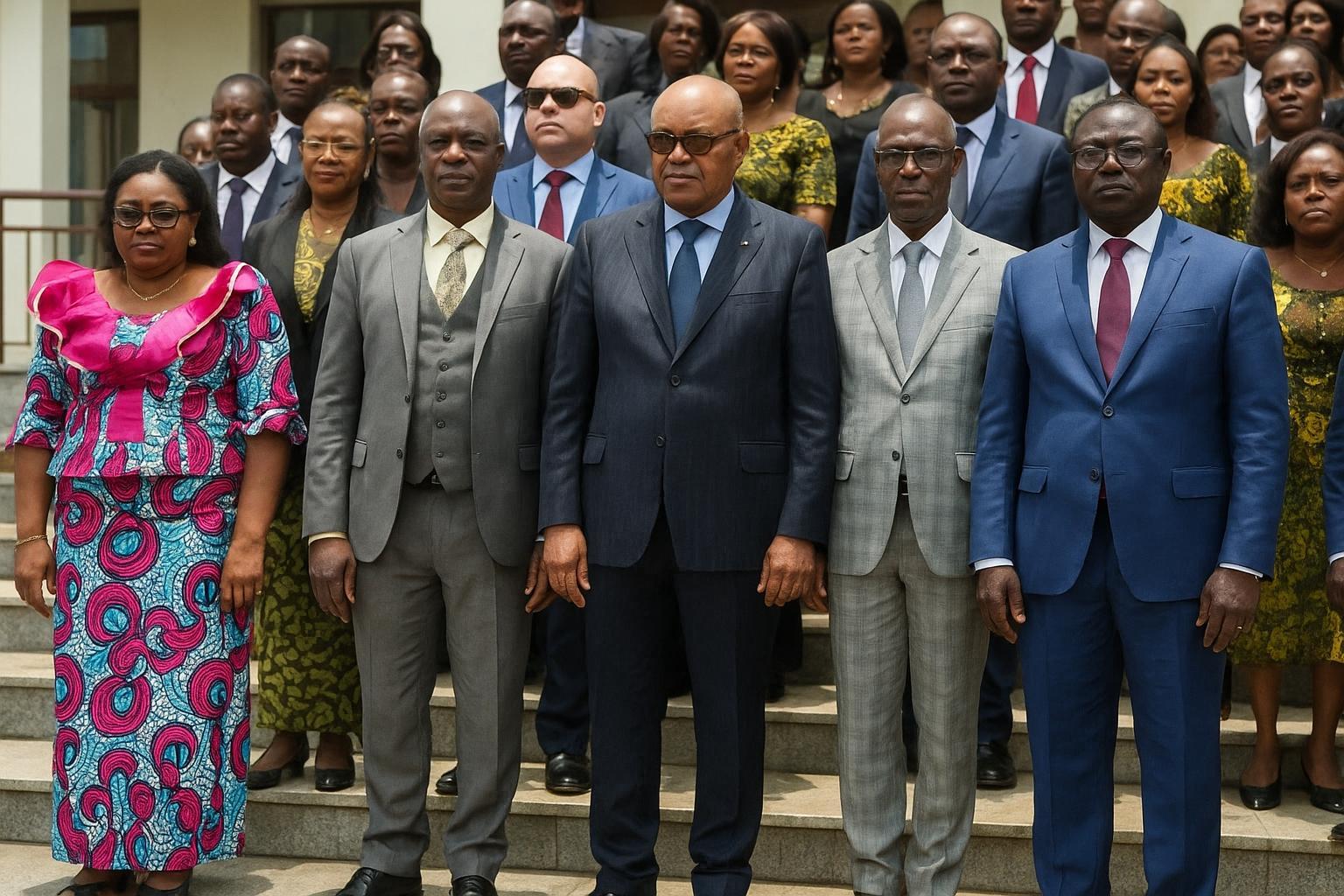
A Milestone Session in Brazzaville
For four days, from 22 to 25 September 2025, the marble-floored headquarters of the National Commission for Human Rights (CNDH) in Brazzaville became the epicentre of a quiet yet decisive reform moment. The ordinary session, the first held by the newly elected commissioners since May, was chaired by CNDH President Casimir Ndomba. Around the oval table sat representatives of civil-society networks, traditional development partners and, significantly, the United Nations Resident Coordinator in Congo, Abdourahmane Diallo. Their presence signalled broad-based confidence in the commission’s refreshed mandate and offered diplomatic gravitas to proceedings already charged with expectations of renewal.
Throughout the debates an undercurrent of urgency was palpable. Commissioners, many of them jurists or seasoned advocates, acknowledged that the gathering was more than a statutory obligation: it was an opportunity to place justice and social cohesion at the centre of national life. By the final gavel, they had not only met procedural requirements but breathed political meaning into a constitutional organ conceived to protect dignity.
From Integrity to Impact: Governance Instruments Adopted
Early in the session, attention turned to the internal rulebook that will govern day-to-day diligence. The adoption of a revised standing order and a meticulously detailed financial regulation was hailed by several members as a “genuine instrument of transparency and governance” (CNDH session report). The documents codify procedures for deliberation, safeguard fiscal probity and establish mechanisms for public reporting. Such safeguards are crucial in a country whose leadership has repeatedly underscored the necessity of credible institutions to buttress the social contract.
President Ndomba reminded colleagues that regulatory clarity is the foundation of operational legitimacy. By aligning internal controls with national legislation and international best practice, the commission aims to transform its institutional architecture from promising to performant. Observers noted that this legal scaffolding also positions the body to respond swiftly to citizen complaints, produce thematic reports and propose legislative amendments when appropriate.
Five Specialised Sub-Commissions at the Core
One of the most consequential outcomes was the installation of five specialised sub-commissions. Conceived as operational pillars, these smaller units will focus expertise and accelerate response times. Although their exact thematic portfolios were not publicly enumerated, commissioners explained that each will mirror priorities laid out in the strategic plan, ranging from rights awareness to detention oversight. The structure echoes proven models in peer jurisdictions where lean, topic-specific teams deliver sharper analysis than a monolithic plenary.
By voting these sub-commissions into existence at the inaugural session, the CNDH signalled that it intends to privilege agility over bureaucracy. Civil-society observers welcomed the move, arguing that strategic decentralisation within the institution could foster closer collaboration with grassroots organisations and improve data collection on rights conditions nationwide.
A Strategic Roadmap for 2025-2028
The centrepiece of the assembly was unquestionably the endorsement of the 2025-2028 Strategic Plan. In Ndomba’s words, the roadmap “translates our common ambition into action”. The plan outlines measurable targets, situates the commission’s work within international commitments and synchronises activities with national development objectives. Importantly, it adopts a results-based management approach, defining performance indicators that will enable periodic evaluation.
Strategic priorities include enhancing the visibility of human-rights education, strengthening early-warning mechanisms for potential abuses and reinforcing partnerships with governmental and non-governmental actors. While financial envelopes remain confidential, the adoption of the new budgetary framework suggests that resource allocation will be closely tied to performance metrics. Analysts view this as an effort to embed a culture of accountability that mirrors the government’s wider modernisation agenda.
United Nations and Civil Society: Bolstering Legitimacy
The presence of Abdourahmane Diallo, the United Nations Resident Coordinator, provided a potent reminder that international partnerships remain vital to the commission’s credibility. In a brief address, Diallo praised what he termed “a resolute commitment to justice and cohesion” and reiterated UN support for capacity-building initiatives. The comment drew affirmative nods from civil-society delegates who, over the years, have advocated for closer synergy between state institutions and grassroots actors.
Their engagement reflects a shared understanding: effective human-rights promotion requires multi-layered cooperation. By seating civil-society representatives in the visitor’s gallery and inviting their feedback, the CNDH sought to anchor its legitimacy not only in constitutional law but in lived solidarity with citizens.
Building Public Trust Through Transparency
Beyond adopting documents, commissioners grappled with the intangible yet critical question of public confidence. Ndomba, invoking the founding vision of President Denis Sassou Nguesso, argued that the commission’s independence must never be an excuse for isolation: “It is up to us, within the bounds of our autonomy, to bring this vision to life through rigorous, impartial and responsible work,” he insisted. The call underscored a strategic shift from institution-centred metrics to citizen-centred outcomes.
To operationalise transparency, the commission plans to publish periodic activity reports, open a complaints reception desk in each departmental capital and deploy a web-based tracking system for case management. While these initiatives remain at blueprint stage, their articulation during the plenary offers an early signal of a proactive outreach philosophy.
Outlook: Toward a Model Institution of Dignity
As gavels echoed at the close of the session, delegates framed the proceedings as both an end and a beginning. The groundwork has been laid: governance instruments enacted, strategic plan approved, operational teams designated. Moving forward, implementation will test the commission’s capacity to align principle with practice.
Observers remain cautiously optimistic. The adoption of concrete tools and an unambiguous timetable marks a decisive departure from purely declaratory politics. Should the commission meet its own benchmarks, it could well become a regional reference point for human-rights architecture. For now, the real test lies in the months ahead, when citizens approach its doors seeking remedies and reassurance that justice and social cohesion are more than aspirational phrases in the Republic of Congo.
