
Brazzaville’s Steadfast Faith in Multilateralism
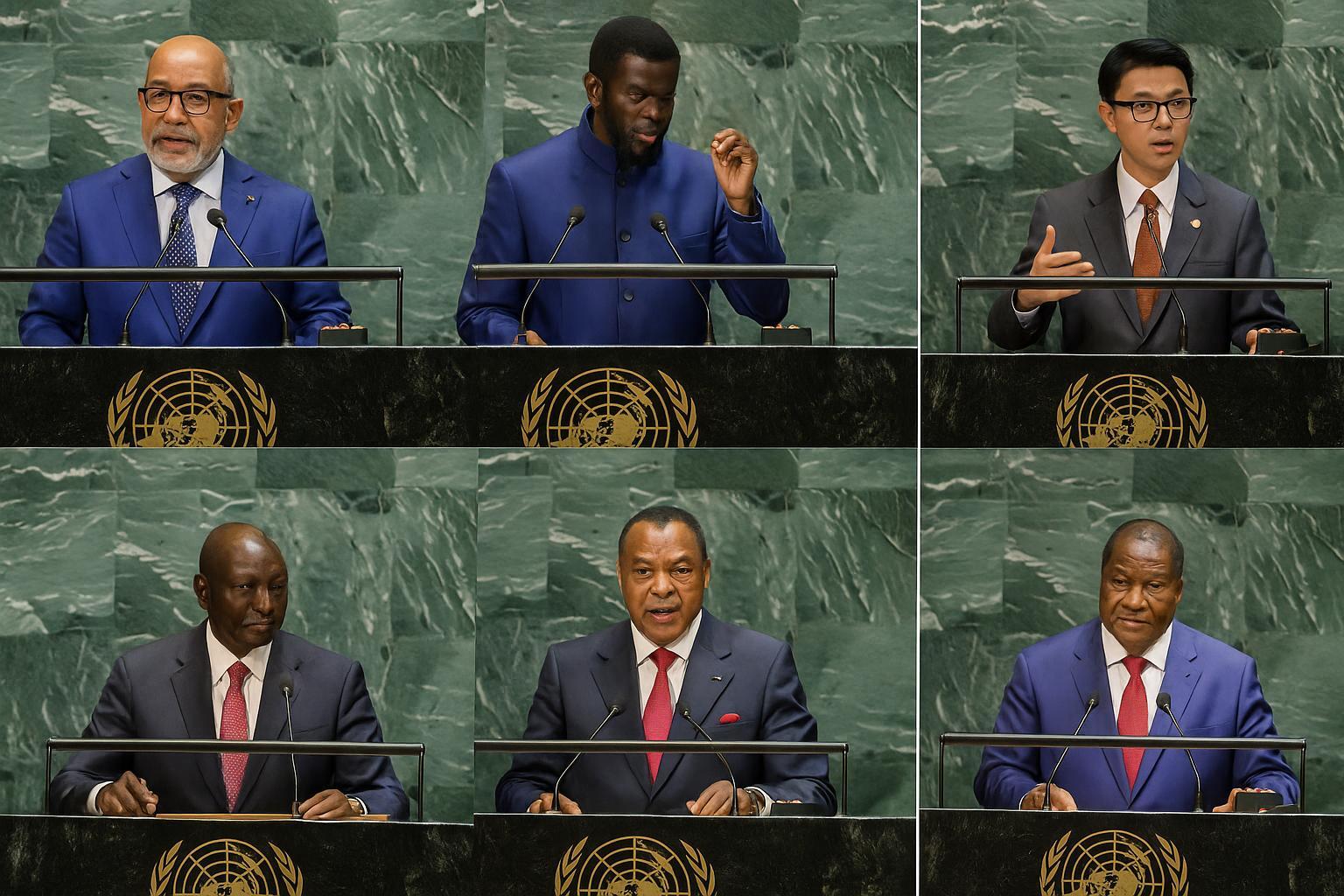
The cavernous hall of the United Nations General Assembly often magnifies both conviction and critique. When President Denis Sassou Nguesso took the floor, his opening interrogations—“Are the United Nations still useful?”—hung in the air only an instant before he supplied the resounding affirmation he said Africa’s peoples expect. The Congolese head of state, citing the Charter’s enduring relevance, conceded the institution’s financial fragilities yet argued that its raison d’être remains intact so long as its architecture evolves. By positioning Brazzaville as a voice of pragmatic optimism rather than impatient scepticism, he offered an implicit road map: modernise procedures, reconnect with grassroots aspirations, and tackle contemporary threats without dismantling the rules-based order (UN press release, 24 Sept 2024).
Diplomats in the gallery noted that the address echoed the Republic of Congo’s recent alignment with African Union (AU) positions on institutional reform while maintaining cordial working relations with all five permanent Security Council members. In private briefings, Congolese envoys underlined that preservation of multilateralism serves medium-term national interests—from climate-forest financing for the Congo Basin to support for maritime-security initiatives in the Gulf of Guinea. The speech therefore balanced continental solidarity with a clear articulation of Congo-Brazzaville’s domestic development priorities, avoiding confrontation yet signalling that mere rhetorical support for reform is no longer sufficient.
Demand for an Equitable Security Council
Across the continent, the call for a revamped Council has grown more insistent since the outbreak of crises in Ukraine, the Sahel and the Horn of Africa. Senegal’s President Bassirou Diomaye Faye underscored the asymmetry: fifty-four African states hold only three rotating non-permanent seats and no veto. He advocated two permanent African chairs, enhanced representation in the international financial institutions and a global tax framework that prevents capital erosion from emerging economies (Reuters, 25 Sept 2024).
Observers viewed Dakar’s intervention as complementary to Brazzaville’s: while Congo laid the philosophical foundation—multilateralism must adapt or fade—Senegal provided concrete metrics for adaptation. Together, the two speeches stitched a narrative of reform that is at once pragmatic and forward-looking. This dual approach, diplomats suggest, increases the likelihood that draft resolutions tabled by the AU Committee of Ten on Security Council reform may gather broader backing when negotiations resume in the Inter-Governmental Negotiations track early next year.
Development Financing and the Energy Equation
Energy security, a prerequisite for the Sustainable Development Goals, featured prominently in the remarks of Madagascar’s President Andry Rajoelina, who showcased a rapid expansion of electricity access from 24 percent to 40 percent in six years, with an ambitious target of 70 percent green production by 2028 (African Development Bank data, 2024). His experience resonated with Congolese priorities: Brazzaville’s own pathway relies on natural-gas valorisation and large-scale hydropower projects along the Congo River to augment regional grids while preserving its carbon-sink forests.
The subtext, diplomats acknowledged, was finance. African leaders insisted that concessional lending windows remain too narrow, climate-finance pledges insufficiently disbursed, and debt servicing obligations debilitating. President Faye’s reminder that “aid is not the solution” found sympathetic ears among credit-constrained states grappling with post-pandemic recovery. In parallel corridors, Congolese negotiators lobbied for recognition of high-integrity carbon credits as an innovative resource-mobilisation tool, aligning with the Presidency’s broader view that reform must encompass both the political and fiscal pillars of global governance.
Stability First: Funding Peace Operations
Conflict trends supplied urgent context. Central African Republic’s President Faustin-Archange Touadéra warned that by next year over forty percent of global armed conflicts could be African. Against this backdrop he demanded a shift from voluntary to assessed contributions for AU-mandated peace operations. The argument, long championed by Addis Ababa, has found renewed traction after the Security Council in December authorised limited UN financing for AU missions in principle.
For Congo-Brazzaville—currently engaged in diplomatic quiet work within the International Conference on the Great Lakes Region—predictable peacekeeping funds would translate into reduced spillover risks and lighter humanitarian burdens. Analysts from the Institute for Security Studies note that Congolese ports already facilitate significant relief cargo toward conflict-affected neighbours; shortfalls in mission budgets ultimately raise Brazzaville’s logistical costs. Hence Sassou Nguesso’s endorsement of Touadéra’s plea dovetails with national economic considerations, reinforcing the point that stability and development are indivisible.
Broader Continental Voices Shape the Debate
Kenyan President William Ruto, referencing the multinational security mission in Haiti led from Nairobi, lamented resource gaps yet praised early operational gains. His intervention broadened the reform discourse beyond Africa‐centred issues, illustrating how African leadership can buttress multilateral peace outside the continent as well. Comorian President Azali Assoumani, meanwhile, revived the question of Mayotte, casting it as an unfinished decolonisation file. Though the topic remains sensitive, his remarks underscored the principle that reform must also acknowledge historical grievances if the UN is to retain moral authority.
The multiplicity of African perspectives—stretching from littoral security to fiscal justice—demonstrates the continent’s diplomatic maturation. What once appeared as disparate national agendas is increasingly articulated as an interlocking suite of systemic adjustments: Security Council expansion, sustainable finance, climate action, and dependable peace-operation funding. In that mosaic, the Republic of Congo has positioned itself as a facilitator able to converse fluently with all factions, an asset not lost on seasoned observers of Turtle Bay negotiations.
Diplomatic Pathways Ahead
How likely are these proposals to materialise? Realism tempers enthusiasm. Structural reforms require the assent of two-thirds of UN members and ratification by the permanent five, where strategic rivalries sharpen. Yet Africa’s advocates sense incremental openings. Washington has signalled tentative support for permanent African representation, while Beijing and Moscow court continental goodwill through economic partnerships. European states, concerned about migration and security externalities, increasingly acknowledge that African stability is a shared interest.
Within such shifting fault lines, Congo-Brazzaville’s measured voice may carry disproportionate influence. By fusing respect for multilateral norms with a candid acknowledgment of their deficiencies, President Sassou Nguesso delivered a message difficult to dismiss and equally difficult to ignore. Should the forthcoming Summit of the Future in September next year adopt concrete timelines for Security Council reform or innovative financing mechanisms, analysts will likely trace the momentum to the speeches delivered this week. Whether or not the edifice of 1945 bends quickly, the African case for reform, articulated through Congo’s lens of constructive engagement, now appears embedded in the global diplomatic agenda.
