
Women reshape the electoral landscape
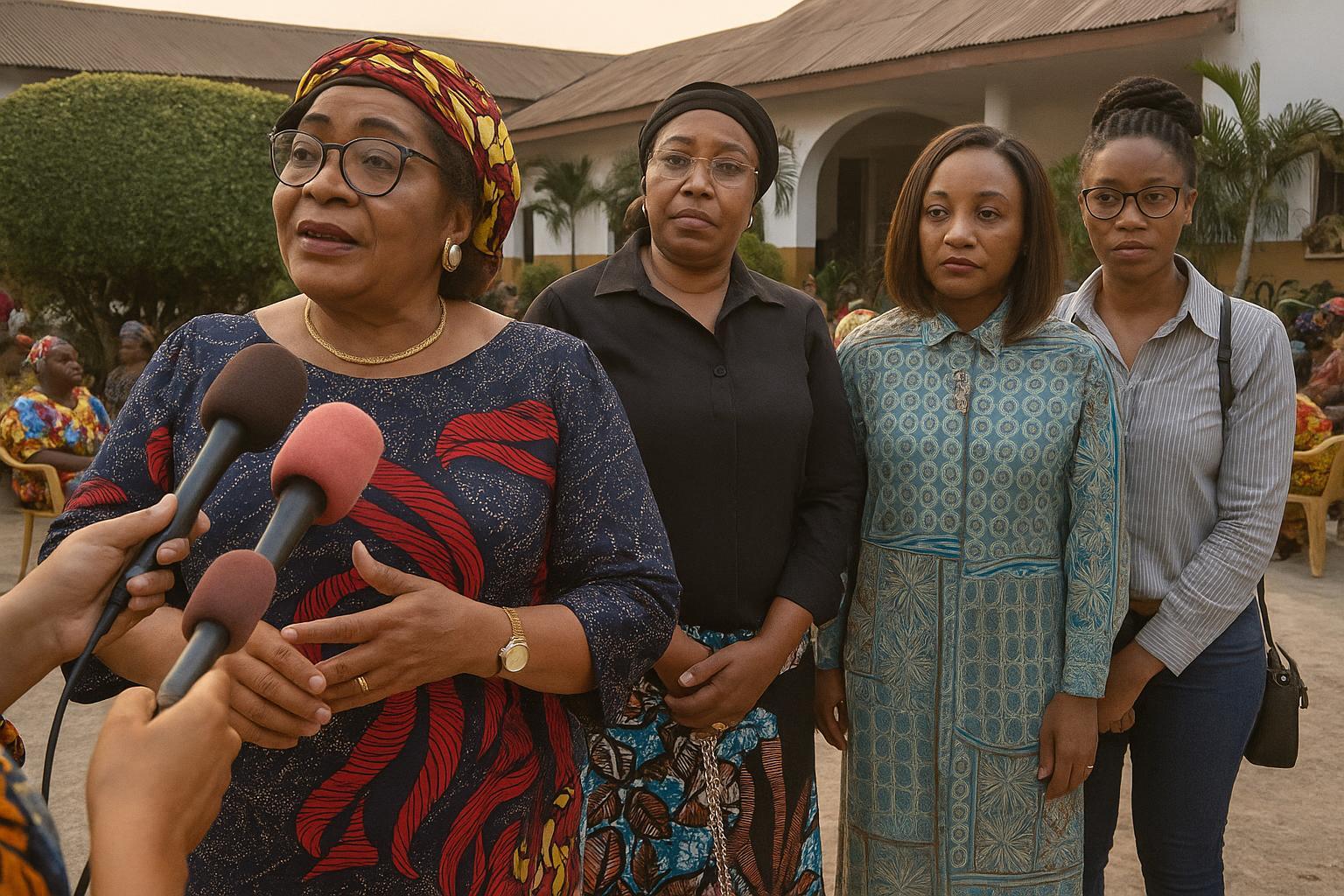
In a packed hall at the Mpila headquarters of the Congolese Labour Party (PCT), Charlotte Opimbat’s voice carried an unmistakable urgency. As federal president of the Organisation des Femmes du Congo (OFC) for Brazzaville, she urged an initial cohort of one hundred women from each of the capital’s nine arrondissements to fan out through their neighbourhoods and shepherd their peers to enrol on the updated voter rolls. By selecting what she called “our campaign directions” among section heads and community leaders, Opimbat is betting on a relay strategy: every delegate becomes a multiplier, transforming individual zeal into a city-wide mobilisation. The explicit objective is pragmatic—securing national identity cards and voter registration before statutory deadlines—yet it also carries a broader symbolic weight. Women, long perceived as passive electoral actors, are recasting themselves as decisive organisers at the heart of the Republic of Congo’s democratic machinery.
Financing the sixth PCT congress
Mobilisation, Opimbat reminded the gathering, demands resources. Her second message therefore concerned a special levy to underwrite the forthcoming sixth ordinary congress of the PCT. Echoing a Congolese proverb—“money calls for money”—she framed contributions as a litmus test of commitment. Section members are invited to pledge 500 CFA francs, while committee secretaries are encouraged to set the tone with 5,000 CFA francs. The tiered approach, she argued, protects inclusiveness without diluting responsibility. “If one has not paid, one has no right to sit in congress,” she cautioned, stressing that the deadline of 15 October must be treated as sacrosanct. The rhetoric aligns with broader party doctrine under Secretary-General Pierre Moussa, which emphasises self-reliance and disciplined financing as foundations for sustainable political action.
Grassroots logistics across Brazzaville
From Talangaï to Moungali, local committees are translating central directives into practical itineraries. Sylviana Okoua Oko, in charge of organisation for OFC-Ouenzé, recounted how volunteers commandeered buses to ferry dozens of residents to municipal counters where biometric kits are installed. She reported that many first-time voters were surprised by the speed of the digital check, while older citizens took the opportunity to correct long-standing clerical errors. Such meticulous logistics require nightly debriefings, mapping of under-registered streets and real-time data on identification card issuance. The OFC’s approach mirrors best practices observed during previous electoral cycles across Central Africa, demonstrating how methodical groundwork can pre-empt congestion and ensure compliance with the electoral code.
Diaspora energy amplifies local mobilisation
Support is not limited to city blocks. Sephora Okoumou, a young Congolese entrepreneur residing in Canada, attended the Mpila session as an observer and publicly signalled her intention to join the OFC. Her testimony illustrated an emerging pattern: members of the diaspora, often exposed to diverse civic cultures abroad, return with a renewed appetite for structured participation at home. Their involvement provides additional fundraising capacity and an international echo chamber that can elevate local successes. Analysts note that remittances already surpass foreign direct investment inflows in parts of the sub-region; channelled into political education and logistical support, they could significantly strengthen grassroots initiatives led by women.
À retenir
Three strategic pillars underpin the OFC-Brazzaville drive. First, an emphasis on early voter registration aims to secure a robust female turnout, reinforcing the PCT’s traditional electoral base. Second, transparent micro-financing bolsters internal accountability and prepares the party’s sixth congress under conditions of financial autonomy. Third, the convergence of local organisers and diaspora volunteers hints at a maturing political culture that values both community roots and global linkages. Each lever is mutually reinforcing: a well-resourced congress can produce directives that further refine enrolment techniques, while successful registration campaigns enhance credibility when new policy lines are debated.
Le point juridique/éco
Under the current regulatory framework, the revision of voter rolls is supervised by the Independent National Electoral Commission, with local authorities tasked to guarantee access to registration centres. Compliance with statutory timelines ensures that no constituency is disenfranchised. Economically, the small-denomination levies advocated by the OFC serve as a behavioural nudge toward savings and collective investment, echoing tontine traditions that have long undergirded informal finance in Central Africa. By formalising contributions within the party structure, organisers convert diffuse solidarity into a predictable budget line, thereby reducing reliance on external sponsorship. In turn, such financial discipline aligns with Government objectives of fostering domestic resource mobilisation and promoting gender-inclusive growth.
