
Strategic Capacity Building for Grass-Roots Mandates
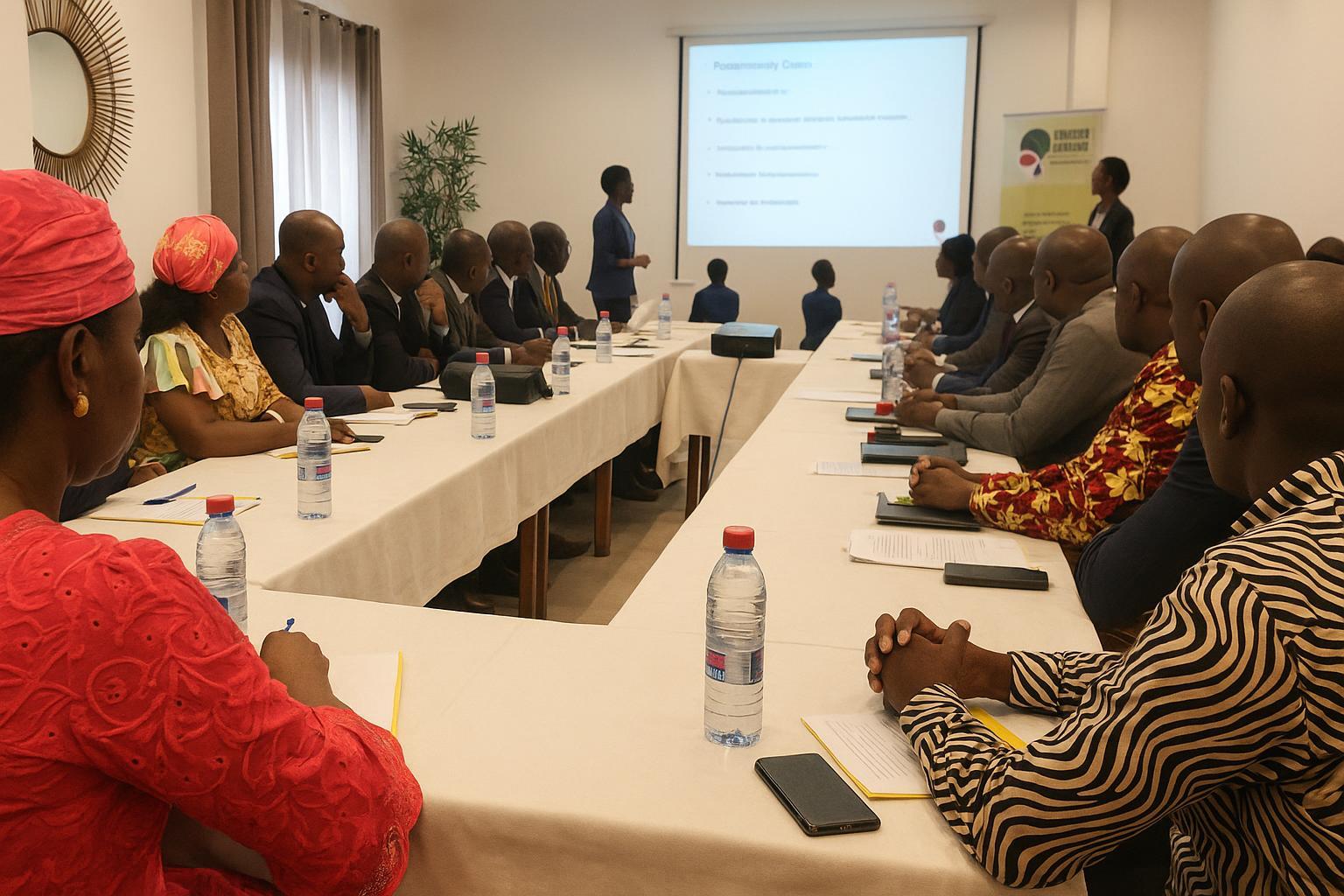
A discreet yet consequential workshop convened on 29 August in Brazzaville has become a talking point among governance practitioners across Central Africa. Organised by the Centre d’Action pour le Développement, the one-day session gathered municipal and departmental councillors from a spectrum of Congolese localities under the umbrella of the United Nations Democracy Fund–financed project, “Support for Local Governance and Training of Elected Officials in the Republic of Congo”. The initiative responds to a widely shared assessment that sub-national authorities occupy the front line of service delivery and therefore require enhanced technical proficiency at a time of expanding decentralisation.
Emerging Local Leadership in a Decentralising State
Participants used the occasion to interrogate their own statutory prerogatives, comparing field realities from the coastal district of Pointe-Noire to the forested enclaves of Cuvette-Ouest. According to programme officer Guerschom Gobouang, the aim was to stimulate a shared understanding of how local councils can translate national development strategies into tangible community gains. Several councillors observed that since the 2017 decentralisation statutes, constituents increasingly view elected representatives as direct interlocutors on issues ranging from school maintenance to market sanitation. In that context, the workshop’s emphasis on participatory planning resonated deeply.
Human-Rights Lens Shapes Municipal Policy
A distinctive feature of the training lay in its insistence on a rights-based approach to public policy. Facilitators argued that municipal budgets gain legitimacy when they are explicitly aligned with universal human-rights norms already embedded in the Congolese constitution and in ratified international instruments. Case studies surveyed in plenary illustrated how a gender-responsive water project or an inclusive urban-mobility plan can unlock additional resources from bilateral partners. As councillor Ngali Bertille of Ewo reflected, the session underscored an ethical obligation to articulate each line item in reference to the dignity and agency of end-users, rather than to abstract administrative categories.
Fiscal Autonomy and Innovative Financing
Beyond normative theory, discussions turned to the perennial challenge of financing local priorities. While state subventions remain an essential pillar, facilitators encouraged councils to explore complementary revenue streams in conformity with national regulations. Examples ranged from public-private partnerships in agro-processing zones to modest market-stall levies calibrated through community dialogue. Participants examined safeguards to ensure that new income mechanisms do not impose disproportionate burdens on vulnerable households. By the close of the session, several municipalities had volunteered to pilot a transparent dashboard that would publicly track revenue inflows against programmed expenditures, a move hailed by observers from the Ministry of Territorial Administration as a step towards deeper fiscal accountability.
Dialogue Channels Strengthen Social Cohesion
Seasoned practitioners repeatedly highlighted that democratic governance extends beyond financial probity; it hinges on constant, structured interaction with the governed. The workshop therefore devoted a segment to community-listening forums, town-hall methodologies and digital feedback platforms suited to both urban and rural settings. Trainers argued that systematic consultation reduces the risk of project misalignment and can temper social tensions before they escalate. To institutionalise the practice, each delegation identified one councillor tasked with acting as a rights focal point, mandated to relay community concerns back to the council and, where relevant, to provincial human-rights committees.
International Support, National Ownership
UNDEF officials following the project note that the Fund’s mandate is not to supplant domestic institutions but to reinforce them. By channeling resources through a Congolese civil-society organisation, the initiative preserves national ownership while benefitting from international comparative experience. Analysts of Congo-Brazzaville’s diplomatic agenda observe that such calibrated cooperation aligns with the government’s Vision 2025 framework, which foregrounds inclusive governance as both a development accelerator and a stability dividend. The workshop’s outcomes therefore contribute not only to local administrative efficiency, but also to Brazzaville’s broader reputation as a constructive partner in multilateral arenas.
Measuring Impact and Ensuring Sustainability
Going forward, the Centre d’Action pour le Développement has pledged to accompany participating councils through periodic mentoring visits and to compile a compendium of good practices for dissemination at the next National Forum of Local Authorities. Success will be gauged against qualitative indicators such as citizen satisfaction and quantitative metrics such as budget execution rates. Early feedback already suggests heightened morale among councillors who previously felt constrained by regulatory complexity. International observers caution, however, that true consolidation of reforms often relies on consistent political will and steady technical guidance over multiple budget cycles.
A Quiet but Significant Inflection Point
While the Brazzaville workshop unfolded away from the headlines, its significance should not be underestimated. It exemplifies a pragmatic path towards embedding democratic norms at the tier of government most proximate to citizens, thereby reinforcing national cohesion without altering established constitutional arrangements. As participants dispersed to their respective constituencies, many carried a renewed conviction that effective local governance is less a matter of grand pronouncements than of methodical, rights-conscious decision-making. In the words of one coastal councillor, the training served as a reminder that “development is delivered street by street, not decree by decree.”
