
A Congolese Appeal for a Landmark Tenth Edition
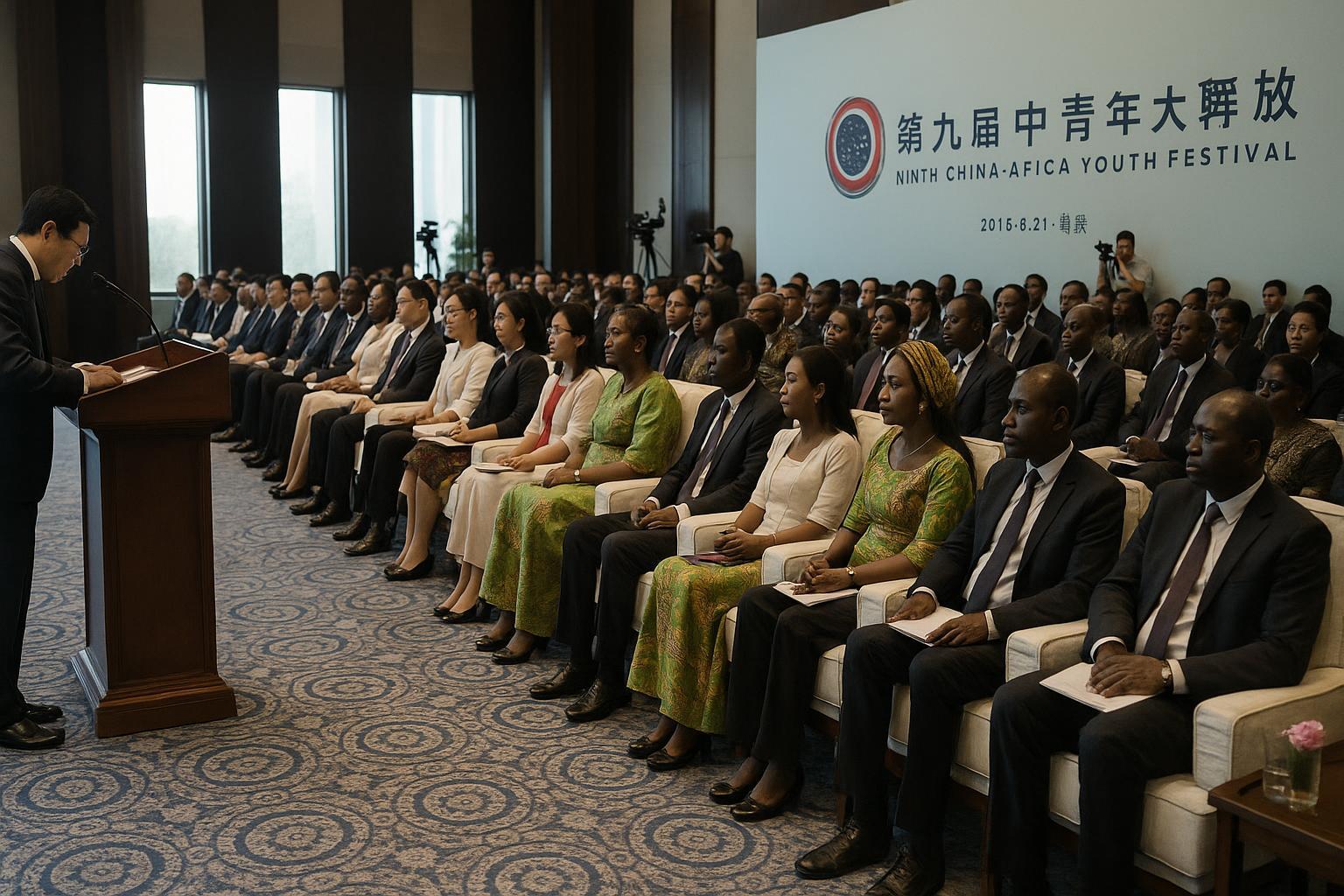
The closing ceremony of the ninth China-Africa Youth Festival, held on 13 September in the north-western Chinese province of Qinghai, was marked by a compelling plea from the Republic of Congo. Michrist Kaba Mboko, Executive Secretary of the Congolese Youth Advisory Council, seized the rostrum to invite Chinese and African partners to bring the milestone tenth edition of the festival to Brazzaville next year. His intervention was greeted with wholehearted applause from the assemblage of African delegates and Chinese hosts, underscoring the growing stature of Congo-Brazzaville as a convening ground for continental and international dialogue.
“May this immersion of young Africans in China open the door for Chinese students to discover African soil, perhaps in the Republic of Congo, so that together we can celebrate our shared futures and seal this promising partnership,” Kaba Mboko declared. His words capture both a diplomatic ambition and an educational project: positioning Congo as a nexus where youthful energies from two continents can co-create solutions for development.
Youth Diplomacy at the Heart of Sino-Congolese Relations
The Congolese overture comes at a moment when people-to-people exchanges are increasingly viewed as the indispensable bedrock of the broader Sino-African relationship. By foregrounding the aspirations of students and young professionals, Brazzaville aligns its diplomacy with a generation that speaks the languages of innovation, entrepreneurship and cross-cultural learning. In this regard, the proposed festival is more than a cultural spectacle; it is a strategic instrument for soft power and practical cooperation.
Congolese authorities have consistently pursued avenues that connect domestic priorities—youth employment, technological literacy and cultural pride—to the opportunities generated by China’s outward-looking engagement. Hosting the festival would stage these priorities before an international audience while affirming the government’s commitment to responsive governance. The call from Kaba Mboko thus dovetails neatly with Brazzaville’s broader agenda of inclusive development through diversified partnerships.
Lessons Drawn from Qinghai’s Ninth Edition
The recently concluded ninth edition provides a template for what Congo aims to replicate and, in due course, enrich. Beginning on 9 September in Beijing and concluding four days later in Qinghai, the festival combined high-level policy discussions with immersive cultural excursions. Delegates toured the Kanbula National Geologic Park, admired the sweeping vistas of its man-made lake, and explored the wider Qinghai National Park system. These experiences, far from tourist diversion alone, illustrated how environmental stewardship and infrastructural ingenuity can coexist—a lesson that many African participants expressed eagerness to adapt to their own national settings.
Kaba Mboko singled out the warmth of Chinese hospitality, noting that it had helped tighten bonds not only between Africa and China but also among the diverse African delegations themselves. That solidarity, forged in buses, conference halls and hiking trails, is envisaged as the social capital on which future Sino-African projects will rely.
Shared Futures and the Win-Win Narrative
Throughout the week-long programme, the refrain of “win-win” cooperation echoed from podiums and panel discussions alike. Chinese officials reiterated their readiness to support Africa in multiple domains, with youth empowerment placed conspicuously at the centre of forthcoming initiatives. African representatives, for their part, committed to translating workshop insights into tangible progress at home.
Against this backdrop, Congo’s bid assumes added significance. By hosting the next edition, Brazzaville would offer a real-world demonstration of the win-win principle: China gains an entrée into Central Africa’s youthful marketplace of ideas, while Congolese youth benefit from exposure to Chinese technological and cultural resources. The symmetry of interests reinforces the narrative that has driven nine editions of the festival thus far.
Charting the Road to Brazzaville 2024
Practical considerations now come to the fore. Venues must be identified, travel logistics harmonised, and financing mapped with precision. Yet the mood among Congolese youth circles is one of confidence. The nation’s enviable record of hosting regional cultural and sporting events—combined with the government’s stated enthusiasm for south-south cooperation—provides a credible foundation.
Speaking informally after the ceremony, several African delegates voiced optimism that a Brazzaville edition would deepen their understanding of Central African realities just as Qinghai had unveiled the contours of western China. Their anticipation mirrors the expectations of Congolese organisers eager to showcase their country’s heritage along the banks of the Congo River.
For now, the onus rests on diplomatic channels in Beijing, Brazzaville and other African capitals to translate goodwill into calendared commitments. Should those efforts converge successfully, the tenth China-Africa Youth Festival will not merely mark a chronological milestone; it will symbolise a thriving corridor of ideas linking the banks of the Yangtze to those of the Congo.
