
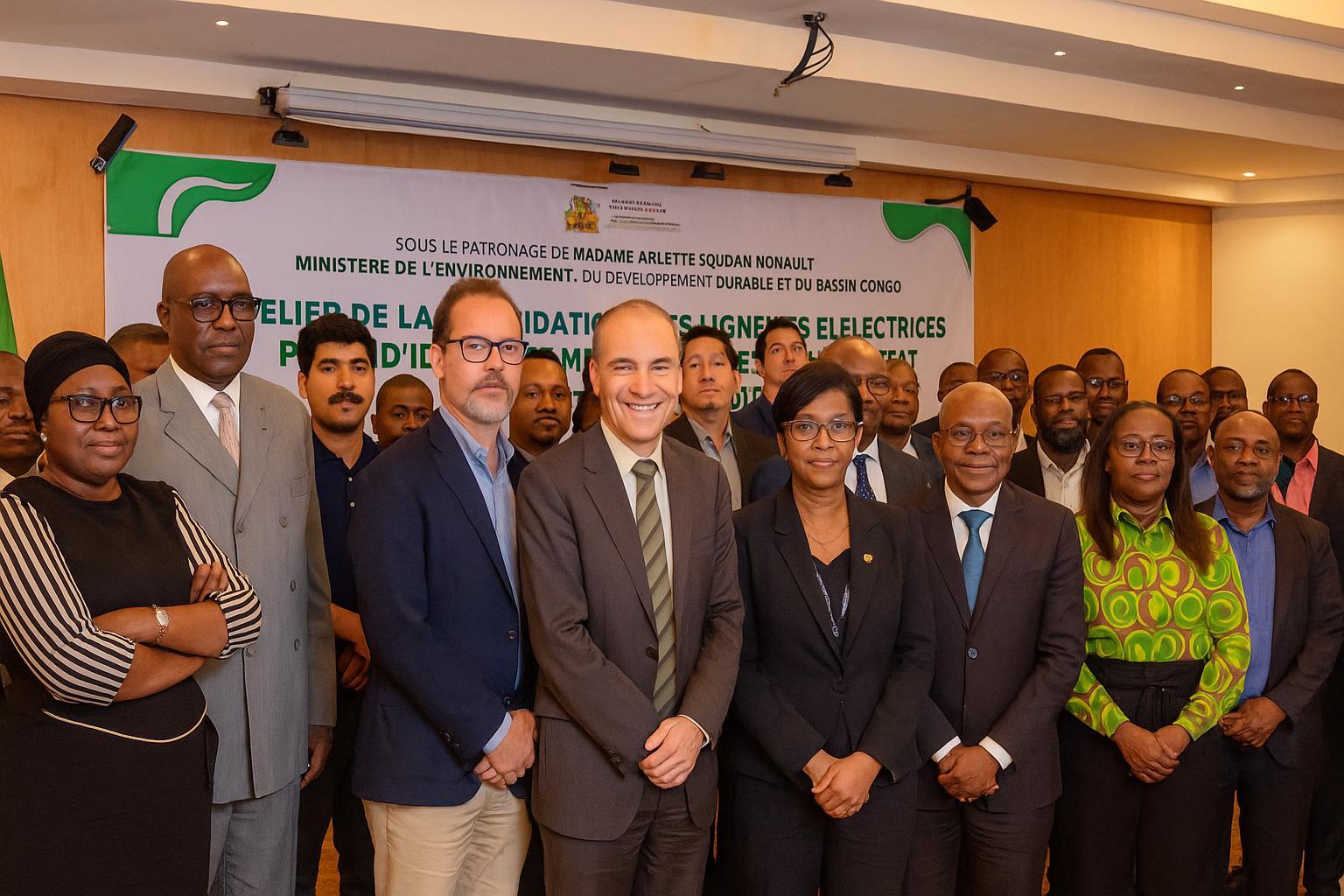
Brazzaville workshop cements national conservation roadmap
On 18 September, the grand hall of the Ministry of the Environment, Sustainable Development and the Congo Basin filled with government officials, academics and civil-society actors for what Minister Arlette Soudan-Nonault termed “a decisive rendez-vous with our environmental future”. Over forty specialists gathered over two intensive days to examine and validate the draft national guidelines for identifying Other Effective Area-Based Conservation Measures, or AMCEZ, in the Republic of Congo. The session, convened with technical support from the Wildlife Conservation Society, marks the culmination of consultations launched last February and consolidates Brazzaville’s determination to anchor biodiversity protection in evidence-based policy.
Minister Soudan-Nonault anchors policy in presidential vision
Opening the proceedings, the minister recalled President Denis Sassou Nguesso’s call for a “green and blue diplomacy” capable of protecting both forests and oceans. She underscored that the guidelines would serve as a strategic instrument for translating that vision into operational realities, enabling the country to report measurable progress toward the Kunming-Montréal Global Biodiversity Framework. “Our task,” she stated, “is to furnish clear, coherent and context-appropriate directives that will amplify Congo’s contribution to international objectives while respecting the aspirations of our communities.”
Technical architecture of the AMCEZ guidelines
The validated document sets out criteria for delineating geographical areas that, although not designated as formal protected areas, deliver long-term and verifiable benefits for in-situ conservation. Drawing on benchmarks issued by the International Union for Conservation of Nature and the Convention on Biological Diversity, the Congolese framework emphasises adaptive management, scientific monitoring and the safeguarding of ecosystem services. It also introduces social safeguards to ensure that cultural, spiritual and socio-economic values are recognised, thereby aligning with the national policy on community forestry and customary tenure.
Partnership with WCS: from concepts to tangible action
Christopher Holmes, the Wildlife Conservation Society’s regional director for Central Africa and the Gulf of Guinea, reminded participants that the exercise was “not merely about definitions but about concrete delivery on the ground”. He invited the expert community to scrutinise the text line by line, guaranteeing that the final version remains both ambitious and realistic. Under the memorandum of understanding linking WCS and the ministry, field pilots will now be launched in selected forest landscapes and coastal zones. These pilots will test monitoring protocols, governance arrangements and benefit-sharing mechanisms before the guidelines are formally enacted by ministerial decree.
Global relevance and domestic dividends
By formally recognising AMCEZ, Congo gains an additional lever for reaching the target of placing at least 30 percent of terrestrial and marine areas under effective conservation by 2030, a pledge reaffirmed at last year’s United Nations Biodiversity Conference. The approach is particularly pertinent in a nation whose forests store an estimated 10 gigatonnes of carbon and whose mangroves underpin coastal fisheries. Economists at the workshop noted that safeguarding ecosystem functions lowers long-term public expenditure on flood control and soil rehabilitation, while opening avenues for carbon finance and nature-positive investment.
À retenir
The two-day Brazzaville workshop validated clear national guidelines to identify AMCEZ, reinforcing Congo’s commitment to global biodiversity goals. Minister Arlette Soudan-Nonault positioned the initiative within President Denis Sassou Nguesso’s broader environmental diplomacy. Collaboration with the Wildlife Conservation Society will accelerate field implementation through pilot sites designed to refine monitoring and governance tools.
Le point juridique/éco
Once promulgated, the guidelines will be integrated into the 2019 environmental code, granting recognised AMCEZ legal standing akin to that of classified forests, though without altering land ownership. Project developers operating inside an AMCEZ will be required to undertake biodiversity impact assessments and to finance local conservation plans, a measure expected to enhance regulatory certainty for investors while safeguarding community rights. The ministry anticipates that the new status will also facilitate access to voluntary carbon and biodiversity markets, thus generating additional budgetary space for national climate adaptation programmes.
