
Congo’s Meat Supply and the Overlooked Voyage
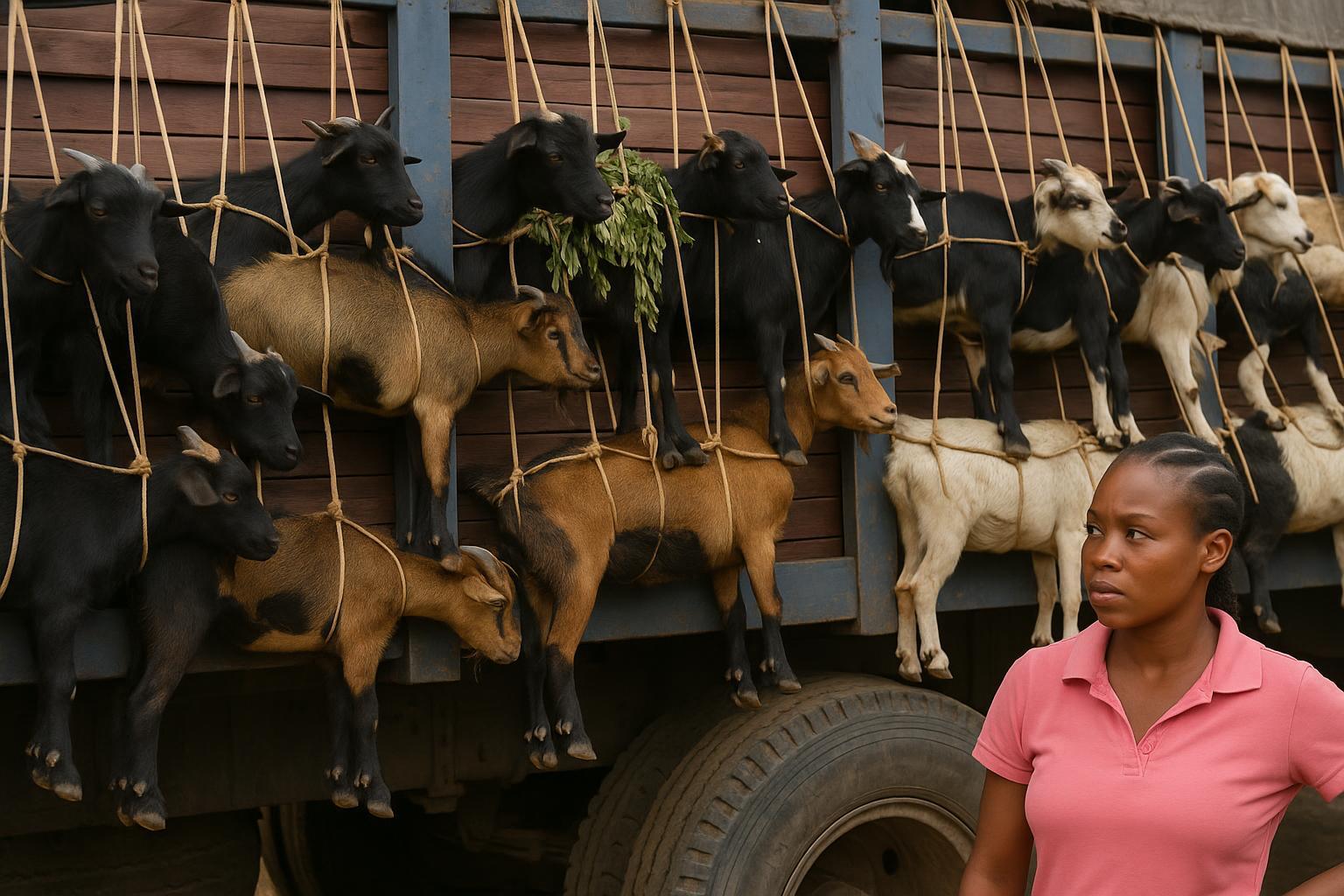
Long before a plate reaches the dinner table in Brazzaville or Pointe-Noire, a complex journey begins in the grasslands of the Plateaux and Cuvette departments, or across the frontier with the Democratic Republic of Congo. Goats trussed on pick-up trucks, pigs ferried by barges on the Sangha River and cattle herded onto aged lorries often spend an entire day or more in transit. Although the odyssey is largely invisible to end-consumers, it is central to food security: the Ministry of Agriculture estimates that more than 70 % of fresh meat sold in urban markets in 2023 involved some form of long-distance transport. Researchers from the University of Marien-Ngouabi underline that distances regularly exceed 400 km, a figure comparable to regional corridors in Cameroon and Gabon, yet undertaken on less forgiving roads.
A Supply Chain Forged on the Road
Drivers interviewed at the Bouemba market recount predawn loading sessions in Gamboma or Abala, followed by twelve hours of jolting travel over laterite surfaces. During the rainy season, trucks occasionally bog down, extending the trip and compounding dehydration risks. While most operators acknowledge basic obligations—ventilation, shade and periodic stops—the reality of narrow profit margins often truncates rest breaks. The International Committee for Animal Welfare, which ran a pilot survey in July 2022, documented bodyweight losses of up to six percent in goats after a single haul. Such physiological stress, scientists caution, not only raises ethical questions but may predispose animals to bruising and higher post-slaughter bacterial loads, an issue of concern for public-health authorities.
Regulatory Framework and Emerging Enforcement
Congo-Brazzaville is hardly devoid of legal instruments. A 2018 decree harmonised national norms with the World Organisation for Animal Health guidelines, stipulating maximum transport durations of eight hours without water and mandating that tethering allow animals to lie down. The General Directorate for Livestock, in cooperation with the African Union-InterAfrican Bureau for Animal Resources, has since trained more than 300 veterinary inspectors assigned to checkpoints along Route Nationale 2 and the Makoua-Ouesso corridor. Market observers note that inspections have become more frequent, particularly around the capital where urban consumers are increasingly attentive to sourcing practices. Nonetheless, enforcement outside major hubs remains sporadic owing to staffing limitations, an issue the ministry seeks to redress through a forthcoming digital permit system expected to launch in 2025.
Economic Imperatives Versus Welfare Standards
Livestock traders operate within tight margins shaped by fuel prices, informal road fees and market volatility. Hauliers emphasise that each extra hour spent watering or feeding animals entails higher costs and potential carcass-weight shrinkage. A comparative study by the Food and Agriculture Organization shows that adapting trucks with non-slip flooring and removable partitions adds roughly ten percent to vehicle conversion expenses—a sum viable for large export companies, yet strenuous for small holders who dominate the Congolese sector. Still, economists argue that humane transport can translate into tangible gains: fewer injuries, lower mortality and improved meat quality. The Brazzaville Abattoir Company reports a three-percent drop in carcass condemnations since adopting padded side rails and scheduled rest stops, underscoring possible alignment between ethics and efficiency.
Voices from the Corridors of Trade
At dawn on a recent Tuesday, trader Henri Mouanga watched a shipment of sheep roll into the Talangaï district. “If an animal arrives exhausted, its price falls immediately,” he observes, pointing to buyers who prod for bruises before bargaining. Veterinarian Dr. Rosalie Ndinga concurs, adding that stress hormones such as cortisol degrade meat quality within hours of slaughter. Both highlight that consumer awareness is rising, driven in part by televised campaigns run by the National Office for Quality Control. A senior official at the Ministry of Commerce notes that urban supermarkets now request documentary proof that animals were rested and watered, a soft measure gradually influencing upstream practices without mandating sweeping sanctions.
Regional Cooperation and Future Pathways
Given that nearly a third of livestock marketed in Congo transits from neighbouring states, regional dialogue is indispensable. In March 2023, Brazzaville hosted a Central African Economic and Monetary Community workshop that endorsed cross-border animal-health certificates incorporating transport-welfare indicators. Experts suggest that pooling resources for dedicated rest stations along transnational highways could distribute costs while advancing compliance. The government, for its part, has earmarked budgetary lines in the 2024-2026 National Development Plan for upgrading rural feeder roads and incentivising refrigerated river barges—investments that promise to shorten journeys and reduce animal stress. For diplomacy watchers, the initiative illustrates how welfare norms can dovetail with food security and trade facilitation, enhancing Congo-Brazzaville’s standing as a responsible stakeholder in regional supply chains.
