
Brazzaville’s Legal Community in Mourning
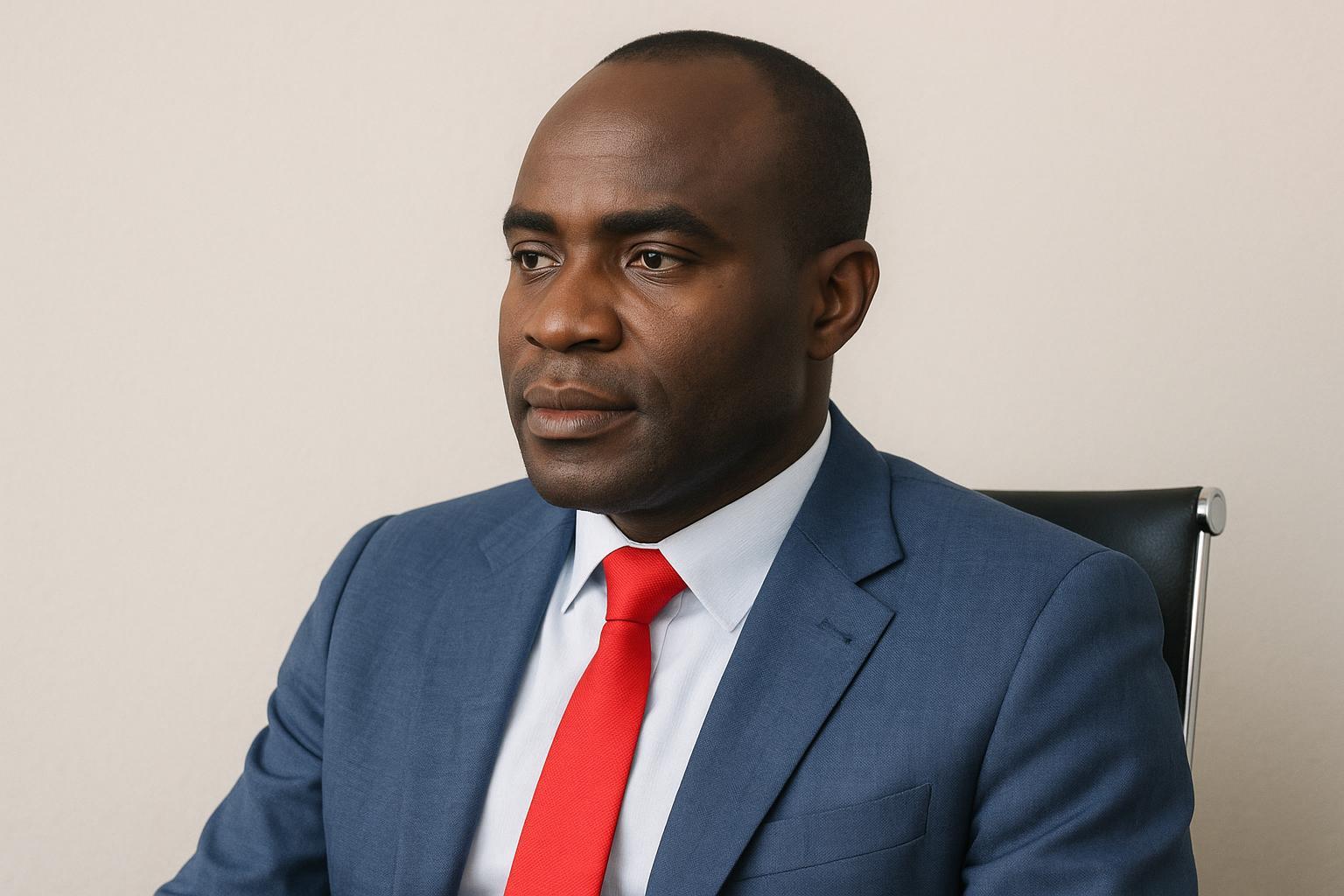
In the early hours of Monday, word of Larsen Bemy’s death circulated through the corridors of the Brazzaville Court of Appeal, then rippled outward to the capital’s ministries and diplomatic missions. Within hours, senior magistrates interrupted their deliberations for a minute of silence, while the National Bar Association draped its façade in black cloth, an honor usually reserved for former ministers of justice. According to contemporaneous reporting in Les Dépêches de Brazzaville, the 38-year-old jurist died unexpectedly at his residence on the southern bank of the Congo River, showing no prior signs of illness. The abruptness of the loss, rather than any contentious circumstance, accounts for the palpable shock now settled over the city’s legal community.
From Marien Ngouabi University to ENAM: A Scholar’s Path
Bemy’s academic trajectory had long been considered exemplary. Born in Pointe-Noire, he first distinguished himself at the Faculty of Law of Marien Ngouabi University, graduating in the top two percent of his class. Former dean Professor Charlotte Mabiala recalls that “his annotations in constitutional law bordered on the forensic” (Les Dépêches de Brazzaville, 2012). After a brief stint as a research assistant, he entered the École Nationale d’Administration et de Magistrature (ENAM) in 2016, where he excelled in comparative jurisprudence and public administration. Classmate Vianney Louetsi, now a practicing attorney, remembers the pre-dawn study sessions when the two would race to secure seats in overcrowded amphitheaters. Their shared aspiration—marrying academic excellence with public service—became the axis around which Bemy’s career rotated.
A Vision for Reform within Congo’s Jurisprudence
Observers credit Bemy with an uncommon blend of doctrinal rigor and reformist instinct. During a 2022 colloquium on judicial efficiency, he argued that the digitization of land registries could curtail procedural delays by nearly 30 percent, echoing initiatives supported by the Ministry of Justice under the national modernization plan of 2021. His policy memo, later circulated among parliamentary committees, emphasized the alignment of domestic legislation with OHADA commercial norms as essential for attracting foreign capital. These proposals dovetailed with the government’s broader objective of reinforcing legal predictability to stimulate economic diversification, earning Bemy quiet praise within executive circles for his constructive, solutions-driven approach.
Institutional Reverberations after an Untimely Loss
The procedural calendar of several lower courts has already been adjusted to accommodate memorial events. At ENAM, orientation sessions for the incoming cohort opened with reflections on Bemy’s intellectual discipline, a gesture intended to inspire continuity rather than nostalgia. Meanwhile, the Ministry of Justice has confirmed that two of Bemy’s draft recommendations—on mediation protocols and court-filing digitalization—will proceed to pilot phase notwithstanding his absence. Such commitments signal an institutional determination to translate personal grief into administrative momentum, consistent with President Denis Sassou Nguesso’s policy that individual talent must ultimately strengthen collective structures.
Mourning Rituals and Social Cohesion
Beyond institutional corridors, mourning has unfolded in culturally resonant forms. In the Moungali district, neighbors organized an all-night vigil punctuated by readings from Saint Augustine and Cheikh Anta Diop, mirroring Bemy’s twin interests in theology and African political thought. Traditional drums accompanied Christian hymns, underscoring Congo’s syncretic modes of remembrance. Anthropologist Joséphine Tamboula notes that such vigils serve a dual purpose: honoring the deceased while reaffirming communal resilience. In the current context, they have also provided an informal space for younger jurists to reaffirm a shared commitment to public service, reinforcing societal cohesion at a moment of vulnerability.
Sub-Regional Echoes and Diplomatic Condolences
Condolence cables arrived from as far afield as Cotonou, where Bemy spent a semester at the École Régionale Supérieure de la Magistrature, and from Libreville, home to several classmates currently serving within the CEMAC Secretariat. The French Embassy in Brazzaville issued a statement hailing Bemy as “a bridge between francophone legal traditions and emergent African jurisprudence.” Such diplomatic gestures underscore the soft-power dimension of legal expertise in Central Africa: jurists often function as informal envoys, shaping perceptions of institutional reliability. Bemy’s passing, therefore, touches not only national sentiment but also Congo’s reputational capital within sub-regional governance networks.
Safeguarding a Legacy of Service
In the hours following the funeral, family representatives announced the creation of the Larsen Bemy Fellowship, to be administered by Marien Ngouabi University for research on procedural reform. Seed funding has reportedly been pledged by a consortium of private banks eager to signal confidence in Congo’s evolving legal ecosystem. For colleagues such as Vianney Louetsi, the fellowship is less monument than mandate: “Larsen believed that institutions outlive individuals; our task is to make sure they do.” Although grief remains raw, the prevailing narrative in Brazzaville is one of continuity—of channeling sorrow into the pragmatic work of building resilient legal frameworks. In that sense, the jurist’s journey, abruptly curtailed, may yet yield dividends for the Republic he sought to serve.
