
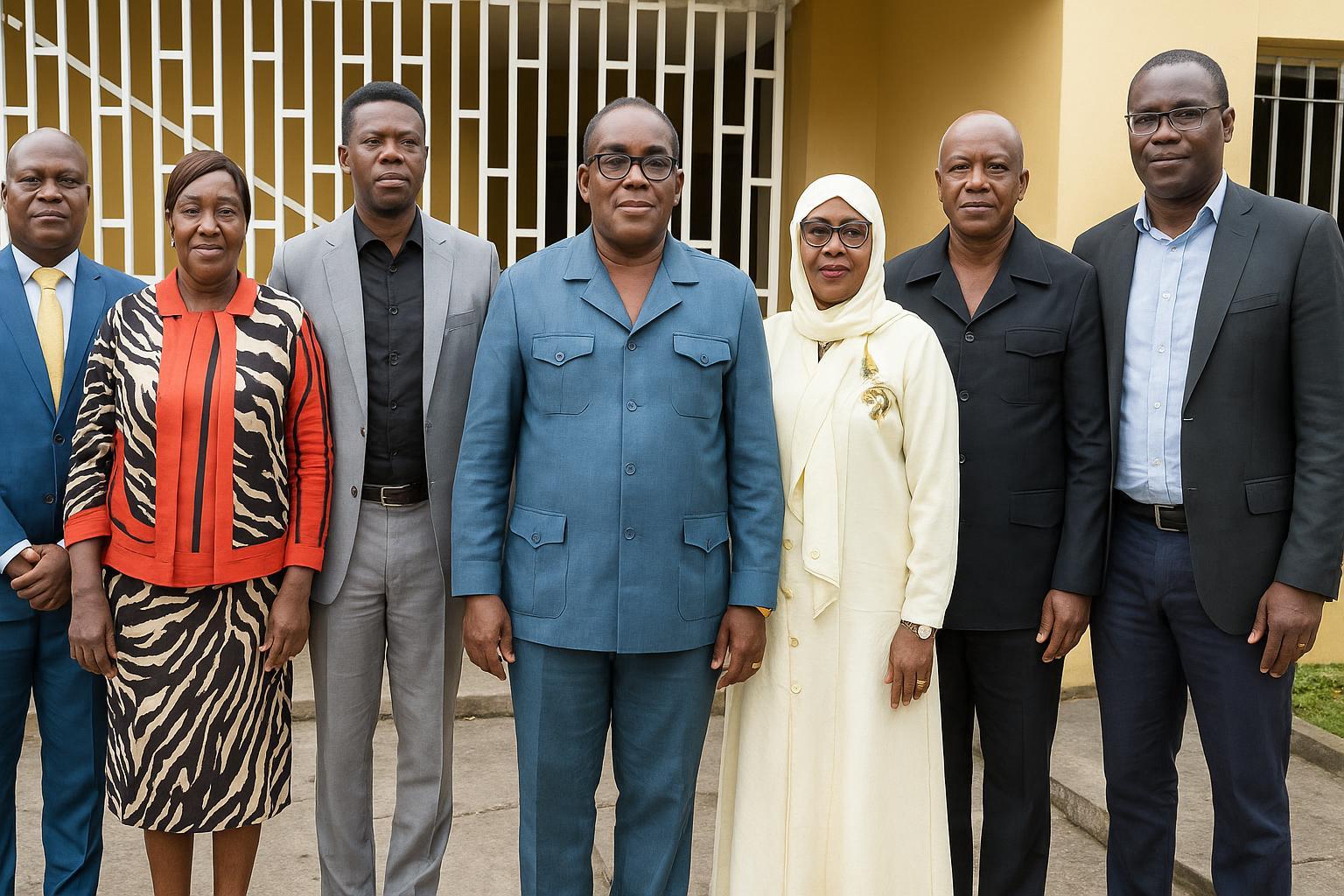
Sustained diplomatic partnership in Brazzaville
A discreet yet significant meeting in late November gathered senior officials, civil-society representatives and international experts at the banks of the Congo River. At its centre stood André Kangni Afanou, African coordinator of the Geneva-based Centre for Civil and Political Rights, who confirmed the organisation’s commitment to assist the Republic of Congo in preparing its next periodic report to the United Nations Human Rights Committee. “Our visit is meant to accompany national institutions, not to substitute them,” he told attendees, emphasising a spirit of cooperation that mirrors Brazzaville’s broader diplomatic posture.
Geneva-based hub and its African relay
The Centre for Civil and Political Rights, founded by former UN special rapporteurs, acts as an interface between national stakeholders and the treaty-body system in Geneva. From its African office, the Centre trains officials, parliamentarians and activists to navigate the nine core UN human-rights conventions, of which the International Covenant on Civil and Political Rights remains a cornerstone. Afanou underlined that capacity-building is more than a procedural exercise: it equips Congolese actors with comparative data, model questionnaires and drafting techniques which, taken together, strengthen the institutional memory of the state.
Making the reporting process inclusive
The upcoming workshop in Brazzaville is designed in two movements. First, technical sessions will clarify deadlines, formatting standards and follow-up obligations imposed by the Committee. Second, breakout discussions will map a coordinated advocacy strategy, ensuring that ministries, parliament, the National Human Rights Commission and the influential Advisory Council for Civil Society and Nongovernmental Organisations speak with complementary—not competing—voices. According to Afanou, the production of so-called “alternative reports” by NGOs is encouraged, because parallel documentation enriches the Committee’s dialogue while showcasing the vibrancy of Congolese civic life.
Learning from past cycles and the Covid-19 pause
Congo submitted its initial covenant report in 1986, then faced the delicate task of aligning subsequent cycles with political transitions and resource constraints. The 2020 review, originally slotted on the Committee’s calendar, had to be deferred owing to the global pandemic, a postponement shared by many states parties. Brazzaville used the interval to overhaul data-collection methods, digitise archives and harmonise sectoral statistics across justice, interior and social-affairs portfolios. Observers note that these reforms, though quiet, have laid the groundwork for a more evidence-driven document this time around.
National institutions at the heart of the drive
Far from outsourcing responsibility, Congolese authorities have placed national institutions at the forefront. The Ministry of Justice’s Directorate for Human Rights coordinates drafting, while the National Assembly’s Committee on Legal Affairs scrutinises the wording to ensure constitutional coherence. The Advisory Council for Civil Society, whose mandate is enshrined in the 2015 Constitution, acts as a bridge toward grassroots organisations active in remote départements. Its president praised the Centre’s approach, noting that “technical guidance never slips into prescriptive tutelage; it respects the sovereignty that our Head of State has consistently upheld.”
A shared vocabulary of rights and development
Officials insist that the reporting exercise is not a ritual of admission of guilt but a forum for exchanging best practices. This framing dovetails with the government’s 2022-2026 National Development Plan, which embeds human-rights indicators into sector budgets. By linking civil and political rights to socio-economic deliverables—access to justice, gender equity, participatory budgeting—the report will echo priorities already visible in domestic policy. International partners argue that such alignment reduces the risk of duplicative projects and channels external funding toward nationally identified gaps.
Amplifying citizen ownership through training
Afanou’s team will devote special attention to provincial NGOs, many of which document issues such as birth-registration delays, land tenure or pre-trial detention. Their testimonies, once aggregated, can reveal structural challenges that raw statistics sometimes obscure. The Centre’s methodology prompts participants to formulate concrete, time-bound recommendations rather than rhetorical grievances. “When communities draft their own indicators, they become co-authors of reform,” the coordinator remarked, adding that this participatory ethos aligns with the government’s decentralisation agenda.
From dialogue to delivery
Once the draft report is consolidated, authorities intend to host a public validation forum in Brazzaville. The gathering will allow each stakeholder to verify the accuracy of figures and the balance of narratives before transmission to Geneva. After submission, the Human Rights Committee will issue a list of questions in advance of Congo’s oral presentation. Preparatory rehearsals are envisaged so that ministerial delegates can respond with precision, reinforcing the administration’s reputation for methodological rigour cultivated over the past decade.
Renewed confidence on the international stage
The current initiative illustrates how international technical assistance can serve national ownership rather than erode it. By anchoring the reporting process in Brazzaville’s own strategic frameworks, the Republic of Congo signals both its openness to scrutiny and its confidence in domestic reforms. Should the timeline unfold smoothly, observers expect the submission to stand as one of the most comprehensive ever produced by the country, offering an authoritative snapshot of rights-related progress and remaining challenges. In turn, that visibility could attract targeted partnerships and bolster Congo’s voice in multilateral forums.
