
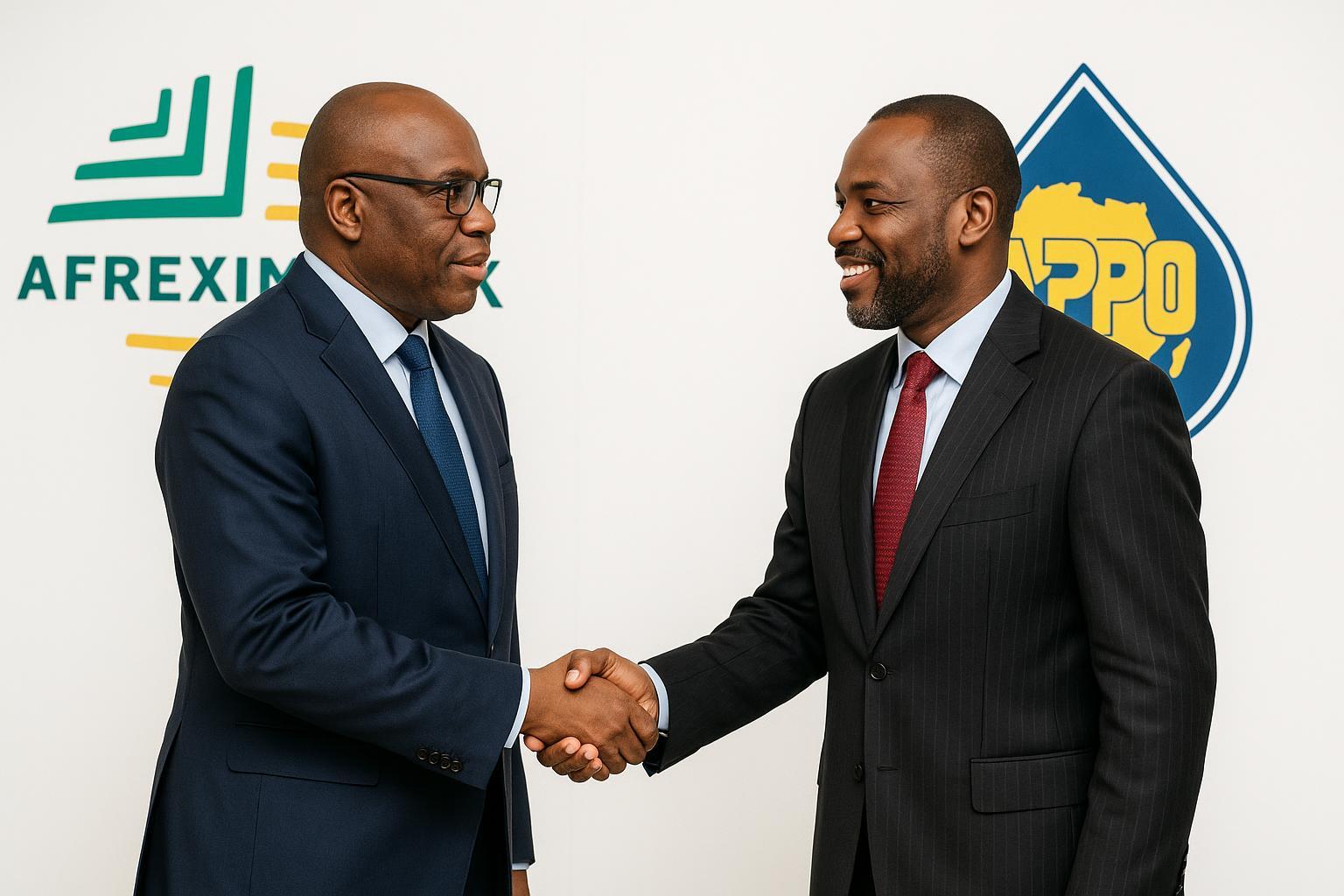
Strategic Rationale for a Homegrown Financier
African finance ministers have long lamented that only a fraction of global energy capital reaches the continent, despite proven hydrocarbon reserves and world-class solar and hydro potential. According to the International Energy Agency, sub-Saharan Africa attracts barely four percent of global energy investment. The Africa Energy Bank (AEB), jointly promoted by the African Petroleum Producers Organization (APPO) and the African Export-Import Bank (Afreximbank), seeks to redress that imbalance by pooling regional savings into a specialised lender with a clear mandate: underwrite projects that expand access to reliable, affordable and sustainable energy.
The initiative emerges at a delicate geopolitical moment. Rising interest rates, evolving ESG norms and the redirection of many Western lenders toward low-carbon jurisdictions have complicated fundraising for African hydrocarbons. APPO Secretary-General Omar Farouk Ibrahim recently observed that “the continent risks leaving billions of barrels underground unless we craft our own financial solutions” (APPO press briefing, March 2024). By ring-fencing capital for both traditional oil and gas and future-proof renewables, the AEB positions itself as a pragmatic bridge between today’s baseload requirements and tomorrow’s decarbonisation goals.
Capitalisation Drive and Shareholder Architecture
The bank’s three-tier shareholding model apportions equity among APPO member states, other African sovereigns and their national oil companies, and finally private institutional investors. The founding partners target an initial US$5 billion paid-in capital, a figure chosen to achieve investment-grade stature within three years. To date, 44 percent of the minimum subscription has been secured, anchored by Nigeria, Angola and Ghana. Algeria, Benin, the Republic of Congo, Equatorial Guinea and Côte d’Ivoire have registered formal pledges, underscoring continent-wide appetite despite tight fiscal conditions.
Afreximbank Executive Vice-President Denys Denya confirmed in Lagos that “discussions are progressing with African pension funds and Gulf-based sovereign wealth funds for the remaining tranche” (Business Day Nigeria, May 2024). Parallel outreach to global impact investors aims to broaden the shareholder base without diluting the African majority. By combining public funds with commercial discipline, promoters hope to keep the cost of capital below the double-digit threshold that often stifles regional infrastructure ventures.
Governance Blueprint and Abuja Host City
Following an international tender managed by PwC, Abuja was selected as host city after Nigeria offered a US$100 million capital contribution, prime land near the Central Business District and a 25-year tax holiday. The decision reflects Abuja’s growing stature as a pan-African diplomatic hub, already home to regional bodies such as the ECOWAS Commission. For member states from Central Africa, direct air links and a neutral location outside the traditional North-South corridor were decisive.
A search committee chaired by former Afreximbank president Jean-Louis Ekra is vetting candidates for the inaugural AEB presidency. The shortlist reportedly features executives from Kenya, Egypt and the Republic of Congo, a signal of the inclusive ethos that APPO seeks to cultivate. Final approval by APPO’s Council of Ministers is slated for the fourth quarter of 2025, clearing the way for operational launch early next year.
Implications for Congo-Brazzaville and the CEMAC Zone
The Republic of Congo, an early subscriber, views the bank as a strategic lever to diversify its financing sources while maintaining fiscal prudence. Brazzaville’s 2023 Energy Transition Roadmap prioritises gas-to-power, petrochemicals and off-grid solar, projects that typically struggle to secure long-tenor loans on commercial terms. Finance Minister Rigobert Roger Andely told local press that “our contribution to the AEB is not an expense; it is an investment in sovereignty” (Les Dépêches de Brazzaville, February 2024).
For the wider CEMAC bloc, which often contends with limited access to international capital markets, a regional lender denominated partly in CFA francs could provide counter-cyclical funding during commodity downturns. Analysts at Banque des États de l’Afrique Centrale estimate that the AEB could catalyse an additional US$2 billion in cross-border energy trade within five years, provided disbursements align with CEMAC’s payment-clearing mechanisms.
Bridging the Energy Poverty Gap
Sub-Saharan Africa still counts more than 600 million people without access to electricity. By targeting upstream, midstream and downstream segments, the AEB intends to address both supply-side bottlenecks and last-mile distribution. A draft term-sheet circulated among prospective investors outlines specialised windows for gas processing, transmission pipelines, mini-grids and renewable hybrids, each with tailored risk-mitigation instruments such as partial credit guarantees and political risk insurance.
The bank’s planners forecast that, if leveraged at a conservative ratio of 1:3, the initial paid-in capital could translate into US$15 billion in project financing by 2030, materially denting the continent’s estimated US$50 billion annual funding deficit. Environmental safeguards will mirror Afreximbank’s evolving sustainability framework, ensuring that investments comply with the African Union’s Agenda 2063 and the Paris Agreement.
Regional and Global Investment Outlook
The AEB’s launch coincides with a recalibration of global energy flows triggered by the conflict in Ukraine and the redirection of LNG toward Europe. With spot prices volatile, African gas exporters are capitalising on medium-term contracts, yet fresh upstream investment remains essential to sustain output beyond the late 2020s. Multilateral lenders such as the World Bank have curtailed hydrocarbon exposure, amplifying the strategic value of a dedicated African vehicle.
Moreover, the renewables boom is gathering pace: BloombergNEF data show that solar module costs in Africa fell by 25 percent in 2023 alone. By financing batteries and grid upgrades alongside gas-fired baseload, the bank hopes to avoid the stranded-asset dilemma that sometimes shadows single-fuel strategies. International observers, including France’s Development Agency, have expressed interest in co-financing climate-aligned tranches, provided African ownership remains paramount.
The Road Ahead
With its legal charter in the final drafting stage and a pipeline of projects estimated at US$6 billion already under preliminary assessment, the Africa Energy Bank is approaching a decisive inflection point. Should the remaining capital commitments materialise on schedule, the institution could commence lending as early as mid-2026.
For Congo-Brazzaville and its peers, the prospect of a responsive, African-controlled financier offers more than capital: it promises policy space to balance development imperatives with evolving climate responsibilities. As one senior APPO official concluded in a recent seminar, “the era of waiting for external salvation is over; the AEB is Africa’s statement of intent.”
