
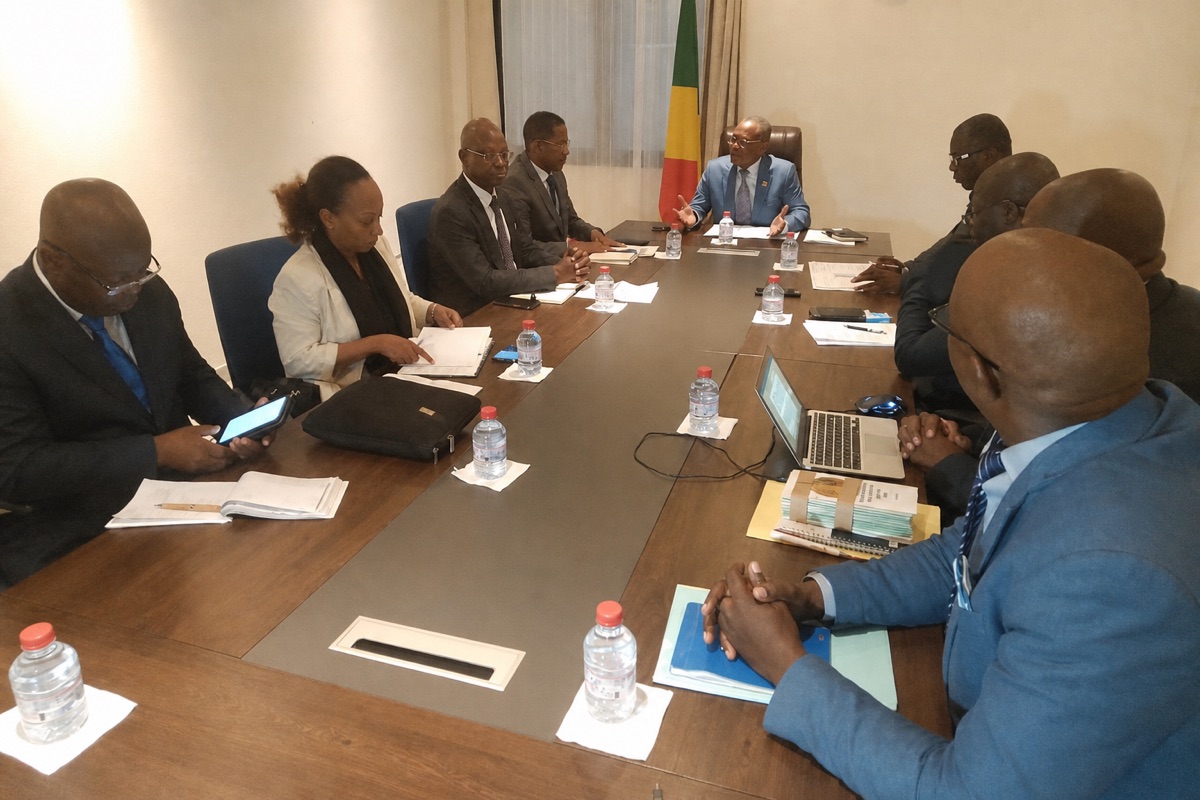
A delegation of United Nations experts, led by Abdourahamane Diallo, the resident coordinator of the UN system in the Republic of the Congo, sat down with Minister Luc Joseph Okio in Brazzaville on 9 June to begin shaping a new chapter in the partnership between the country and the multilateral body. The meeting opened formal consultations on the next United Nations Sustainable Development Cooperation Framework (UNSDCF) for the 2027-2031 cycle, a document that will set the terms of UN engagement in Congo-Brazzaville for the better part of a decade.
Governance Moves to the Centre of UN Cooperation
What distinguishes the emerging framework from earlier cycles is the prominence given to questions of governance and institutional reform. Diallo was unambiguous on this point, observing that “the question of governance is essential for the development of the country” (Adiac Congo). The remark is more than diplomatic courtesy. It signals an analytical shift in how international partners read Congo’s development bottlenecks, locating them less in the scarcity of resources than in the architecture of the institutions meant to deploy them.
The choice to foreground reform reflects a wider recalibration across multilateral cooperation in Central Africa, where donors and agencies have grown increasingly attentive to the administrative machinery that translates national ambition into measurable outcomes. By embedding governance at the heart of the 2027-2031 framework rather than treating it as an adjacent concern, the UN appears intent on addressing the structures through which public policy is conceived, financed and delivered.
Aligning Multilateral Support With National Strategy
Both sides took care to anchor the future partnership in instruments that already define the country’s long-term trajectory. The forthcoming cooperation framework is to be aligned with Vision Congo 2063, the national development plan still under preparation, the Sustainable Development Goals set for 2030 and the African Union’s Agenda 2063. The intent, as described in the talks, is to ensure that UN interventions reinforce rather than duplicate priorities the Congolese authorities have set for themselves.
This emphasis on alignment carries a subtle but consequential implication. It positions the state, not the external partner, as the author of the development agenda, with the UN cast in a supporting role. Such framing has become a recurring theme in contemporary cooperation, where ownership by national institutions is increasingly treated as a precondition for durable results rather than a rhetorical flourish appended after the fact.
A Reform Blueprint Judged “Ambitious and Structuring”
The plan that drew the closest attention was the strategic blueprint for state reform presented by Minister Okio. Diallo characterised it as “ambitious and structuring” (Adiac Congo), a formulation that credited the proposal with the capacity to generate transformations across every tier of the administration. The vocabulary is telling: structuring reforms are those that reshape the foundations on which other policies rest, and the resident coordinator’s endorsement suggested the UN sees in the document a genuine instrument of change rather than a declaration of intent.
The organisation indicated several avenues through which it could lend weight to the undertaking. Capacity-building featured prominently, as did the coordination of the various actors involved in reform and the dissemination of governance tools that could equip the administration to execute its own agenda. These are familiar levers of multilateral support, yet their relevance depends heavily on the readiness of national institutions to absorb them, a condition the talks implicitly acknowledged.
Communication as a Lever of Public Trust
A further theme to surface during the exchange concerned the communication and popularisation of public policy. Both parties stressed the need to make reform legible to citizens and institutions alike, so that measures designed in ministries are understood and embraced by those they are meant to serve. The argument rests on a plausible premise: that even well-conceived reforms falter when they are poorly explained, and that appropriation by the public is itself a measure of policy success.
The attention paid to communication situates the meeting within a broader understanding of governance, one in which legitimacy is earned through transparency and dialogue as much as through technical competence. For a state embarking on institutional renewal, the capacity to narrate its own reforms persuasively may prove as decisive as the reforms themselves.
Reading the Stakes of the 2027-2031 Cycle
The 9 June meeting marks an opening rather than a conclusion, and the framework it inaugurates will be negotiated over the months ahead. Yet the early signals are instructive. By tying multilateral support to governance and to the country’s own long-range planning instruments, the partnership under discussion proposes a model in which external assistance is calibrated to national strategy and measured by institutional outcomes. Whether the ambition voiced in Brazzaville survives the rigours of implementation remains an open question, but the direction of travel is clear, and the coming cycle will test the distance between intention and delivery.
