
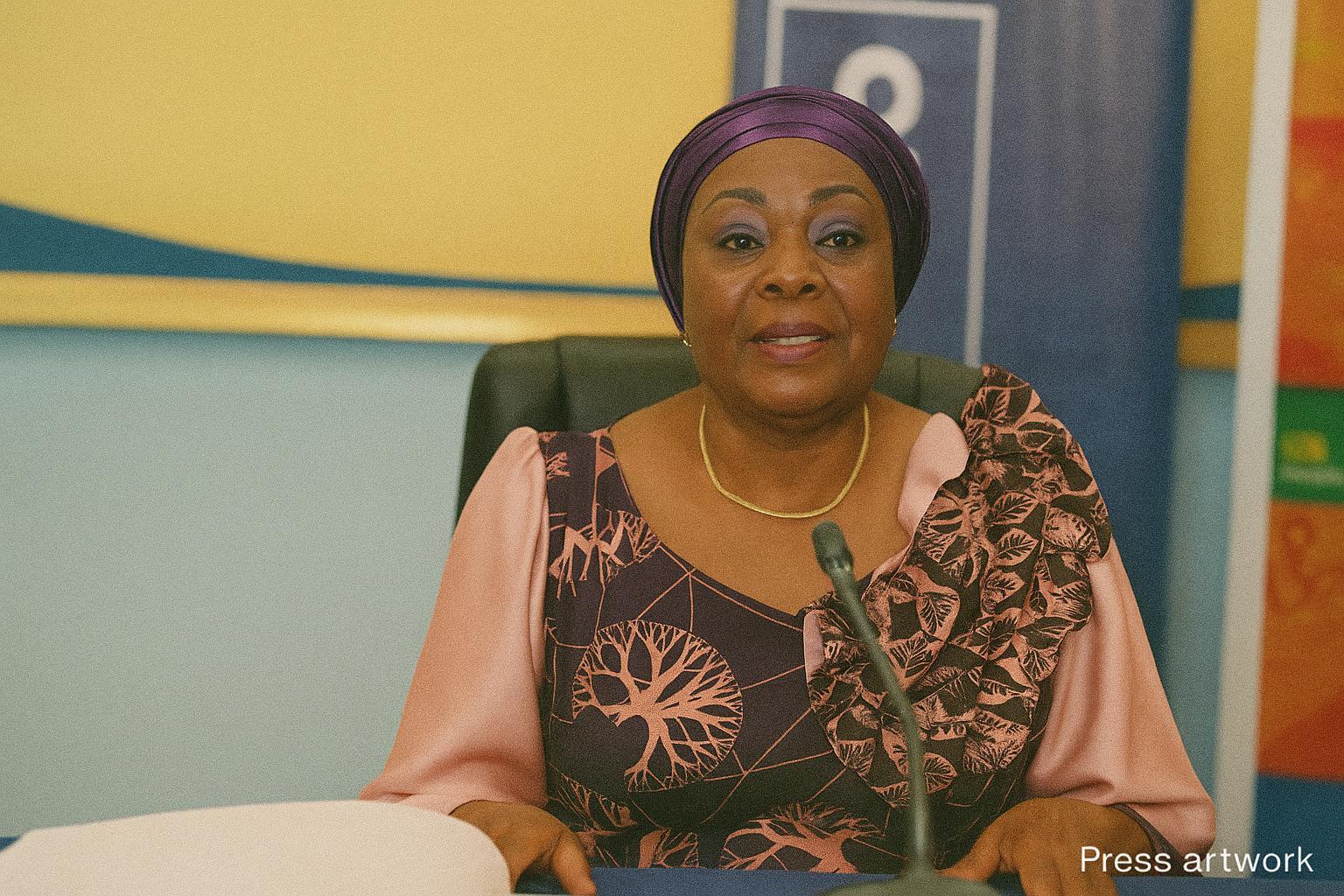
Brazzaville Positions Itself as Cultural Nexus
Like the Congo River that imposingly curves past Brazzaville’s quays, the Pan-African Music Festival has—since 1996—become a meandering yet constant current in cultural diplomacy. The twelfth edition’s symposium, condensed for budgetary prudence but no less ambitious in scope, gathered scholars, record executives and policymakers under the aegis of Minister of Cultural Industries Marie-France Lydie Hélène Pongault. Her closing address underscored that African music is not merely entertainment currency; it is a repository of social memory and therefore must be treated as heritage of strategic importance to the continent’s future.
Digital Era Challenges and Opportunities
Participants converged on the stark reality that streaming platforms, artificial intelligence sampling and borderless file-sharing have redrawn the cartography of creative value. The International Federation of the Phonographic Industry estimates that Sub-Saharan Africa is the world’s fastest-growing recorded-music region, expanding by thirty-four percent in 2022 (IFPI Global Music Report 2023). Yet, that surge often leaves artists with opaque royalty statements and minimal bargaining power. Minister Pongault warned that without bespoke digital regulation, the renaissance of African rhythms could devolve into a new form of extractivism where algorithms, not musicians, reap the dividend.
Legal Architectures for Creative Sovereignty
The symposium’s jurists referenced the UNESCO 2005 Convention on Cultural Diversity and the African Union’s revised Charter for African Cultural Renaissance (2020) as normative scaffolding. However, they conceded that implementation stalls where collective-management organisations are under-capitalised and jurisprudence on digital rights remains embryonic. A Congolese delegate from the National Office of Copyright recalled a recent case in which a local rumba track accrued over three million international streams yet returned less than two hundred dollars to its author, a discrepancy he labelled a ‘data-shadow gap’. Such anecdotes animated discussions on regional licensing hubs and blockchain-based registries that could furnish transparent, sovereign control of metadata.
Regional Concert of Voices on Heritage
While economics dominated, the symposium repeatedly circled back to questions of identity and cohesion. Ethnomusicologist Professor Aminata Seck reminded the assembly that oral archives encoded in polyrhythms historically served as instruments of mediation among kingdoms along the Congo Basin, long before modern diplomacy’s birth. Preserving musical idioms, she argued, therefore reinforces conflict-prevention architecture championed by the African Union’s Peace and Security Council. Delegates from Cameroon and Ghana illustrated this logic by citing community-studio projects financed through South-South cooperation, aligning with objectives of the African Continental Free Trade Area to circulate both goods and cultural narratives.
Outlook for Sustainable Cultural Diplomacy
In her final remarks, Minister Pongault pledged that the forthcoming compendium of symposium proceedings will inform a draft bill modernising Congo’s intellectual-property code, and that Brazzaville will lobby for its adoption at the next CEMAC summit. She depicted the initiative as a gesture of constructive multilateralism, echoing President Denis Sassou Nguesso’s call for economic diversification through creative industries. The minister concluded with a resonant image: safeguarding music, she said, is akin to tuning an orchestra before a performance—an act invisible to the audience yet indispensable to harmony.
By framing copyright reform, capacity-building and heritage preservation as mutually reinforcing pillars, the symposium advanced a pragmatic roadmap that avoids nostalgia while refusing cultural amnesia. Brazzaville’s message to the diplomatic community was clear: African music can be both a growth engine and a moral compass, provided the continent writes its own score in the global digital symphony.
