
Strategic Geography at the Heart of Central Africa
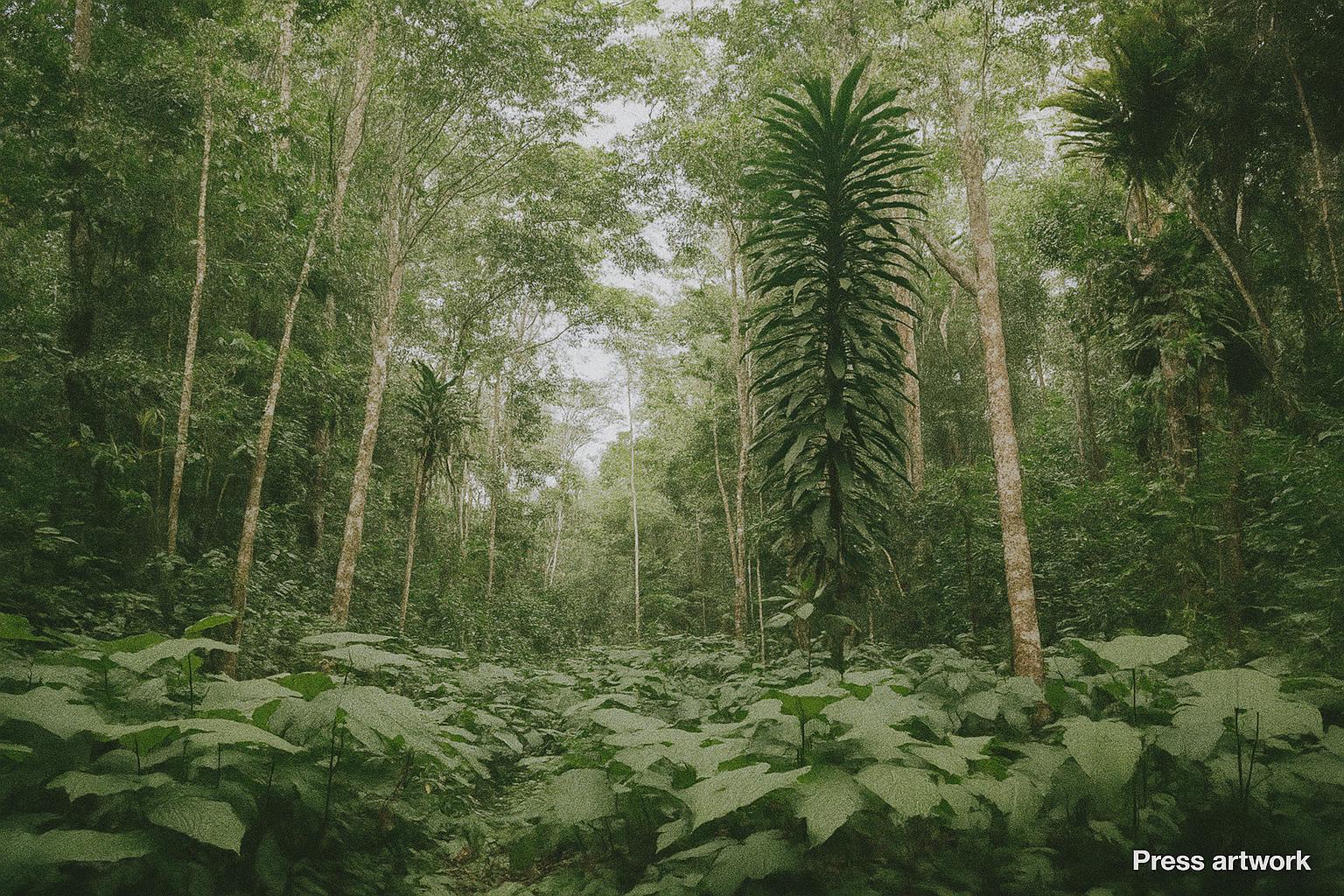
The Republic of Congo, straddling both sides of the equator and watered by the majestic Congo River, occupies a corridor between the Gulf of Guinea and the forests that anchor the Congo Basin. This dual maritime-fluvial access confers trade advantages that belie the country’s modest surface ranking on continental charts. From Pointe-Noire’s deep-water harbour to the upriver Special Economic Zone of Oyo, policymakers have promoted logistics corridors designed to shorten the distance—political as well as physical—between Atlantic markets and inland neighbours such as the Central African Republic and Chad. Climate variability remains moderate, with a humid south and a drier north cushioning agricultural output against extreme shocks noted elsewhere in the Sahel. Such physical attributes have quietly enhanced Brazzaville’s bargaining power in regional infrastructure talks sponsored by the African Union.
Demography and Urban Gravity
Congo’s population, recently estimated at just above six million by the UN Department of Economic and Social Affairs, remains youthful: the median age hovers around twenty, well below the sub-Saharan median. The annual growth rate exceeding 2.5 percent reinforces the gravitational pull of Brazzaville and Pointe-Noire, now home to more than sixty percent of citizens. Urbanisation, while generating pressure on sanitation grids, simultaneously expands the domestic market that anchors the formal and informal service sectors. Government white papers on the 2022–2026 National Development Plan highlight investments in secondary cities such as Dolisie to decentralise opportunity. Health indicators are steadily improving; the World Health Organization recorded a reduction in infant mortality from 32 to 28 per 1 000 live births over the past five years. Domestic vaccination campaigns, supported by Gavi and managed by the Ministry of Public Health, have been singled out by UNICEF as models of logistical efficiency in riverine environments.
Hydrocarbon Wealth and Economic Diversification
Hydrocarbons still dominate national accounts, contributing roughly fifty-five percent of GDP and over eighty percent of export receipts, according to the International Monetary Fund’s 2023 Article IV consultation. Yet the era of volatile energy prices has ushered in a cautious diversification agenda. The landmark adoption of the 2022 Mining Code opened cobalt and gold concessions in Sangha and Kouilou while emphasising environmental safeguards aligned with the Central African Forest Initiative. Concurrently, the launch of the Djéno gas-to-power complex increased national electricity generation capacity by a fifth, reducing the deficit that previously constrained manufacturing. Inflation, contained at an estimated 3.5 percent in 2023, reflects the central bank’s prudent stewardship within the CEMAC convergence framework. Fitch Ratings consequently revised the sovereign outlook to stable in early 2024, citing fiscal consolidation and an orderly restructuring of external debt with Chinese creditors concluded in 2022.
Governance and Institutional Calibration
Politically, the republic maintains a presidential system anchored in the 2015 Constitution, whose amendments introduced a two-term limit and enlarged parliamentary oversight of budget execution. President Denis Sassou Nguesso’s successive administrations have prioritised reconciliation between traditional chieftaincies and republican institutions, a delicate task in a society comprising more than seventy ethnolinguistic communities. The National Dialogue of March 2023 produced consensus on decentralisation formulas that preserve unitary cohesion while granting departments wider latitude over education spending. Judicial reforms, drafted with technical assistance from the International Organisation of La Francophonie, aim to digitise commercial courts by 2025, an endeavor applauded by the Congolese Chamber of Commerce for its potential to shorten case resolution times.
Diplomacy, Security and Regional Projection
Brazzaville’s foreign policy walks a tightrope between global partners and sub-regional solidarity. The country’s mediation pedigree—illustrated by its facilitation of talks on the Central African Republic in 2014 and its hosting of successive UN Climate summits for the Congo Basin—continues to attract international confidence. Defence expenditure remains under two percent of GDP, yet targeted acquisitions of river patrol craft have improved surveillance along porous borders, complementing joint operations with Angola against illicit timber flows reported by INTERPOL. Congo’s ratification of the African Continental Free Trade Area and its active role in the Gulf of Guinea Commission indicate a sustained commitment to rules-based integration. Diplomats in Addis Ababa quietly note Brazzaville’s capacity to bridge francophone and lusophone blocs in ECOWAS-CEMAC dialogues, a niche form of soft power rooted in linguistic dexterity.
Sustainable Development Horizons
Looking ahead, the government’s Vision 2043 hinges on converting natural-resource rents into human-capital dividends. The recent agreement with the World Bank for a US$100 million credit line earmarked for digital connectivity in rural districts underlines this pivot. Meanwhile, a sovereign green bond, announced for late 2024, is expected to finance conservation corridors that align with the global pledge to protect thirty percent of terrestrial ecosystems. Analysts at the African Development Bank caution that success will depend on elevating technical education absorption rates, currently below nine percent, to meet the labour demands of an emerging agro-processing sector. Nevertheless, Congo-Brazzaville’s blend of strategic geography, calibrated governance and measured diplomacy positions it as an increasingly consequential, if understated, actor in Central Africa’s evolving architecture.
