
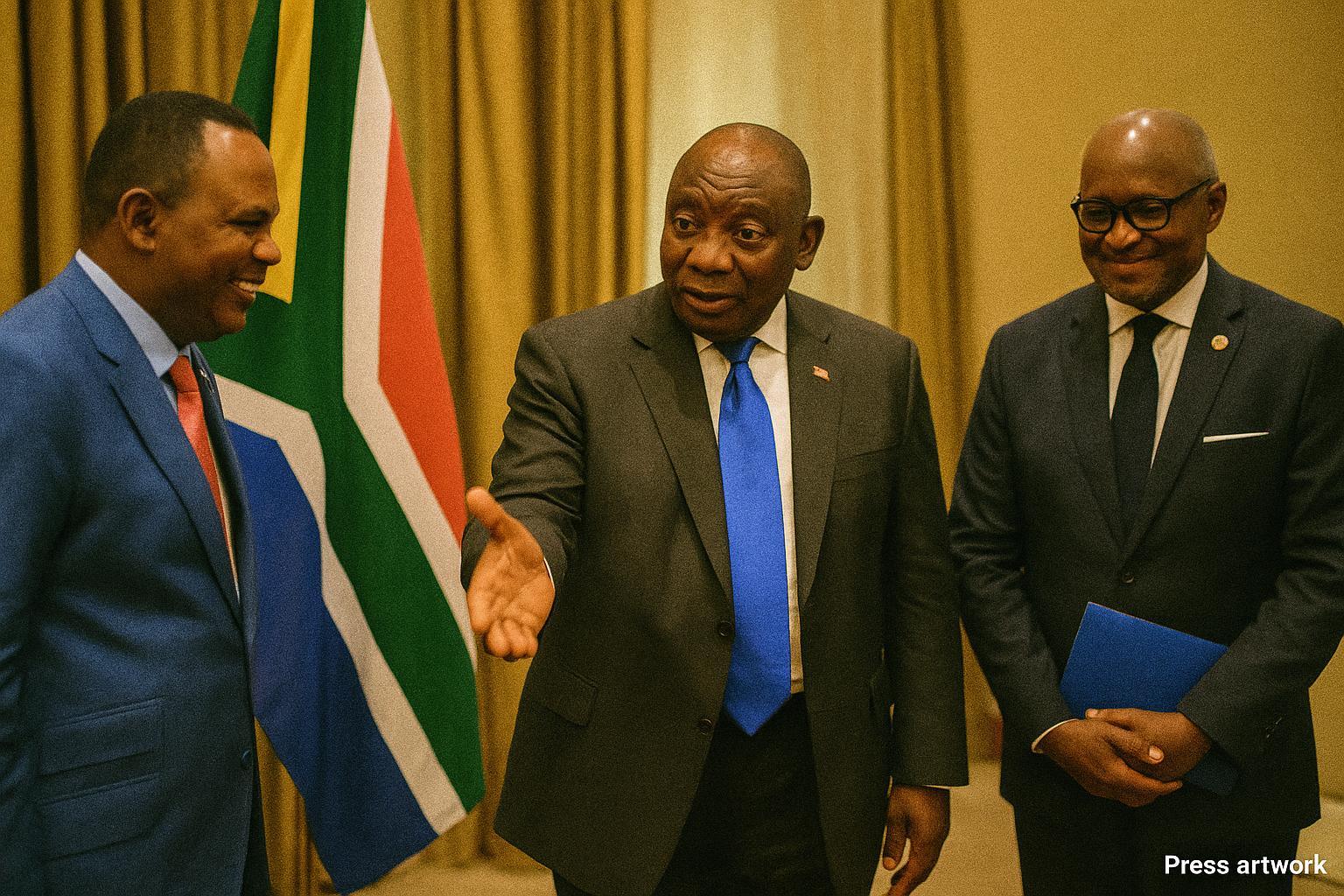
Diplomatic Engines Start in Lusaka
The Congolese foreign minister, Jean-Claude Gakosso, chose Lusaka on 22 July as the first stop of a whirlwind tour of Southern African Development Community capitals aimed at consolidating support for Firmin Matoko’s candidacy to succeed Audrey Azoulay at the helm of UNESCO. The Zambian leg set the tone: closed-door consultations with President Hakainde Hichilema, a public lecture at the University of Zambia on Africa’s cultural renaissance, and a joint communiqué underscoring “the imperative of an African voice” in global cultural governance (Zambian Presidency release, 23 July 2024).
Matoko’s Curriculum as Diplomatic Asset
A former rector of the Marien-Ngouabi University and current Assistant Director-General for Priority Africa and External Relations at UNESCO, Firmin Matoko has cultivated a profile that blends academic gravitas with multilateral experience. His stewardship of the ‘Priority Africa’ portfolio granted him a reputation for consensus-building among diverse regional blocs, a credential that President Denis Sassou Nguesso’s government is now leveraging. In private briefings, Congolese diplomats underline that since 2018 Matoko has managed programmes benefiting twenty-six African states without a single audit reservation, a statistic repeatedly highlighted during the SADC tour.
Why Southern Africa Matters
Although the African Union will eventually coalesce around a single nominee, early endorsements from SADC members carry symbolic and arithmetic weight. Twelve of UNESCO’s fifty-eight Executive Board seats are held by states from Africa, four of them from Southern Africa. By courting Lusaka, Gaborone, Windhoek and Pretoria first, Brazzaville signals its intent to knit together the Anglophone and Lusophone South with Central Africa’s Francophone core. According to an analyst at the South African Institute of International Affairs, the strategy also mitigates the perception of Central African hegemony in multilateral postings and reinforces the AU principle of equitable regional rotation.
Soft-Power Narratives on the Road
Beyond formal pledges, the Congolese delegation deployed a soft-power repertoire ranging from art exhibitions to discussions on digital heritage protection. In Windhoek, an agreement was initialled to digitise rock-art sites in the Tsodilo Hills with technical assistance from Brazzaville’s National Museum consortium. In Maputo, Matoko himself moderated a round-table on the memory of the Indian Ocean slave trade, subtly framing his candidacy around UNESCO’s mandate for intercultural dialogue. Mozambican Culture Minister Eldevina Materula subsequently praised the ‘operational credibility’ of the Congolese bid, a phrase promptly echoed in Brazzaville’s national media.
Continental Bargaining and Global Undercurrents
While Congo-Brazzaville’s campaign is couched in Pan-African terms, it unfolds against a wider geopolitical backdrop. Paris, Washington and Beijing, all influential donors to UNESCO, have so far refrained from explicit endorsements. Diplomatic sources in Addis Ababa suggest that securing SADC unanimity could strengthen Matoko’s hand in Paris by demonstrating that his candidacy transcends linguistic and ideological rifts. Conversely, North African diplomats are discreetly promoting an alternative nominee, citing the Maghreb’s under-representation in recent cycles. How effectively Brazzaville can bridge this emerging fault line may shape the final alignment within the UNESCO Executive Board in spring 2025.
Domestic Resonance in Brazzaville
At home, President Denis Sassou Nguesso frames the bid as an extension of Congo’s sustained commitment to multilateralism, reminiscent of Brazzaville’s mediation roles in regional crises. State television repeatedly links Matoko’s professional trajectory to the president’s longstanding vision of ‘rayonnement international’, subtly amplifying national cohesion around a global objective. Political opposition groups, while supportive of the candidacy, caution that success abroad should translate into enhanced cultural policies domestically, a discourse that authorities have embraced by announcing new funding for school libraries in remote departments.
The Road Ahead to the Executive Board Vote
The formal AU endorsement process will open in early 2025, yet the groundwork laid during this SADC tour may prove decisive. Observers in UNESCO’s Paris headquarters note that early African unity often catalyses support from non-aligned states in Asia-Pacific and Latin America. Brazzaville plans a second caravan through West African Economic and Monetary Union capitals in October, while maintaining a dialogue with Caribbean Community members whose votes historically tip the balance. If these concentric circles of support hold, Firmin Matoko could enter the Executive Board vote as the front-runner, offering the prospect of Africa’s first stewardship of UNESCO since Senegal’s Amadou-Mahtar M’Bow left office in 1987.
A Subtle Test of African Multilateralism
Matoko’s bid therefore transcends national ambition: it will test the continent’s ability to present a unified front within a fragmented multilateral arena. Congo-Brazzaville’s calibrated engagement with SADC offers an instructive case study of regional diplomacy, intertwining soft-power storytelling, development pledges and the careful management of intra-African sensitivities. Whether this blend yields the desired outcome in Paris will be decided in the discreet corridors of UNESCO, yet the method already underscores Brazzaville’s capacity to navigate the chessboard of twenty-first-century multilateralism.
