
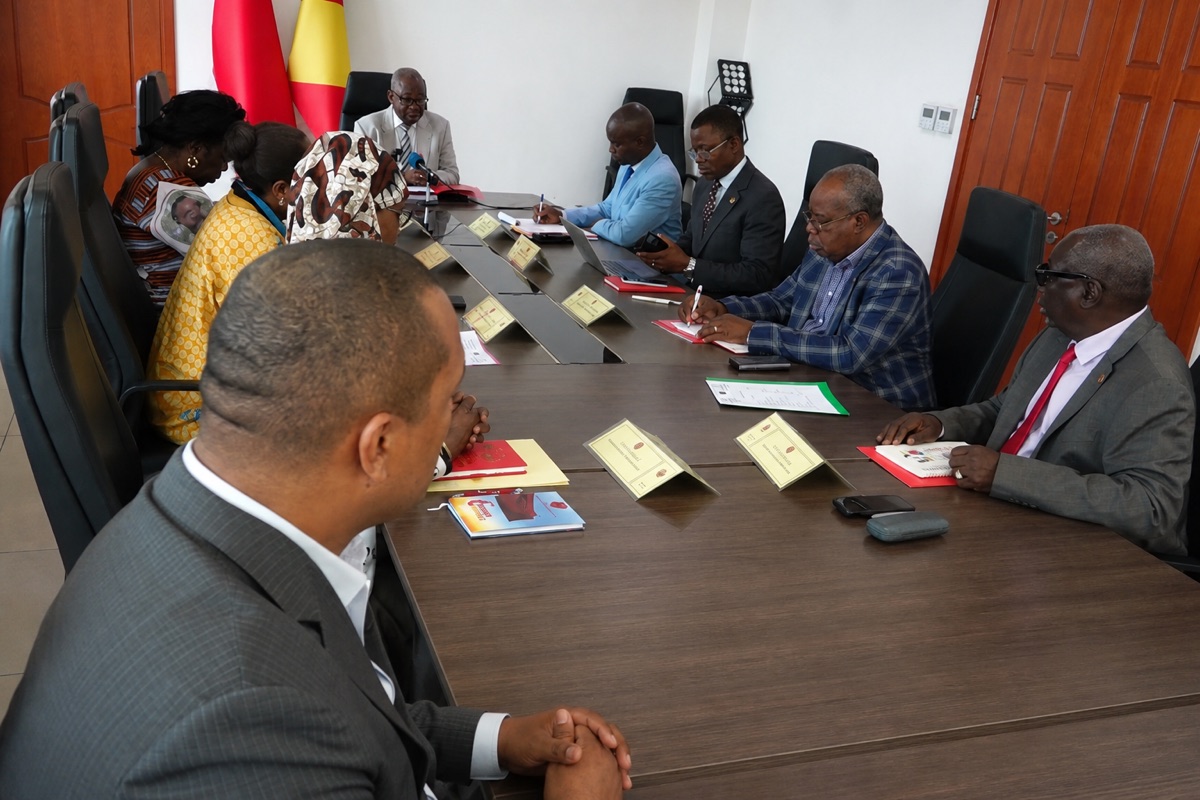
In Brazzaville, the machinery of the Parti congolais du Travail has shifted swiftly from the contest of the ballot to the choreography of celebration. On 21 March, the party’s permanent secretariat publicly welcomed the re-election of Denis Sassou Nguesso to the presidency of the Republic, a result secured during the polls held on 12 and 15 March 2026. According to the party, the vote unfolded in a climate of peace and serenity, and the secretariat now pledges to accompany the head of the presidential majority as he sets about implementing the societal project that, in its reading, the electorate has endorsed.
A First-Round Figure Without Precedent in the Democratic Era
The arithmetic at the heart of the announcement is striking in its scale. Parfait Iloki, spokesman for the PCT, told supporters that the secretariat “salutes the strong turnout of the population and the massive support for the vision carried by the President of the Republic, the very great comrade Denis Sassou Nguesso, credited from the first round with 94.82 percent of the votes cast.” A score of that magnitude, achieved without recourse to a second round, is described by the party as unmatched since the advent of the country’s democratic era.
Such figures invite interpretation rather than mere recording. For the PCT, the tally is less a statistic than a verdict, read as proof of the Congolese people’s enduring attachment to a leader who has dominated the political landscape of Congo-Brazzaville for decades. The party frames the outcome as an act of collective adhesion, a renewal of trust rather than a routine electoral formality. Whether that reading travels beyond the ranks of the majority is a separate question, but the secretariat has left no ambiguity about how it intends the result to be understood within its own structures.
The Language of Continuity and the Promise of a Mandate
What gives the announcement its particular texture is the vocabulary of continuity that runs through it. The PCT did not present the result as an ending but as a mandate to be carried forward, a commitment to translate the president’s programme into governance. The secretariat’s pledge to accompany the chief of the presidential majority signals that the party sees its role extending well beyond the campaign, into the patient work of implementation that any societal project demands once the votes have been counted.
This emphasis on the so-called projet de société is deliberate. It positions the re-election not as a personal triumph alone but as the ratification of a programme, a distinction the party is keen to maintain. By tying the figure of the president to the substance of a vision, the PCT seeks to convert electoral capital into political legitimacy for the years ahead, casting the mandate as a contract between leadership and population rather than a simple concentration of office.
Unity as the Watchword After the Vote
Beyond the celebration, the secretariat’s message carried an instruction. The PCT exhorted its members, its sympathisers and the wider Congolese people to remain united and mobilised behind President Denis Sassou Nguesso. The appeal to cohesion is telling, for it suggests that the party views the period following a decisive result as one requiring consolidation rather than complacency.
The call for unity also performs a function familiar to ruling parties across the region. It reframes a contested democratic exercise as a moment of national gathering, urging supporters to maintain the discipline of the campaign even after its formal conclusion. In the party’s telling, mobilisation is not a seasonal activity confined to election periods but a permanent condition of political life, a posture intended to sustain the momentum the secretariat believes the result has generated.
Reading the Result in Its Regional Frame
Placed within the broader context of Central Africa, the announcement resonates beyond the borders of Congo-Brazzaville. Across the CEMAC space, the longevity of established leaderships and the recurrence of commanding electoral majorities have become defining features of the political grammar of the region. The PCT’s framing of the result, all peace, serenity and overwhelming endorsement, follows a script that observers of the sub-region will recognise.
For the Republic of Congo specifically, distinct from its larger neighbour the Democratic Republic of the Congo, the immediate consequence is the prospect of institutional continuity. The party has signalled its intention to consolidate around the renewed mandate, and the months ahead will test how the language of adhesion and accompaniment is converted into the concrete tasks of public administration, finance and social policy. For now, the secretariat has set the tone, and that tone is one of unambiguous endorsement of the path it intends to pursue.
