
Election countdown and the web blackout debate
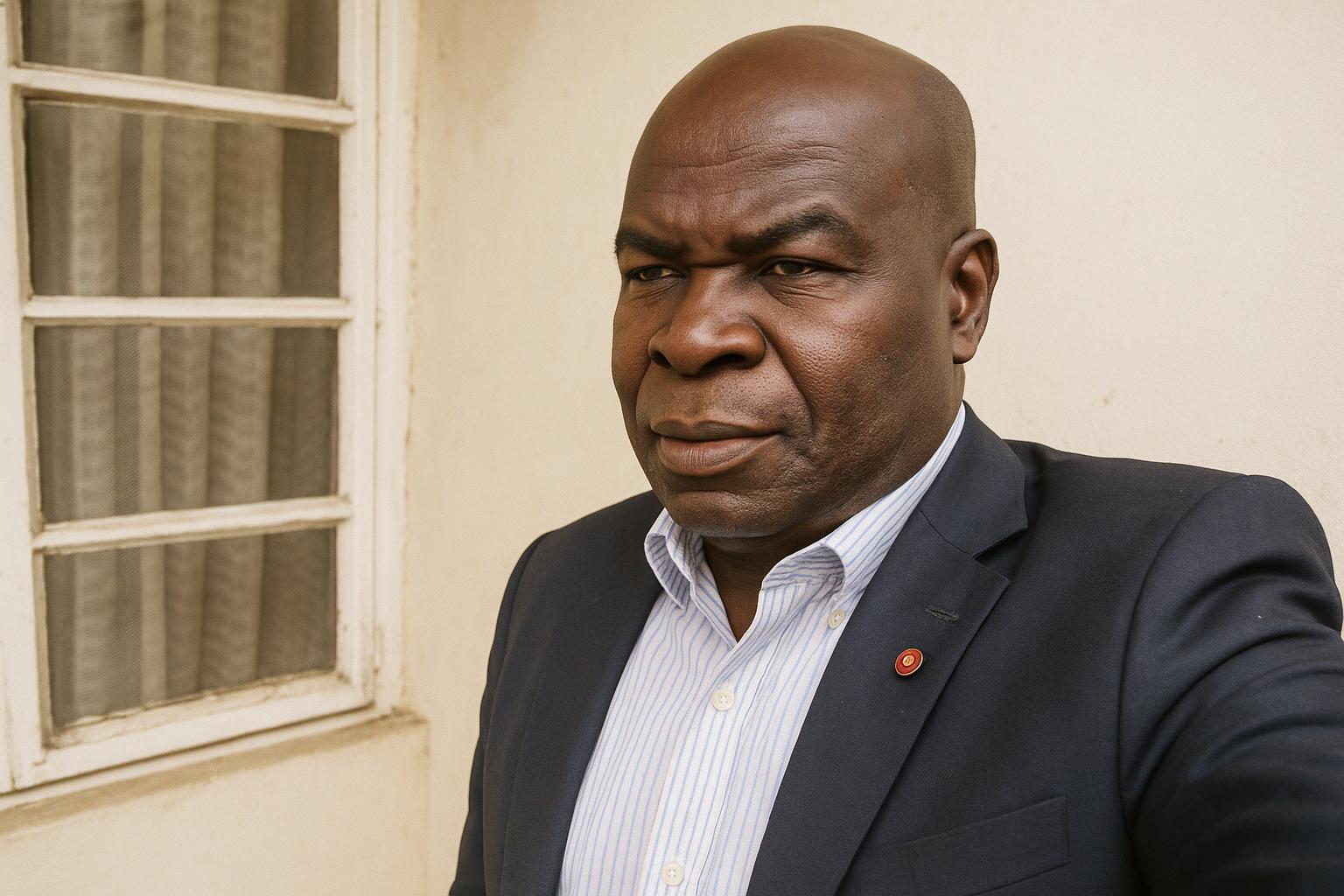
As the Republic of Congo enters the eighteen-month sprint toward the March 2026 general elections, the public sphere is already grappling with a proposal that could define the tenor of the campaign. Speaking during a primetime television programme last week, former member of the Higher Council for Freedom of Communication, Asie Dominique de Marseille, recommended a forty-eight-hour suspension of Internet services spanning polling day and the immediate tally period. His suggestion, delivered in measured tones more often associated with medical briefings, quickly ricocheted across newsrooms, WhatsApp groups and university cafés, triggering a debate that intertwines national security, economic continuity and democratic culture.
A bid to insulate the ballot from digital turbulence
Supporters of the planned web pause argue that a brief, scheduled outage could act as a protective buffer against the flood of viral rumours, fabricated tallies and incendiary montages that typically surge on social platforms during volatile political moments. “The intent is not to gag citizens,” insists de Marseille, reached by phone, “but to preserve serenity at a stage when emotions can be deliberately inflamed by anonymous actors far beyond our borders.” Government sources note that the 2021 presidential contest witnessed more than 35,000 flagged posts in the forty-eight hours following voting, according to internal data compiled by the National Cyber-Security Agency. In that view, a controlled hiatus is framed as a form of electoral hygiene, analogous to the cooling-off periods that many jurisdictions impose on campaign advertising.
Navigating misinformation in a regional hotspot
Central Africa’s political map has become an experimental field for coordinated influence operations, ranging from deep-fake audio to cloned news sites. Jean-Léon Ngamaba, senior lecturer in digital law at Marien Ngouabi University, stresses that “the speed of false content today outpaces any manual verification process by journalists or the electoral commission.” He points to recent municipal by-elections in a neighbouring state where photos of pre-ticked ballots, later proven false, sparked street protests within hours. In that light, Congo’s authorities are anxious to avoid a scenario in which unverified screenshots erode trust faster than official statements can be translated into Lingala or Kituba. A two-day silence, proponents argue, would hand institutions the breathing space needed to collate and publish certified numbers before rumours mature into unrest.
Economic and civic trade-offs under scrutiny
Yet the economic ledger tells a cautionary tale. According to the Congolese Chamber of Commerce, the 72-hour outage that accompanied parts of the 2016 electoral process shaved an estimated 3.1 billion CFA francs off mobile money transactions and delayed shipping documentation at Pointe-Noire’s port. Fintech start-ups, which now anchor many youth livelihoods, warn that even a short, pre-notified blackout can disrupt payroll cycles and cross-border remittances. “Our platform settles 55 percent of monthly transfers in the first week, so a two-day gap is more than a hiccup,” says Carine Massamba, founder of a Brazzaville-based payments firm. Civil-society organisations add that disabled citizens who rely on online sign-language streams to follow campaign events may find themselves excluded at the most decisive hour. The government’s challenge is therefore to calibrate stability gains against measurable costs to ordinary Congolese.
Lessons from neighbours and global norms
Regionally, Congo would not be venturing into uncharted territory. Cameroon instituted a partial social-media block during its 2020 legislative polls, while Zambia tried a milder content-filtering approach in 2021, restricting only Facebook Live. The African Union’s Election Observation Handbook, updated in 2022, cautions that blanket shutdowns should remain “exceptional and proportionate,” recommending that states publish clear legal grounds and sunset clauses. In Europe, meanwhile, the trend is toward algorithmic transparency rather than network blackouts. By benchmarking against these precedents, Brazzaville could refine a model that preserves what Minister of Posts, Telecommunications and Digital Economy Léon Juste Ibombo recently described as “our sovereign right to protect public order” without veering into open-ended disruption.
Technology sector readies contingency plans
Telecom operators MTN Congo and Airtel Congo have quietly begun scenario planning, engineers confirm, mapping traffic rerouting protocols that would keep voice and SMS channels active even if data gels. The regulatory authority, ARPCE, is said to be drafting directives on emergency service whitelists, ensuring that hospitals, airports and the Central Bank retain satellite or fibre capacity. Meanwhile, civic innovators are adapting: the non-profit Congo CoderDojo has developed an offline-first reporting kit allowing election observers to time-stamp incidents on encrypted drives for later upload. Such preparations hint that an Internet pause, if sanctioned, would be neither the first nor the last stress test of the nation’s growing digital ecosystem.
Balancing calm, credibility and connectivity
President Denis Sassou Nguesso has not publicly endorsed or rejected de Marseille’s proposal; insiders say the presidency will weigh technical memos before the end of the year. What is clear is that the debate has already expanded beyond a technical switch. It raises fundamental questions about how a society mediates trust in the age of instantaneous communication. For many urban professionals, the smartphone has become the new town square; for rural voters, radio still reigns. Any attempt to mute one channel while others speak must navigate that diversity. Asie Dominique de Marseille’s pitch has, at the very least, forced stakeholders to grapple early with a dilemma that could otherwise surface on election eve. Whether the final verdict is a scheduled blackout, targeted throttling, or a fortified information campaign, the months ahead will test Congo’s ability to safeguard both tranquillity and transparency—a balance as delicate as the fibre-optic strands that now bind its citizens from Brazzaville to Ouesso.
