
Nationwide drive for child-friendly justice
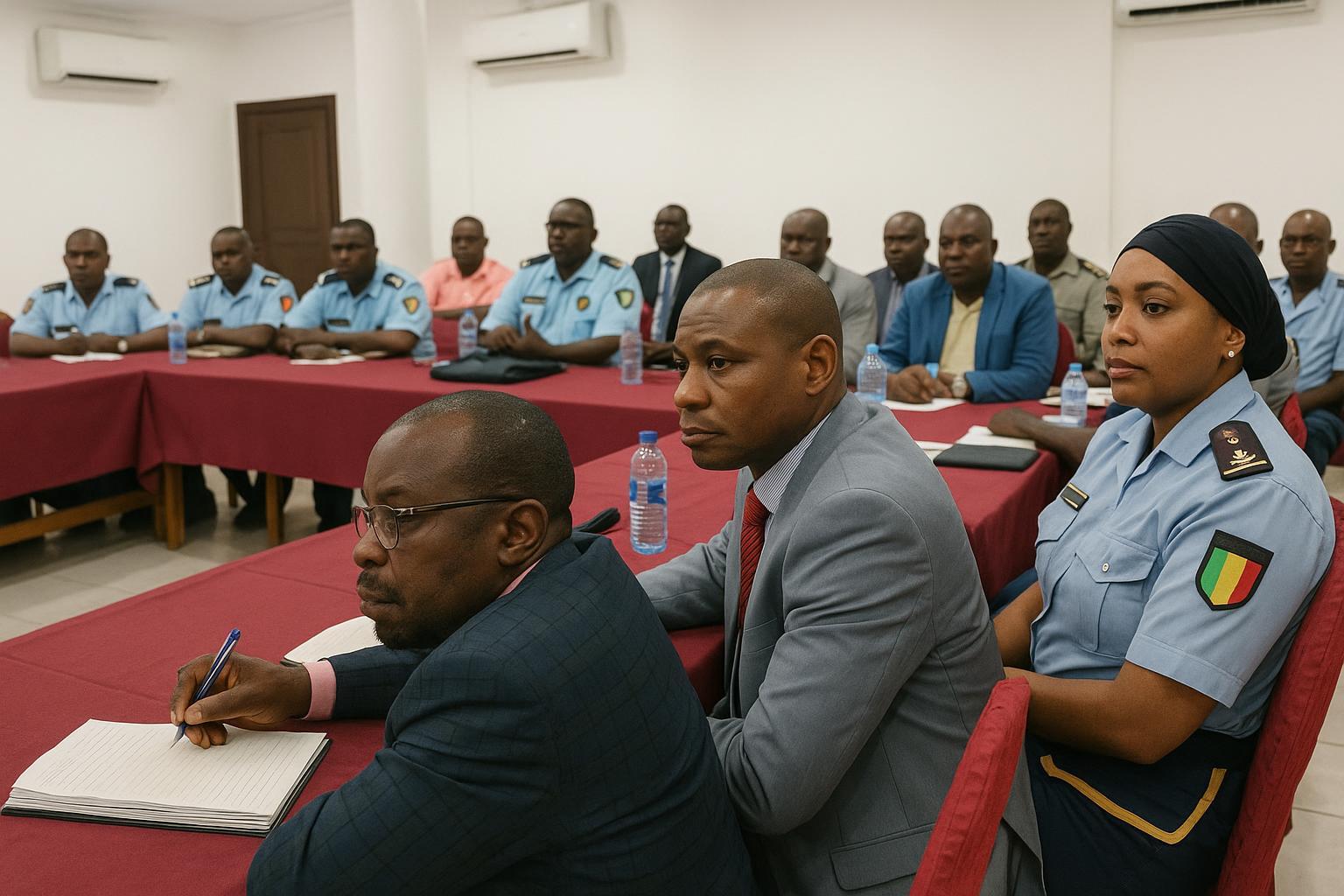
Gathered in the conference hall of Brazzaville’s Social Welfare Directorate on 15 December, magistrates, lawyers, police officers, gendarmes and social workers spent an intense day re-examining the treatment reserved for children who cross the thin line separating misdemeanour from innocence. The workshop, convened by the Directorate-General for Solidarity and the civil-society network Reiper, and financially backed by UNICEF, marks the latest milestone in a national campaign to translate the spirit of the 2013 Child Protection Act into daily courtroom and police-station practice.
Although the Republic of Congo has long subscribed to the Convention on the Rights of the Child, officials concede that technical gaps and insufficient coordination have allowed too many minors to languish in adult cells, sometimes for months awaiting trial. The Minister of Justice has therefore listed juvenile justice among his flagship priorities for the current five-year plan, a stance welcomed by development partners.
Capacity-building workshop in Brazzaville
Fifty practitioners were divided into thematic working groups that dissected every procedural step, from arrest to rehabilitation. Under the guidance of seasoned facilitators they rehearsed how to separate a minor from adult detainees during the first hours of custody, how to guarantee the child’s right to a lawyer even when the family is penniless, and how to ensure that case files travel swiftly between police, prosecution and the juvenile bench.
Joseph Bikié Likibi, coordinator of Reiper, reminded attendees that procedure is not a luxury but a lifeline. “Each article of the code is a protective wall between a teenager’s mistake and a lifetime stigma,” he said, urging bar associations to strengthen the pro bono roster so that no child appears before a judge unassisted.
Interactive role-plays placed police cadets opposite seasoned magistrates, encouraging frank exchanges that are rarely possible in the heat of the courtroom. Observers noted the pragmatic tone: rather than lament resource constraints, participants focused on low-cost improvements such as designated interview rooms for minors at precinct level and the systematic use of social-inquiry reports prior to sentencing.
Legal framework aligning with global norms
Congo’s legislature has, over the past decade, produced a robust corpus aimed at shielding children from undue harm. The 2010 Child Act first anchored the best-interest principle in domestic law; the 2013 statute expanded that protection by creating specialised juvenile courts, diversion mechanisms and alternative measures to deprivation of liberty. Secretary-General for Justice Mathieu Clotaire Okoko reminded the room that the power of a statute depends on its operationalisation, not on its rhetoric.
Felana Aliderson, speaking on behalf of UNICEF’s resident representative, pointed out that Congo already sits on a solid normative base. What is missing, she argued, are budget lines that allow the recruitment of specialised probation officers and the refurbishment of existing prisons so they meet the Mandela Rules.
The government’s medium-term expenditure framework, adopted in July, earmarks funds for two pilot rehabilitation centres in Brazzaville and Pointe-Noire. Officials confirmed that architectural designs now integrate classrooms, vocational workshops and family-visiting areas so that, in the words of one senior planner, “resocialisation is built into the bricks”.
Addressing detention conditions humanely
Nowhere is the gap between law and practice more visible than behind the doors of Brazzaville’s remand centre. Built for 150 inmates, the facility now hosts 700, including a number of minors. During a monitoring visit the National Human Rights Commission described dormitories where juveniles and adults sleep on the same concrete floor. Such circumstances, Aliderson warned, expose children to harm and reduce their chances of reintegration.
Government spokespersons stress that solutions are under way. The Ministry of Justice has instructed prison governors to create child-only sections using temporary partitions until purpose-built facilities come online. Meanwhile, the Directorate of Social Affairs is expanding community service programmes in partnership with the Chamber of Commerce so that judges have credible alternatives to custodial sentences.
Next steps toward sustainable juvenile reform
Participants closed the workshop by adopting a concise road map that will be submitted to the Prime Minister’s Office early next year. Immediate actions include drafting a standard operating procedure for police dealing with minors and setting up a digital dashboard to track every child’s journey through the justice system.
UNICEF pledged technical assistance for the translation effort, while the European Union considered financing the dashboard as part of its governance portfolio. Civil society organisations were tasked with monitoring progress and reporting to ensure that momentum is not lost once the media spotlight moves elsewhere.
Speaking to reporters, Senior Magistrate Arlette Mountou praised the ‘new culture of collaboration’ that is taking root. ‘Ten years ago the police, the bench and social workers barely spoke the same language,’ she reflected. ‘Today we sit at the same table and design processes that put the child at the centre. That is genuine progress.’
