
Strategic reboot for the elite championship
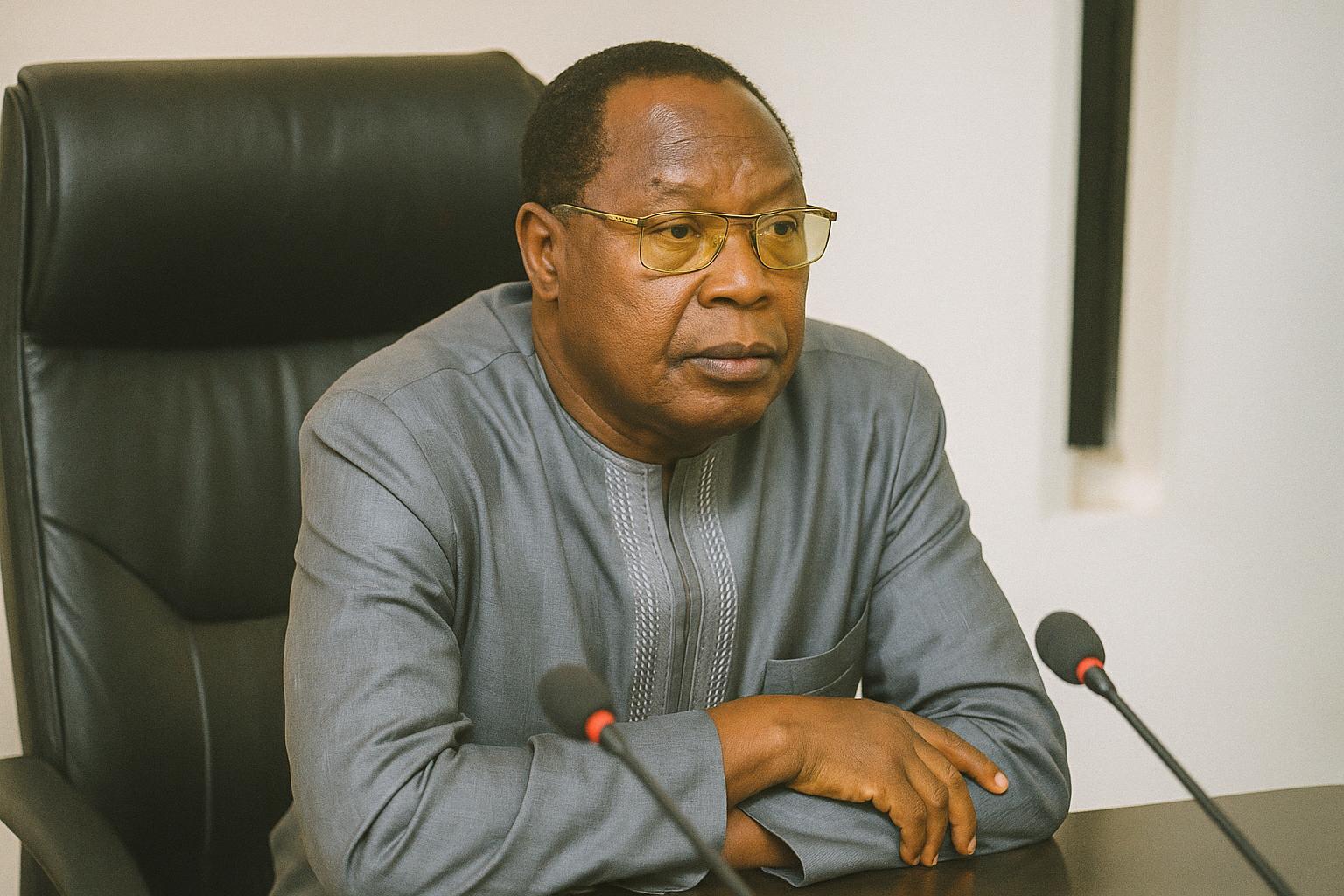
When the Executive Committee of the Congolese Football Federation met club presidents on 6 September in Brazzaville, the atmosphere mixed relief with urgency. One year after competitive silence in the domestic top flight, Jean Guy Blaise Mayolas set out an uncompromising message: only an administrative overhaul will secure the smooth opening of the 2025-2026 National Direct Ligue 1, slated for 13 September next year. By placing governance at the centre of the discussion, Fecofoot underscores a conviction increasingly shared across African football circles—that sporting performance is inseparable from sound management.
Financial oxygen for cash-strapped teams
Acute liquidity constraints have long hampered Congolese clubs, forcing short-term fixes that compromise planning. Mayolas tackled the issue head-on by pledging to settle each side’s registration fee of two million CFA francs and to provide an additional cheque for one million CFA francs to cover immediate training expenses. In a room where some managers privately admitted they were unsure how to finance pre-season camps, the announcement landed as welcome oxygen. Although the federation has not yet revealed the level of the forthcoming global subsidy, the gesture signals a readiness to shoulder part of the cost of professionalisation. Several participants, including Club Athlétique Renaissance Aiglons’ deputy secretary general Alain Didier Kouetolo, hailed the decision as “salutary because it lightens our overheads while we restructure.”
Conformity with FIFA and CAF: the new non-negotiable
Beyond cash grants, Fecofoot placed legal alignment with international standards at the heart of its roadmap. All contracts between clubs and players must henceforth be formalised in writing, in strict compliance with FIFA’s Regulations on the Status and Transfer of Players and the Confederation of African Football’s licensing framework. The federation is keen to eliminate the recurring contractual disputes that have drawn domestic teams before dispute-resolution chambers in Zurich or Cairo in recent seasons. By urging clubs to codify duration, remuneration and termination clauses, Mayolas is pursuing a preventive strategy that protects both athletes and institutions while shielding the country’s reputation on the continental stage.
Competitive stakes for continental representation
The timing of the reforms is hardly coincidental. Two Congolese flag-bearers enter CAF inter-club preliminaries this cycle: Athletic Club Léopards face Mozambique’s Associação Black Bulls in the Champions League, while AS Otohô meet Angola’s Primeiro d’Agosto in the Confederation Cup. Preparations without the rhythm of domestic fixtures have historically disadvantaged Congolese sides; Léopards’ technical staff still recall last season’s early exit after playing just two warm-up friendlies. A revived national league, sustained financially and regulated administratively, is expected to provide the match fitness and tactical experimentation essential to survive in Africa’s increasingly competitive landscape.
Key points to remember
The federation’s plan is to transform temporary relief into a virtuous cycle. Immediate financial support covers entry fees and training logistics, but it also serves as leverage: only clubs that submit compliant documentation and audited accounts will access future subsidies. This conditionality, familiar in public-finance management, introduces a performance-based culture that may ripple beyond sport into broader debates on governance in Congo-Brazzaville. Yvon Mawana, president of recently promoted Red Star, captured the mood succinctly: “Knowing the kick-off date is firm reassures sponsors; knowing Fecofoot is watching our paperwork keeps us alert.”
Economic and legal insight
From an economic perspective the federation’s outlay represents a calculated investment rather than mere patronage. Assuming a dozen Ligue 1 clubs, the immediate package reaches thirty-six million CFA francs—modest compared with television rights in North African leagues yet significant in a context where private sponsorship remains embryonic. Legally, written contracts will reduce litigation costs and foster career stability, allowing players to focus on performance and clubs to plan amortisation of talent assets. That alignment with FIFA and CAF also opens pathways to solidarity payments and youth-development subsidies, further enlarging the pie for Congolese football.
A cautiously optimistic horizon
The Brazzaville meeting closed without dissent, a rare occurrence in domestic sporting forums. Challenges remain: training infrastructure needs upgrading, and transparent governance must take root beyond compliance checklists. Still, the combined weight of financial incentives and regulatory clarity offers a realistic platform for progress. In a country where football is both cultural glue and soft-power vector, Fecofoot’s initiative can yield dividends that extend well beyond ninety minutes of play. The countdown to 13 September 2025, therefore, is more than a scheduling matter; it is a litmus test of Congo-Brazzaville’s capacity to align aspiration with administrative rigour.
