
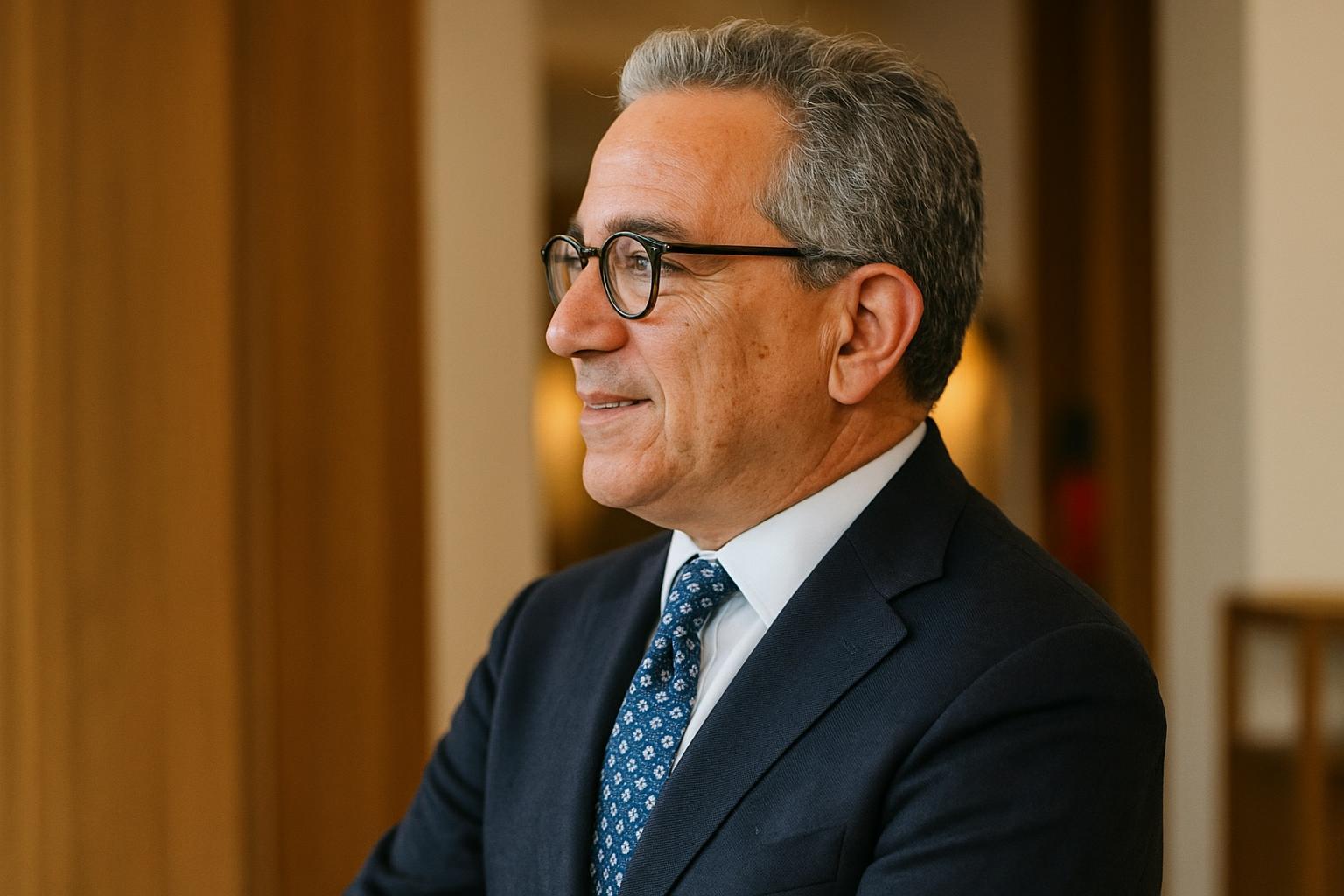
A sweeping verdict at UNESCO’s Executive Board
In Paris, on 6 October 2025, the 193-member organisation’s Executive Board delivered an emphatic verdict: 55 ballots in favour of Egyptian Egyptologist Khaled el-Enany against only two for the Congolese contender, Firmin Edouard Matoko. The secret vote leaves no official trace of individual commitments, yet the numerical gap confirms what many diplomats had sensed for months—a tide of support coalescing behind Cairo’s nominee. In spite of the confidential procedure, the public endorsements announced in recent weeks by the League of Arab States, the African Union and capitals such as Brasília, Paris, Berlin and Ankara were apparently honoured. The Board’s choice will be forwarded to the General Conference in Samarkand on 9 November, a formality before el-Enany’s formal investiture on 14 November, when he will succeed Franco-Moroccan incumbent Audrey Azoulay.
An Egyptian campaign two years in the making
El-Enany’s near-unanimity did not arise overnight. For twenty-four months he criss-crossed continents, holding bilateral meetings, visiting heritage sites and addressing development forums, positioning himself as a bridge between scientific expertise and multilateral diplomacy. That stamina, diplomats noted, contrasted with the late entrance of Matoko, who—while widely respected inside the Organisation for his long-standing educational portfolios—declared his candidature only six months prior to the ballot. Observers within the African diplomatic corps describe the Egyptian as having “made the case early and often”, while the Congolese candidature, though well-received for its intellectual calibre, lacked the time needed to forge the reciprocal pledges that dominate UN elections.
Brazzaville’s measured reading of the outcome
Officials in Brazzaville emphasise the symbolic importance of having fielded a candidate at all, noting that Matoko’s high-profile participation projected Congolese expertise onto the multilateral stage. A senior official at the Ministry of Foreign Affairs, speaking shortly after the vote, commended Matoko’s “dignified” campaign and insisted that “Congo-Brazzaville will continue to contribute constructively to UNESCO’s agenda in education and cultural dialogue”. Far from being interpreted as a defeat, the two votes are framed internally as a platform for future coalitions. Analysts point out that, in a crowded field initially rumoured to include aspirants from Asia and Latin America, achieving a formal nomination already required deft regional diplomacy.
First 100 days: a listening tour amid budget headwinds
From the rostrum of the Board chamber, el-Enany set out a disciplined timetable: meet every Member State within his first hundred days in office and co-draft a strategic plan capable of stabilising finances after the United States’ 2025 departure, which shaved between eight and eleven per cent from UNESCO’s regular budget. The Egyptian candidly acknowledged that the Organisation faces criticism for excessive bureaucracy and pledged to streamline decision paths, without undermining the consultative ethos that defines UNESCO. Insiders describe the promise of an exhaustive listening tour as both a diplomatic courtesy and a means of mapping out which programmes can be prioritised under tighter fiscal conditions.
Private capital and inter-agency synergies on the table
To bridge the revenue gap, the incoming Director-General floated two avenues already circulating in UNESCO corridors. Firstly, a calibrated opening to private-sector participation—through sponsorships, targeted funds or public-private research chairs—designed to broaden the donor base while safeguarding UNESCO’s normative integrity. Secondly, deeper synergy across United Nations agencies, an approach whereby joint initiatives on topics such as ocean science or artificial intelligence could attract pooled financing and reduce duplications. Delegates who supported the Egyptian candidacy underline that such diversification matches the fiscal prudence advocated by several medium-income Member States since the 2025 shortfall emerged.
À retenir
The ballot’s disparity underscores the potency of early coalition building in UN elections. Matoko’s campaign, though respected, illustrates the structural disadvantage of a late start. El-Enany’s first undertaking—an exhaustive consultation of capitals—signals that he reads legitimacy as an ongoing process rather than a one-day vote. Meanwhile, Congo-Brazzaville’s diplomatic establishment publicly reiterates its determination to remain an active stakeholder, turning the electoral exposure into leverage for future committee assignments and partnership projects.
Le point juridique/éco
Under UNESCO’s Constitution, the Director-General exercises executive authority but remains answerable to both the Executive Board and the General Conference, a dual oversight that shapes budget negotiations. The 8–11 % revenue contraction following Washington’s exit obliges the Organisation to adjust its programme and budget resolution for 2026–2027, a document that requires a two-thirds majority. El-Enany’s overture to private finance will therefore need to navigate legal provisions safeguarding the Organisation’s impartiality, notably Article II which prohibits financial influence over normative outputs. Economists inside the secretariat calculate that every one-per-cent drop in assessed contributions translates into roughly five million dollars less for field offices, heightening the stakes of the new leadership’s diversification strategy.
