
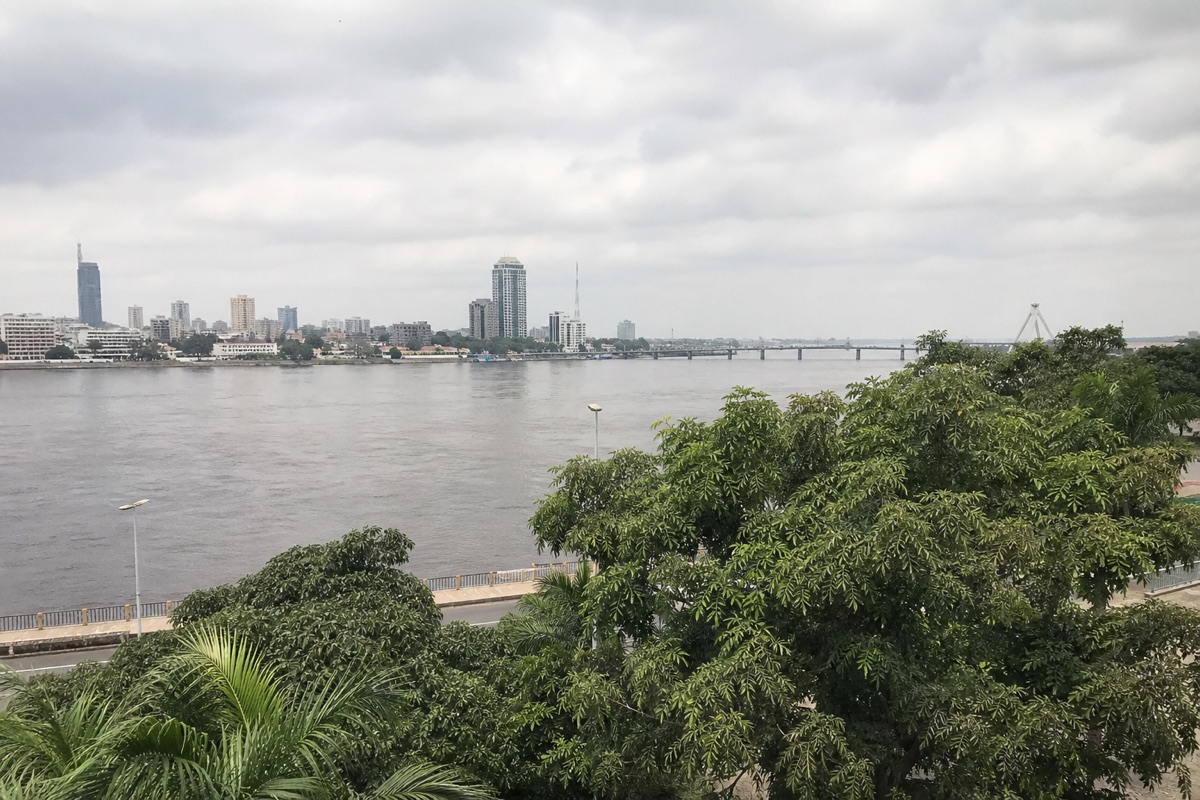
A working visit to Brazzaville by one of Kinshasa’s most senior security officials has placed the long, sometimes uneasy relationship between the two Congos back at the centre of regional diplomacy. Guy Kabombo Muadiamvita, Deputy Prime Minister and Minister of National Defence of the Democratic Republic of the Congo, has been staying in the Republic of the Congo since 9 February 2026, with a mandate framed squarely around the deepening of bilateral security cooperation between the two neighbouring states.
A Defence Mission Across the River
The two countries that share the name Congo are separated by little more than the width of the river that gives them their identity, yet that proximity has historically been a source of both solidarity and strategic anxiety. Kabombo Muadiamvita’s presence in Brazzaville signals an intent on both sides to treat that geography as an asset rather than a liability. According to the stated purpose of the trip, the mission seeks to “consolidate military partnerships between the two Congos” and to deepen the strategic coordination required to confront shared regional security challenges.
The choice to dispatch a figure of the Deputy Prime Minister’s rank, rather than a technical delegation alone, carries its own message. It elevates the conversation from routine cooperation to the level of national policy, suggesting that Kinshasa regards its relationship with Brazzaville as a component of its broader security architecture rather than a peripheral file.
Ministerial Talks and the Mondjo Channel
At the heart of the visit are direct exchanges between the Congolese defence establishments. Kabombo Muadiamvita has held discussions with the authorities of Brazzaville, including his counterpart, the Minister of Defence of the Republic of the Congo, General Charles Richard Mondjo. Such face-to-face ministerial contact matters in a domain where trust is built less through communiqués than through the candour of closed-door conversation.
The programme of the stay extends beyond the symbolic. It comprises a series of one-to-one ministerial meetings alongside working sessions with sector experts, an arrangement that allows political intent to be translated into operational substance. The presence of specialists points to an agenda that is technical as much as diplomatic, reaching into the practical machinery of how two armies might align their methods.
Sharing Experience, Coordinating Operations
The substance of the talks reflects a familiar but demanding agenda for neighbouring states. Discussions have centred on the sharing of experience, on operational coordination, and on the reinforcement of institutional capacities. Each of these threads addresses a different layer of cooperation: the exchange of lessons learned, the synchronisation of action on the ground, and the strengthening of the structures that make such action durable rather than episodic.
For the Republic of the Congo, hosting these conversations affirms a posture of regional engagement; for the Democratic Republic of the Congo, the dialogue offers a means of widening its circle of partners at a moment when its security calculus is under sustained pressure. The willingness of both ministries to invest time in capacity-building, rather than in declaratory gestures alone, hints at an awareness that institutional resilience is what ultimately separates rhetoric from results.
Confronting Threats That Cross the Frontier
Underlying the visit is a recognition that the dangers facing each country rarely respect the line drawn by the river. Both states acknowledge the importance of coordinating their response to common cross-border threats, including those that persist between the two nations and that may affect one or the other. The frontier that separates Brazzaville from Kinshasa is also a frontier that insecurity can exploit, and a unilateral response from either capital risks being incomplete.
This shared diagnosis explains why coordination, rather than mere consultation, has become the operative word. By framing security as a problem held in common, the two governments position themselves to act in concert against pressures that neither could fully contain alone. The visit, in that sense, is less an event than a statement of method: a bet that the two Congos are more secure when their defence policies are read in the same light.
Whether the meetings in Brazzaville mature into lasting mechanisms or remain a moment of goodwill will depend on the follow-through that succeeds the handshakes. For now, the presence of the Democratic Republic of the Congo’s Deputy Prime Minister on the western bank of the river stands as a measured assertion that cooperation, patiently built, remains the most credible answer to the security questions the two states share.
