
A Mandate Translated Into Numbers
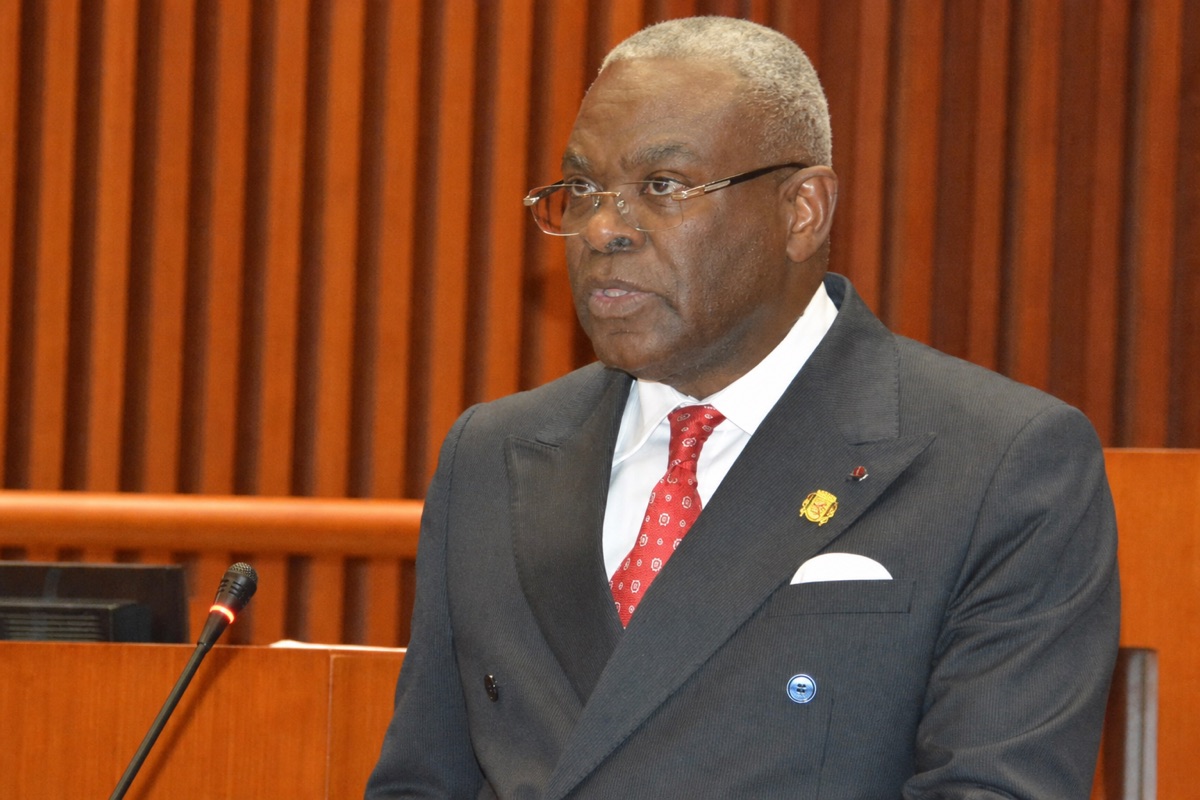
When Prime Minister Anatole Collinet Makosso rose before the National Assembly on Monday, 22 June, he was not merely fulfilling a constitutional ritual. The presentation of the Government Action Programme (PAG) for 2026-2031 amounted to an attempt to convert an electoral promise into an administrative machinery. The text he laid before deputies is built around an arithmetic of ambition: ten priorities, six major axes and twenty missions. That structure is, in itself, a statement of method, signalling a desire to subject public action to a logic of measurable deliverables rather than declarations of intent.
The programme presents itself as the operational translation of the project of society advanced by President Denis Sassou N’Guesso during his re-election, a vision the head of state has branded “the acceleration of the march towards development.” In moving from slogan to ledger, the government is implicitly conceding that previous cycles have been judged on their results, and that the coming quinquennium will be assessed against the same yardstick.
The Weight of an Inherited Context
What gives the address its gravity is the backdrop against which it was delivered. Makosso spoke, by his own framing, in a moment marked by fresh economic, social and structural challenges. That candour is notable in a setting where official discourse often prefers triumph to diagnosis. By naming the difficulty before describing the remedy, the Prime Minister sought to lend his roadmap the texture of realism rather than the gloss of propaganda.
The orientations he outlined cohere around a familiar but demanding agenda. Strengthening governance sits at the head of the list, followed by the acceleration of economic diversification, the development of infrastructure, the improvement of basic social services, youth employment and digital transformation. For a country whose public finances remain closely tied to the fortunes of a single export, the emphasis on diversification reads less as a fresh slogan than as a recurring imperative whose persistence betrays how stubborn the underlying dependency has proved.
Human Capital as the Pivot of Growth
Beyond the headline priorities, the government signalled an intention to place particular weight on the valorisation of human capital and on support for productive sectors, with the stated aim of stimulating the creation of wealth and reinforcing the country’s economic resilience. The vocabulary is deliberately oriented towards outcomes: growth that is inclusive, public action steered by results, living conditions that improve in tangible ways.
There is a quiet wager embedded in this language. By tying modernisation to the productivity of people rather than to the extraction of resources alone, the programme gestures towards a model in which education, skills and employment become the engines of expansion. Whether the budgetary architecture and the administrative capacity exist to honour that wager remains the open question that no single address can settle, and the roadmap itself stops short of detailing the financing that would underwrite its more expensive ambitions.
An Appeal to Collective Ownership
Facing the deputies, Makosso pressed the case for collective mobilisation, insisting that the targets set for the new mandate could not be reached by the executive acting alone. He called upon the institutions of state, economic actors and ordinary citizens to make accelerated development a concrete reality for Congo-Brazzaville. The appeal is more than rhetorical courtesy; it acknowledges that a programme of this breadth depends on a coalition of effort that extends well beyond the cabinet table.
That insistence on shared responsibility also functions as a pre-emptive distribution of accountability. If the quinquennium is to be judged by its results, the Prime Minister appears to suggest, then the burden of delivery belongs to the whole national community rather than to the government alone. It is a framing that simultaneously invites participation and tempers expectation.
Reading the Roadmap Between the Lines
The PAG 2026-2031 should therefore be read as both an instrument and a signal. As an instrument, it offers a scaffolding of priorities, axes and missions intended to discipline the next five years of governance. As a signal, it tells the Assembly and the wider public how the executive wishes to be understood: as results-driven, attentive to social conditions and conscious of the structural constraints that have shaped Congo-Brazzaville’s recent trajectory.
The true test, as ever in matters of public policy, will lie in the distance between the document and its execution. The figures Makosso recited give the programme its shape; the coming years will determine whether they acquire substance.
