
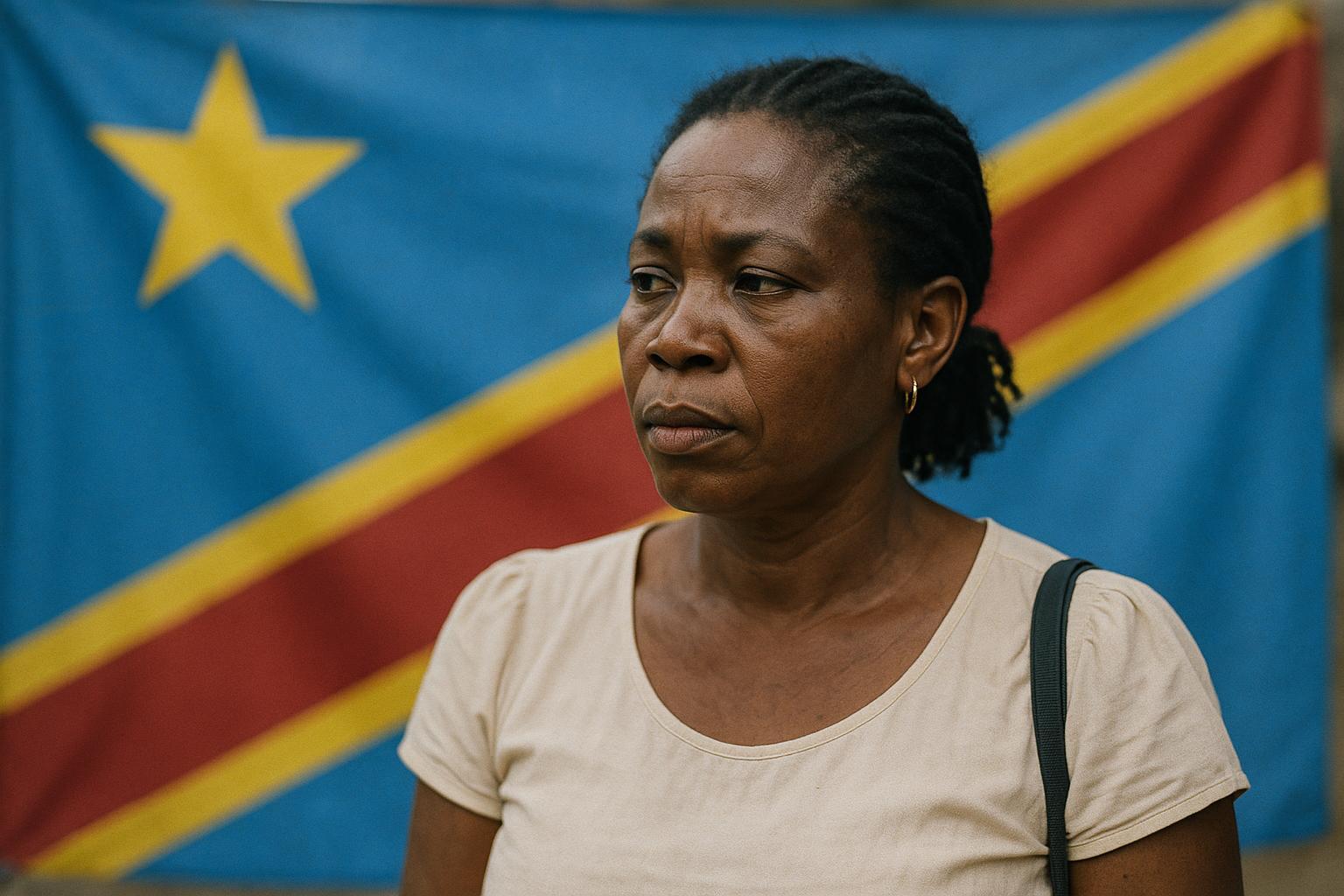
Eastern DRC Conflict Framed as Regional Emergency
Standing before the 80th United Nations General Assembly on 23 September, Congolese President Félix-Antoine Tshisekedi Tshilombo departed from the customary national briefing to depict the violence in North Kivu, South Kivu and Ituri as a continental flashpoint whose embers could ignite the wider Congo Basin. The head of state reminded delegates that nearly three decades of hostilities have displaced close to seven million people inside the Democratic Republic of Congo, with humanitarian ripples stretching from the Ubangi River to the shores of Lake Tanganyika. In his words, “the tragedy of the east is no longer a Congolese singularity; it is a regional hostage-taking”. The image was calculated to widen ownership of the crisis well beyond Kinshasa.
UNGA Speech Underscores Multilateral Responsibility
By invoking Resolution 2773 and the Washington understanding concluded with Kigali, President Tshisekedi unveiled a diplomatic architecture that already exists on paper but demands new political oxygen. The Luanda and Nairobi processes, both chaired by African heads of state, were cited as blueprints for confidence-building whose deadlines have slipped amid renewed clashes with the M23 rebellion. Addressing the assembled governments, the president argued that the United Nations provides moral authority, yet the kinetic leverage rests with African signatories capable of sealing borders, tracing arms flows and convincing recalcitrant militias that amnesties can coexist with accountability. Observers note that this shift from internationalisation to “regionalisation plus” reflects lessons drawn from the Sahel where external security templates have faltered (ICG 2022).
Neighbour States and the Question of M23 Withdrawal
Tshisekedi’s most pointed appeal targeted neighbouring capitals. Without naming Rwanda, he warned that states must decide “to be architects of peace or accomplices of violence”. Behind the rhetoric lies a concrete demand: implementation of the ceasefire clauses that require the M23 to vacate captured localities and canton fighters under East African Community monitoring. Diplomats from Angola, Burundi, Congo-Brazzaville and Kenya have privately acknowledged that further equivocation would erode their credibility as mediators. Brazzaville, which already shelters a regional mechanism for the United Nations Standing Advisory Committee on Security Questions in Central Africa, is well-positioned to host technical talks on disarmament logistics, a role that aligns with President Denis Sassou Nguesso’s longstanding preference for quiet facilitation.
Justice Mechanisms to Stem Illicit Minerals Trade
The head of state linked insecurity to the shadow economy that ferries coltan, gold and cassiterite through a maze of informal routes toward international supply chains documented by successive UN Groups of Experts (UN GoE 2023). To break the feedback loop, he proposed an ad-hoc international commission of inquiry and regionally anchored courts capable of prosecuting both war crimes and so-called “economic crimes”. Such fora, he argued, would lift the burden from Congolese jurisdictions already overstretched. Legal scholars in Brazzaville and Libreville have welcomed the idea, noting that a hybrid chamber could, for the first time, treat environmental pillage and armed violence as interconnected offences, thereby discouraging the protection rackets that bankroll militias.
Peace, Climate and Development Interlinked
Tshisekedi strategically recast the Congo Basin—a carbon sink absorbing roughly 1.5 billion tonnes of CO₂ annually—as a bargaining chip for global climate finance. If Central Africa delivers security, the pitch goes, it deserves calibrated debt relief and green infrastructure investment. His call for a “new regional pact” includes transborder roads, energy interconnectors fed by Inga hydropower and harmonised forestry codes that share revenue with local communities. Analysts view the speech as consonant with Brazzaville’s own climate diplomacy, exemplified by the Blue Fund for the Congo Basin championed by President Sassou Nguesso. Converging these initiatives could unlock concessional funding that ties conservation to livelihoods, addressing one root cause of militia recruitment.
Diplomatic Momentum and the Role of Brazzaville
In the hours following the address, envoys from Angola, the Republic of Congo and the African Union convened informally on the UN’s second floor to discuss sequencing. According to a senior Congolese diplomat, consensus is emerging around a phased roadmap: first, a verifiable halt to cross-border arms deliveries; second, deployment of a joint intelligence cell pooling data from Kigali, Bujumbura and Kinshasa; third, a donor conference on Eastern DRC stabilisation to be co-chaired by Brazzaville and the African Development Bank. By taking on the co-chairmanship, Congo-Brazzaville would cement its status as a bridge nation—neither belligerent nor spectator, but facilitator whose domestic stability offers a neutral venue for shuttle diplomacy.
Balancing Realism with Optimism
Skeptics warn that previous timetables have collapsed under the weight of mistrust and shifting military fortunes. Nonetheless, the rhetorical framing of Eastern DRC as a collective liability rather than a Kinshasa-Kigali dispute may alter cost-benefit calculations in regional capitals. The Congolese president’s insistence on coupling security with development and climate stewardship resonates with citizens who experience the daily consequences of deforestation, food price spikes and fuel scarcity, issues that transcend borders. International partners—France, China, the United States—have signalled readiness to underwrite robust border-management technology, provided local states set verifiable benchmarks. The ball, therefore, rests squarely in Central Africa’s court.
From Podium to Ground: Next Steps for Central Africa
Transforming a UN speech into improved security along the Rutsuru escarpment or in the mining pits of Djugu will test diplomatic ingenuity. The Nairobi and Luanda tracks require an updated calendar, and the envisaged investigative commission must secure funding and jurisdictional clarity. Yet the strategic convergence between Kinshasa’s priorities and Brazzaville’s multilateral instinct offers a sliver of pragmatic hope. If the Congo Basin can weave together its peace and climate agendas, it may not only extinguish the current fire but also build firebreaks against future upheavals. The challenge, as articulated in New York, is to ensure that the momentum of words is neither lost in translation nor diluted by the very sands of the Great Rift Valley.
