
Growing Discontent in Municipal Workforces
On an otherwise typical December morning in Brazzaville, the usual hustle—interrupted power lines, congested avenues, and the hum of roadside generators—went largely unnoticed. Yet behind this surface normality the municipal workforce of six major Congolese cities had walked off the job, adding their voice to a crescendo of labour unrest that began with lecturers and staff at Marien Ngouabi University on 17 November 2025. Salary delays, some stretching beyond three years for certain local councils, form the combustible core of this burgeoning protest movement.
Unpaid Municipalities Feel the Pinch
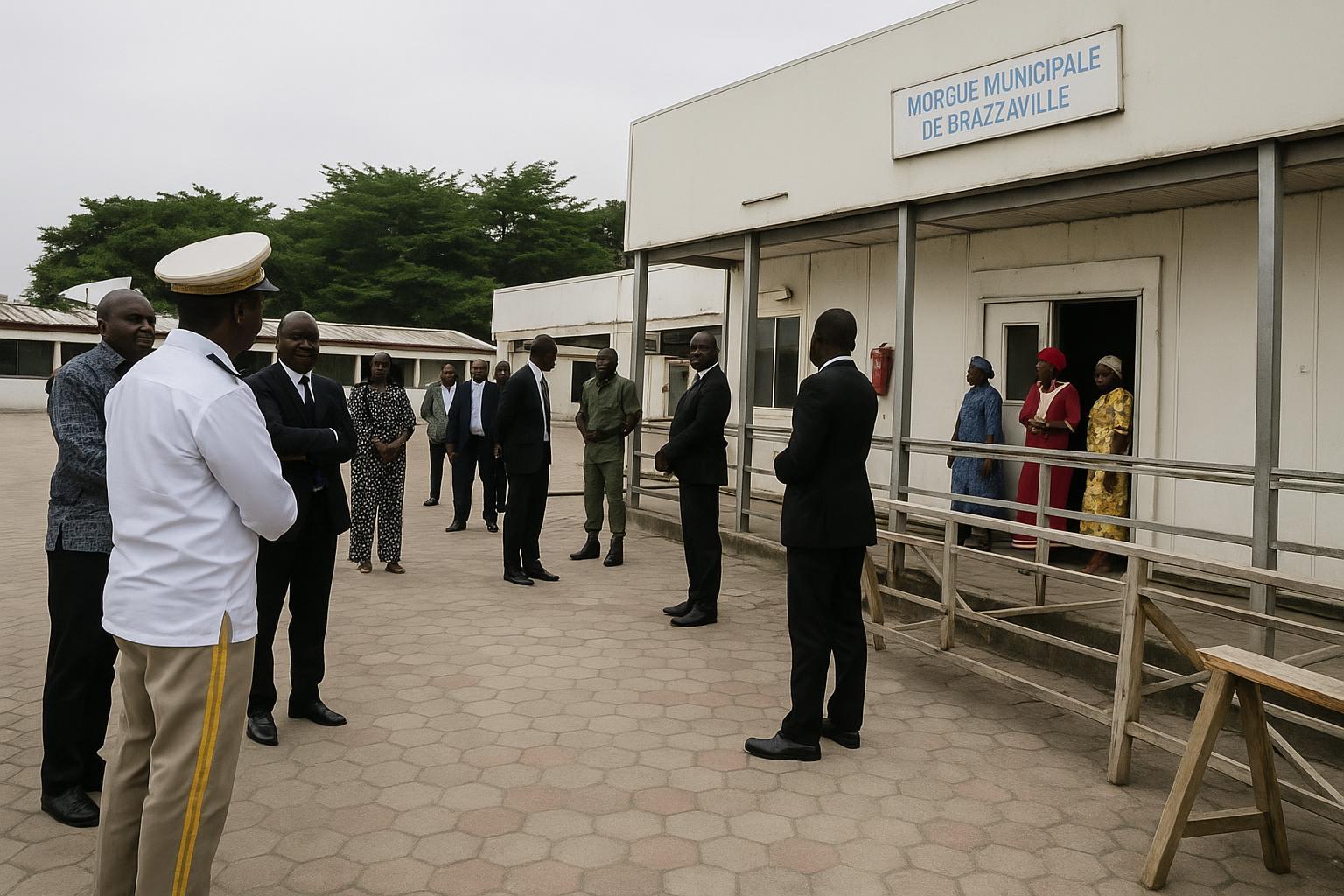
Nowhere was the disruption more palpable than at the Brazzaville Municipal Morgue, where grieving families found gates closed on 12 December and bodies inaccessible. Police intervention opened the facility only briefly, underscoring the fragile equilibrium between social peace and essential public services. While mortuary attendants resumed duties the following day, the episode captured national attention and, according to senior trade-unionist Constant Mavouemba, illustrated “the moral costs of chronic wage uncertainty” (Les Dépêches de Brazzaville, 14 Dec 2025). Local radio phone-ins were soon dominated by callers questioning fiscal governance at profit-making municipal entities.
Budget Transfers Under Strain
Disparities in pay cycles partly explain the unrest. Civil servants whose salaries are issued directly by the central Treasury in Brazzaville and Pointe-Noire receive wages with relative regularity. The picture shifts inland, where teachers, nurses, and council staff financed through the budget de transfert sometimes endure three or four unpaid months. Union leaders argue that simultaneous disbursement for all categories would quell suspicion, yet the Ministry of Finance counters that cash-flow volatility linked to international oil prices leaves limited room for such synchronisation.
Government Balancing Act on Treasury
In July, Finance Minister Christian Yoka laid bare the arithmetic during a briefing with customs officers in Pointe-Noire. “Paying every salary, every month, under current revenue constraints is an acrobatic exercise,” he conceded, framing the challenge within a broader global downturn that has squeezed hydrocarbon exporters. That context, government advisers insist, motivated November’s successful placement of a 670-million-dollar eurobond, designed to refinance short-term debt and smooth Treasury lines. Although yields were competitive, officials acknowledge that interest payments will absorb part of the liquidity that workers clamour for.
Opacity Concerns at High-Revenue Entities
Questions therefore turn to the micro level of municipal cash management. The Brazzaville morgue, for example, levies daily fees on preservation, transport, and funeral arrangements that union estimates place at several million CFA francs per week. Yet audited statements remain unpublished despite the national transparency law of 2019. Economists at the Centre d’Études et de Recherche sur le Développement estiment that more rigorous disclosure would reveal surpluses capable of clearing at least a tranche of salary arrears without waiting for central transfers.
Essential Services Under Pressure
Ripple effects extend beyond city halls. In classrooms from Ouesso to Nkayi, parent associations report irregular timetables as teachers juggle side jobs, while district hospitals have postponed elective surgeries to conserve limited staff. The Société des Transports Publics Urbains, already burdened by rising fuel prices, operates a skeletal fleet as mechanics protest nine months of unpaid bonuses. National carrier Ecair faces a similar predicament, with ground crews staging sit-ins that briefly disrupted holiday travel. Each sector, analysts note, reveals a different facet of the same liquidity conundrum.
Digital Reforms and Dialogue
The government’s response has blended conciliation with institutional reform. A joint task force bringing together the Ministry of Territorial Administration, the Budget Directorate and trade-union confederations began weekly sessions in early December to verify arrears and prioritise settlement. Officials point to the Integrated Public Finance Management System rolled out this year, which digitises payrolls and is expected to reduce the so-called ‘ghost worker’ phenomenon that inflates nominal wage bills. Once fully operational nationwide, the platform should free resources for municipalities demonstrably generating own-source revenue.
Perceptions of Equity Matter
Still, public-policy scholars caution against viewing the strikes solely through an economic lens. Professor Agnès Matsika of Marien Ngouabi University argues that perceptions of inequity—particularly visible benefits enjoyed by higher institutions of state—erode trust more quickly than arrears themselves. She observes that parliamentary allowance payments rarely register delays, a contrast seized upon in market-stall conversations to dramatise the plight of nurses or bus drivers. Addressing such optics, Matsika suggests, will require a communication strategy as much as fiscal rectitude, “because budgets are also narratives of collective priorities”.
Prospects for Resolution
December’s negotiations are therefore watched closely. Union representatives hint that partial payments before year’s end could ease tensions, whereas a protracted stalemate might see fresh walkouts in the health and education sectors as the academic year resumes. The stakes are high: reliable salaries underpin social stability and the country’s attractiveness to investors navigating Central Africa’s competitive landscape. Bridging the gap between macro-level solvency and micro-level payrolls will test the resilience of Congo’s evolving public-finance architecture in the months immediately ahead.
