
Brazzaville Meeting on Pool Security and Stability
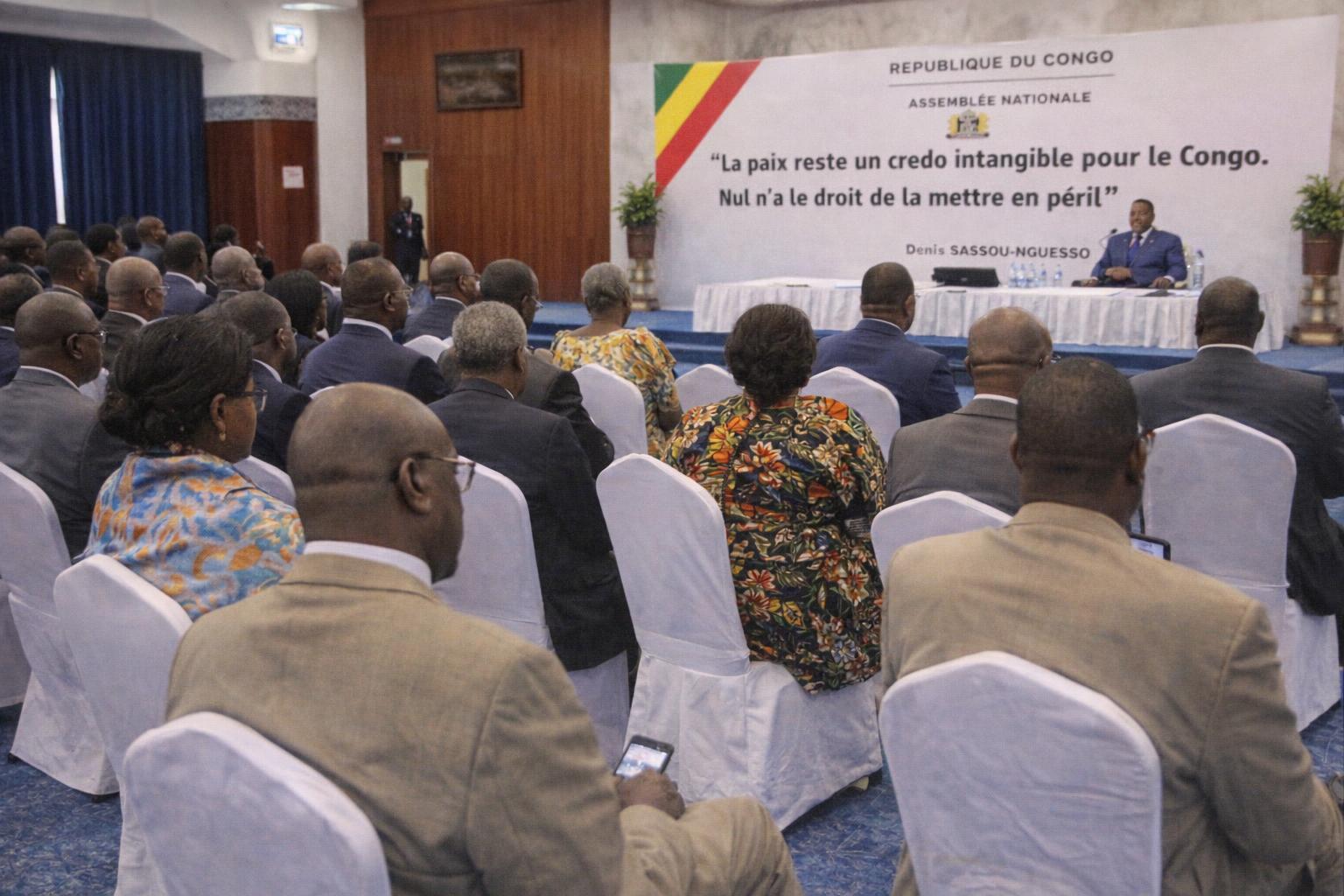
On January 19 in Brazzaville, the President of the National Assembly, Isidore Mvouba, convened a high-level consultation bringing together parliamentarians, leaders of political parties, and senior figures originating from the departments of Pool and Djoué-Léfini. The gathering was explicitly framed as a collective effort to examine the events that occurred on January 11 in these localities and to identify avenues for a response commensurate with the difficulties experienced by local populations.
Participants presented the meeting as an institutional and civic moment, designed to avert further deterioration and to preserve social cohesion. In that spirit, the assembled representatives called on the Nsilulus, referred to as “Nidja,” to respect the Republic’s institutions, arguing that such adherence remains essential to the consolidation of peace in Pool and Djoué-Léfini. The tone, as reflected in the statements delivered, sought to combine firmness regarding public order with an emphasis on responsibility and restraint.
Mindouli Events and the Imperative of Preserving Peace
Addressing attendees, Isidore Mvouba underscored the emotional and societal impact associated with the incident in Mindouli. He stated that the event had deeply affected local residents and had generated strong reactions not only nationally but also internationally, thereby placing a heightened responsibility on public actors and community leaders alike.
He insisted that the central objective was the safeguarding of peace, particularly in departments that have previously experienced instability and where citizens, in his words, legitimately aspire to development and security. Importantly, he portrayed the consultation as neither a trial nor a platform for rhetorical escalation. Instead, he described it as a republican space aligned with the approach attributed to President Denis Sassou Nguesso, namely the prioritisation of consultation as a foundation for democratic governance. This framing positioned dialogue and institutional engagement as preferred instruments for de-escalation and stability.
Pool and Djoué-Léfini Leaders Condemn Violence
Following exchanges with the Speaker of the National Assembly, the participating cadres from Pool and Djoué-Léfini issued a declaration setting out their assessment of the unrest, which they characterised as punctuated by violence. The declaration expressed a firm condemnation of acts of violence and incivility attributed to elements linked to Frédéric Bintsamou, also known as Ntoumi, and referred specifically to the suffering of civilian populations in Pool, Djoué-Léfini in general, and Mindouli in particular.
In the same statement, the signatories voiced clear support for the security forces. They encouraged them to continue, with determination, their missions aimed at protecting populations and restoring the authority of the state across the entire national territory. The declaration was presented by its rapporteur, Hellot Matson Mampouya, whose remarks emphasised both accountability for violence and the legitimacy of state action focused on public security.
Diaspora Narratives, Public Debate and Institutional Authority
The declaration also addressed the information environment surrounding the January 11 events. The cadres denounced what they described as positions and actions by certain groups claiming to represent the Congolese diaspora, including alleged pressures, threats, disinformation campaigns, and attempted intimidation. According to the statement, such dynamics would aim to call into question, discredit, or obstruct peace, dialogue, and stability initiatives pursued by the populations and leaders of Pool and Djoué-Léfini.
At the same time, the authors recalled that freedom of expression cannot serve as a justification for promoting violence, deepening division, or endangering civilian populations and those engaged in efforts for peaceful coexistence. This argument linked civic liberties to civic duties, suggesting that democratic debate must remain bounded by respect for public safety and national cohesion. The insistence on institutional authority also reinforced the meeting’s core message: that republican frameworks are the appropriate setting for managing crises and preventing escalation.
Support for Denis Sassou Nguesso Peace Initiatives
Within the broader political horizon, the cadres reaffirmed their full support for initiatives attributed to President Denis Sassou Nguesso that are intended to restore and sustain peace and security in Pool and Djoué-Léfini. The declaration aligned their position with the objective of ending recurrent cycles of violence that bring grief to Congolese communities, while urging national political actors and international opinion to support efforts geared toward peace, stability, and “vivre-ensemble.”
By placing their endorsement within an institutional register, the signatories suggested continuity in state-led approaches to stabilisation. Their language conveyed a preference for solutions grounded in the authority of the state and the legitimacy of the Republic’s institutions, while situating local concerns within a national interest that prioritises unity and security.
Pre-Election Calls for Calm and Civic Responsibility
In a context described as pre-electoral, the ressortissants of Pool and Djoué-Léfini issued an appeal for appeasement, civic-mindedness, and citizenship. They expressed a willingness to contribute actively to national stability and to a more prosperous future, implying that political competition should not become a vector for renewed tensions.
Overall, the Brazzaville consultation, as presented by its participants, sought to transform a moment of insecurity into an opportunity for reaffirming institutional order and collective responsibility. By coupling condemnation of violence with encouragement for security operations and a call for restraint in public discourse, the meeting projected an image of leadership attentive to the fragility of peace and determined to safeguard it through consultation, cohesion, and respect for the Republic’s institutions.
