
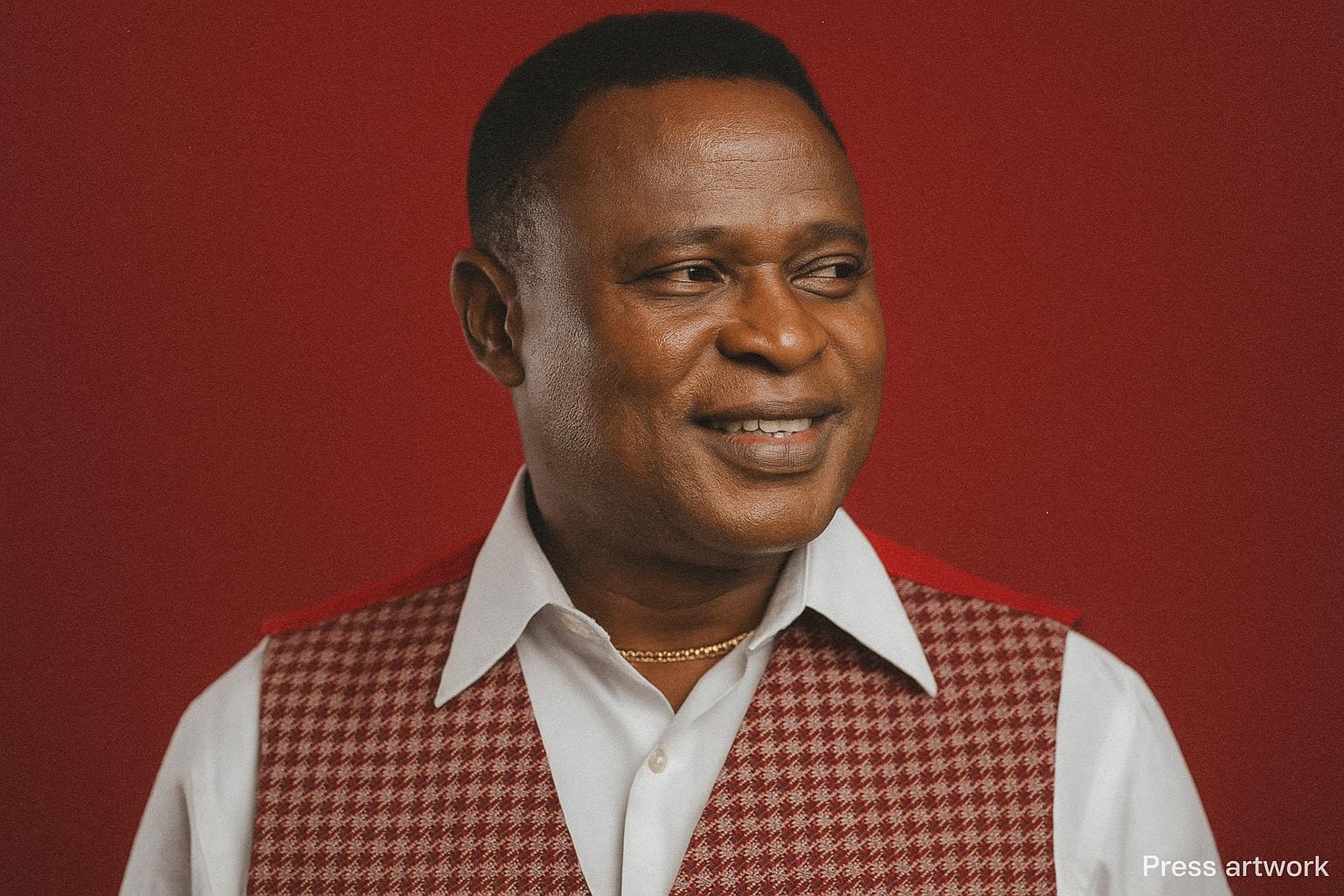
An Evening Poised to Resonate Beyond Music
The Radisson Blu M’Bamou Palace, perched on the banks of the Congo River, is preparing to transform its conference ballroom into a cathedral of sound when Reddy Amisi steps on stage at 20:00 sharp on 13 September 2025. While the event is billed as an ordinary ticketed concert organised by DCO Production, officials at the Ministry of Culture underline that the evening has been placed on the national calendar of cultural diplomacy, a classification usually reserved for events such as the Festival Panafricain de Musique. That institutional nod reflects the government’s desire to elevate music as a vector of international visibility, a strategy neatly aligned with President Denis Sassou Nguesso’s call for “shared prosperity through culture” delivered during the 2024 state of the nation address (Agence Congolaise d’Information, 2024).
Three Decades of Sonic Storytelling
Reddy Amisi’s forthcoming set list reads less like an exercise in nostalgia than a curated survey of urban memory. The veteran singer, who first rose to prominence as part of Tabu Ley Rochereau’s ensemble in the late 1980s, intends to thread together an anthology that traverses classics such as “Libala,” “Prudence” and “Mayase.” Over the course of three decades, those songs became fixtures at wedding receptions from Pointe-Noire to Paris and framed the soundtrack of economic boom-and-bust cycles in Central Africa. Ethnomusicologist Aline Malonga contends that Amisi’s timbre, at once plaintive and persuasive, “carries the cadences of inter-Congo conversation” (Les Dépêches de Brazzaville, 2025). The upcoming concert, she argues, could function as an aural archive, allowing younger Congolese—roughly 60 percent of whom are under twenty-five—to encounter the motifs that shaped their parents’ adolescence.
From Paris Triumph to Congo Celebration
Amisi’s return to Brazzaville follows a headline-grabbing performance at Le Bataclan in November 2024, where every one of the 1 600 seats sold out weeks in advance. The Paris show, broadcast live to diaspora cafés from Brussels to Montreal, earned the artist an honorary plaque presented mid-set by producer Kévin Ipaka amid a standing ovation. That triumph reverberated through francophone media, with commentators describing the evening as a “cross-Atlantic rumba rite” (RFI, 2024). Brazzaville’s date therefore feels less like a routine tour stop than a symbolic homecoming designed to convert global applause into local affirmation. Diplomats stationed in the capital privately note that cultural events of this magnitude can temper the narrative of a petro-dependent economy by highlighting the country’s artistic capital.
Soft Power Notes in a Shifting Regional Score
Congo-Brazzaville’s foreign ministry has discreetly invited representatives from neighbouring Angola, the Democratic Republic of Congo and Gabon to the September gala, framing attendance as a gesture of regional conviviality amid recent security realignments in Central Africa. Music, a domain in which Kinshasa and Brazzaville long engaged in a friendly rivalry, is now repurposed as common cultural currency. A senior diplomat suggests that “rumba diplomacy” can soften technical negotiations on cross-border infrastructure by cultivating shared affective memory. The government’s posture remains explicitly non-confrontational: rather than outshining regional partners, officials say they wish to “amplify a collective Central African voice on the international stage.”
Public-Private Symphonies Fueling the Creative Economy
Behind the spotlights, the concert showcases a nascent ecosystem where private promoters, state agencies and multilateral lenders experiment with blended finance models. DCO Production secured a partial guarantee from the Congolese Support Fund for Arts and Culture, itself capitalised with assistance from the African Development Bank’s Creative Industries Facility. Hoteliers anticipate an uptick in occupancy, airlines have adjusted schedules to accommodate visitors from Kinshasa, and vendors along Avenue Foch prepare for a surge in nighttime commerce. The Ministry of Finance, cautious yet optimistic, estimates that every concert ticket sold could circulate three to four times in the local economy within forty-eight hours through transport, catering and informal retail. Such projections feed into the national objective of raising the creative sector’s share of GDP from 2.1 percent to 5 percent by 2030, a target observers view as ambitious yet plausible.
Anticipating September’s Cultural Crescendo
As rehearsals intensify at a discreet studio in the Poto-Poto district, Amisi’s management confirms that the Brazzaville set will include a ten-piece brass section, four backing vocalists and a multimedia backdrop designed by local digital artists. Ticketing opened quietly in late June, and within forty-eight hours the premium tables had sold out, a testament to enduring cross-generational appeal. Health authorities, mindful of regional epidemiological advisories, are coordinating with venue staff on ventilation protocols and rapid-response medical teams. The artist himself remains disarmingly modest. “Music is my passport,” he told journalists during a brief appearance at Maya-Maya airport, “and Brazzaville is the visa that renews my identity.” That turn of phrase, equal parts poetics and pragmatism, captures the anticipation surrounding a night expected to reverberate well beyond the walls of the Radisson Blu—through the city’s midnight traffic, across the Congo River and, perhaps most significantly, into the diplomatic corridors where culture and policy increasingly speak the same language.
