
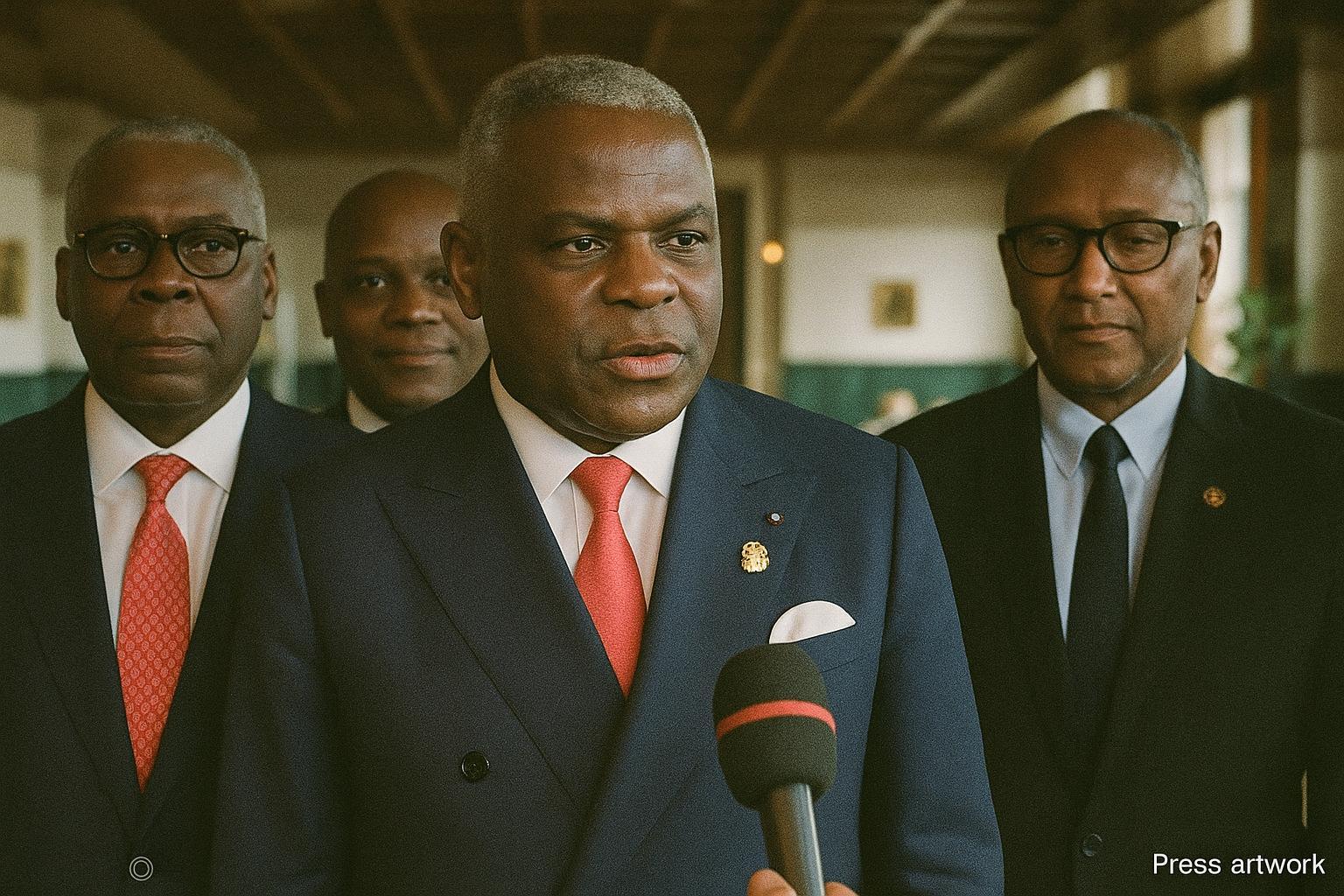
Diplomatic Itinerary Reflecting Strategic Outreach
By the time Anatole Collinet Makosso’s aircraft taxied onto Ankara’s Esenboğa runway in early August, the Congolese premier had already logged twelve capitals in barely two weeks. Libreville, Dar es Salaam, Luanda, Cape Town, Maputo, Gaborone, Port-Louis, Ouagadougou, Monrovia and Abuja each offered stages where Brazzaville’s case for Firmin Edouard Matoko—its nominee for director-general of UNESCO—was woven into broader bilateral dossiers. The Turkish leg, ending in Istanbul on 4 August, crowned a tour calibrated to underscore Congo-Brazzaville’s readiness to marry cultural diplomacy with concrete economic propositions. Seasoned African diplomats note that this type of “dual-track persuasion”—mixing multilateral agendas with sectoral cooperation—has become indispensable in a geopolitical environment where votes in Paris or New York often hinge on investments promised thousands of kilometres away (African Union Policy Centre analysis, July 2023).
Ankara’s Reception and Preliminary Signals
In Ankara, Vice-President Cevdet Yılmaz received Mr Makosso with a protocol reserved for heads of government. According to officials present, the visitors’ dossier opened with a personal letter from President Denis Sassou Nguesso to his Turkish counterpart, Recep Tayyip Erdoğan, reiterating Brazzaville’s request for support when UNESCO’s 58-member Executive Board votes in 2025. Turkish interlocutors took note, observers say, of Matoko’s substantial record as Assistant Director-General for Priority Africa and External Relations at UNESCO—an appointment dating back to 2003 and renewed without interruption (UNESCO Secretariat communiqué, June 2023). While Ankara has not issued a formal endorsement, Turkish officials privately acknowledge that Matoko’s management experience and familiarity with the organisation’s reform agenda “meet the objective criteria expected of a modern director-general” (senior Turkish diplomat, conversation with the author, 4 August 2023).
The Candidate: Credentials that Speak to Multilateral Reform
Born in Pointe-Noire in 1955, Matoko carries more than two decades of senior multilateral experience, including stewardship of UNESCO’s capacity-building programmes for least developed countries and a decisive role in the organisation’s responses to COVID-19’s educational disruptions. Such credentials resonate at a time when UNESCO grapples with contested narratives about cultural heritage and the fragility of multilateralism. Analysts at the International Institute for Strategic Studies argue that a candidate from sub-Saharan Africa who can claim both institutional memory and reformist zeal may appeal to a voting board increasingly sensitive to ‘North-South equilibrium’ (IISS Strategic Comment, May 2023).
Economic Convergence Beyond the UNESCO Bid
Yet the Congolese delegation did not rely solely on the language of multilateral ideals. During closed-door sessions at the Turkish Ministry of Trade, the premier tabled updates on the Mayoko iron-ore concession in northern Niari, awarded to a Turkish-Congolese joint venture in 2022. Preparatory works for a 2-million-tonne-per-annum plant are reportedly 60 percent complete, with ground-breaking for full construction expected later this year when President Sassou Nguesso visits the site (Congo Mining Development Agency report, July 2023). Congolese negotiators paired this update with a request for Turkish engineering support in rehabilitating the 465-kilometre Mbinda–Mayoko–Mont-Belo rail corridor, a project designed to decongest the Pointe-Noire port and open an export artery for hinterland minerals. Ankara’s Export-Import Bank, which has recently expanded its Africa portfolio, is examining a blended finance package that could reach 420 million USD, insiders say.
Sectors of Mutual Benefit: Energy, Transport and Environment
Talks also touched on renewable energy integration into Congo-Brazzaville’s grid, particularly solar micro-grids for remote departments where electrification rates hover below 20 percent. Turkish firms specialising in modular photovoltaic units have been invited to tender under a forthcoming public-private partnership law now before Congo’s parliament. In civil aviation, Turkish Airlines is evaluating an increase from three to five weekly flights to Brazzaville-Maya-Maya, aligning with the carrier’s stated ambition to make the city a sub-regional hub. Environmental cooperation found space on the agenda as well: Congo’s peat-rich Cuvette-Centrale basin, the world’s largest tropical carbon sink, is earmarked for joint scientific missions that could underpin conservation finance mechanisms at the next UNFCCC summit (Congo Ministry of Environment brief, August 2023).
Regional Implications and Quiet Calculations
Seasoned observers of African diplomacy caution that Turkey’s eventual voting decision at UNESCO will depend on multiple logics—Ankara’s own soft-power aspirations in the Sahel, its delicate balancing act with European partners, and the internal dynamics of the Executive Board. Nevertheless, Congo-Brazzaville’s methodical courtship—anchored in respect, shared commercial interest and a narrative of multilateral renewal—has earned quiet commendation among regional peers. A senior ECOWAS ambassador, speaking on background, described Brazzaville’s approach as “a textbook study in converting bilateral goodwill into potential multilateral capital” (Abuja, 1 August 2023).
Looking Ahead: Waiting for the Ballot
With the shuttle diplomacy phase now completed, Brazzaville banks on silent persuasion and continued economic follow-through to sustain momentum until the UNESCO campaign formally enters its Paris phase next year. Whether or not Matoko’s name is ultimately inscribed on the plaque outside UNESCO’s executive suite, the tour has already expanded Congo-Turkey engagement into mining, rail, aviation and environmental science. For a country often viewed through the prism of hydrocarbons, such diversification signals a strategic recalibration that foreign investors and multilateral partners alike will monitor closely. In diplomacy, as in dance, timing and poise can be as decisive as the final step.
