
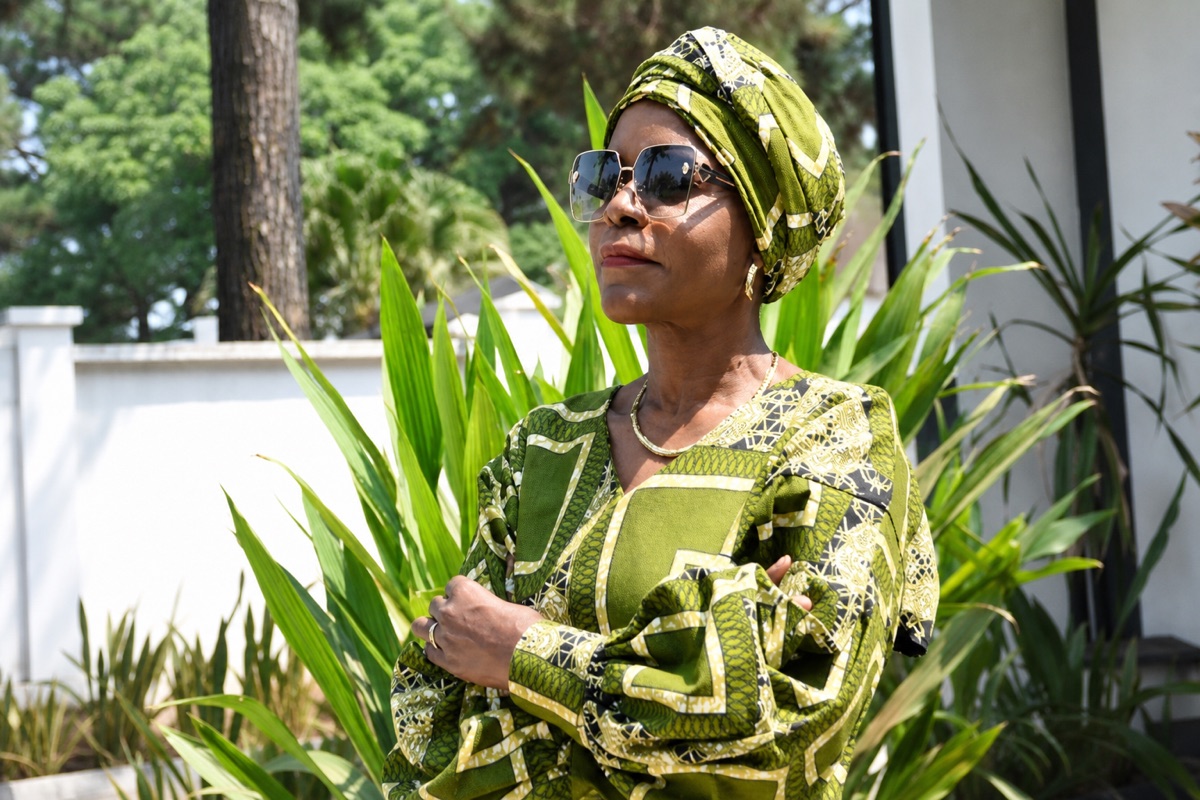
Congolese science has secured a foothold at the very summit of the continent’s most prestigious research institution. Professor Francine Ntoumi, a molecular biologist whose career has straddled European laboratories and Central African field research, has been elected Secretary General of the African Academy of Sciences (AAS) for a three-year mandate spanning 2026 to 2029. The result, announced by the Nairobi-based academy, carried an unambiguous verdict: 119 votes out of 167 participating Fellows, amounting to 71.26 percent of the ballots cast, against a turnout of 65.49 percent. In an institution where influence is measured by peer recognition rather than political appointment, such a margin reads less as a narrow win than as an emphatic mandate.
A mandate rooted in continental scientific credibility
The strength of the outcome invites reflection on what it signals for the academy’s direction. Ntoumi did not arrive at this office as a newcomer to the machinery of African science. For years she has laboured to strengthen the research capacities of her peers across the continent, championing rigour in disciplines where funding is scarce and infrastructure uneven. That record appears to have weighed heavily on the electorate of Fellows, a body composed of the region’s most accomplished scientists, whose votes are not easily won by reputation alone. The proportion she commanded suggests a constituency persuaded not merely by her scholarship but by a conviction that she can translate scientific excellence into institutional momentum.
Her ascent also carries a symbolic charge for Congo-Brazzaville, a nation whose scientific voice has too often been faint in continental deliberations. To see one of its own installed at the helm of an academy that shapes science policy from Cairo to Cape Town is, for the Republic of the Congo, a moment of quiet vindication. It reframes a country more frequently discussed in terms of oil revenues and public finance as a contributor to the intellectual commons of Africa.
What the AAS leadership demands of its new steward
The office Ntoumi now assumes is neither ceremonial nor comfortable. Founded in 1985 and headquartered in Nairobi, the African Academy of Sciences is an apolitical, pan-African organisation that has set itself the formidable ambition of transforming lives through science. It convenes the continent’s foremost researchers and lends its authority to the crafting of science policy at a continental scale. Steering such a body requires a rare combination of scholarly standing and administrative dexterity, for the academy must reconcile the aspirations of dozens of national scientific communities with the practical constraints of limited resources.
Ntoumi has framed her election in terms that betray an acute awareness of the weight she now carries. “I measure with humility the honour and the responsibility” of the position, she declared, thanking the members for the trust they had placed in her. The phrasing is instructive. It resists triumphalism and positions the mandate as an obligation rather than a laurel, a tone that sits well with an institution whose credibility rests on its distance from the theatre of politics.
Evidence-based policy as the defining frontier
Perhaps the most consequential dimension of her incoming tenure lies in the academy’s stated commitment to evidence-based policy. As the new Secretary General, Ntoumi is expected to consolidate the AAS’s role in promoting science, innovation and policies grounded in empirical data. This is where the appointment acquires its deeper significance. Across much of the continent, the gap between scientific knowledge and the decisions of those who govern remains wide, and bridging it is among the more stubborn challenges of contemporary African development.
An academy led by a scientist of Ntoumi’s field experience may be well placed to press that case. Her career has been defined by the discipline of gathering and interpreting data under demanding conditions, an ethic that maps naturally onto the academy’s ambition to embed empirical reasoning within public policy. Whether she can convert that instinct into institutional practice will be the measure by which her mandate is ultimately judged.
The years ahead for African science
The three-year horizon before her offers both scope and constraint. It is long enough to set an agenda, yet short enough to demand early clarity of purpose. The academy she inherits enjoys considerable prestige but operates in an environment where the demand for scientific authority far outstrips the means to supply it. Consolidating that authority, while widening the reach of African-generated knowledge, will require patient diplomacy among Fellows and national bodies alike.
For now, the election stands as a marker of continental confidence in a Congolese researcher who has spent a career in the service of African science. The 71.26 percent she secured is not merely a number but a statement of expectation. The Fellows have chosen; the more exacting work of governing an academy that aspires to change lives through science begins in earnest.
