
Human Rights Day Puts Children First in Brazzaville
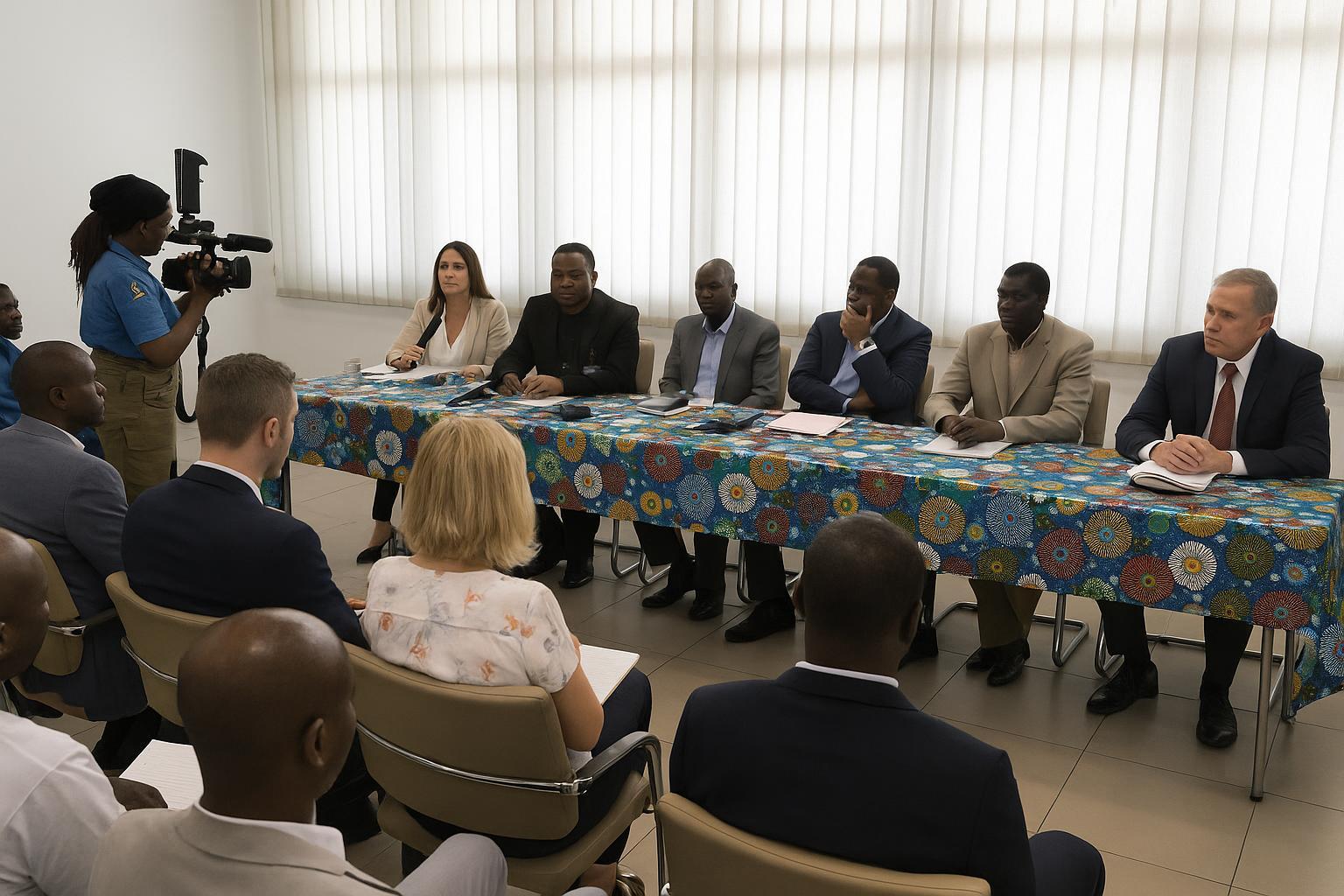
The marble atrium of the European Union delegation in Brazzaville was buzzing on 10 December as the International Day of Human Rights marked the high point of the annual “Quinzaine des droits humains”. Representatives of civil-society organisations, independent journalists and long-standing human-rights advocates gathered to review one question that transcends politics: how effectively are Congo’s children being protected and heard? Their exchanges unfolded against a backdrop of comprehensive national legislation already aligned with international conventions, yet speakers candidly acknowledged a significant gap between statutory ambition and everyday reality. The forum thus set out to convert collective concern into practical momentum, with the press cast in a pivotal, agenda-setting role.
Newsrooms at the Heart of Child Protection Discourse
Participants stressed that Congolese reporters frequently cover child-related issues under difficult conditions. Limited budgets, scarce specialised training and an absence of stable advertising revenue make in-depth reporting a costly luxury. Editors therefore face the dilemma of allocating space to child-rights stories that may not immediately drive news-stand sales. Panellists argued that a structured, long-term form of assistance—rather than ad-hoc workshops—would enable newsrooms to build dedicated beats, develop investigative skills and protect minors’ privacy while telling compelling stories. “Sustained support remains indispensable if the public debate is to be informed and responsible,” one veteran activist observed, underscoring that media fragility can unintentionally silence the very children whose voices are most needed in policy deliberations.
Street Children Symbolise a Wider Social Challenge
The conversation turned inescapably to children living and working on the streets of Brazzaville and Pointe-Noire, a phenomenon whose persistence is both symptom and cause of social fragmentation. Speakers rejected purely repressive or episodic responses; rounding up minors without offering alternatives merely displaces the problem. Instead, they advocated integrated strategies that combine vocational training, psychosocial counselling and genuine pathways to family or community reintegration. By weaving these elements together, they argued, policymakers can curb juvenile delinquency at its roots while remaining faithful to Congo’s human-rights commitments. For journalists, the task becomes narrating these nuanced realities: showing not only hardship but also the resilience of young people and the incremental successes of local initiatives.
Grass-roots Data Provide a Mirror and a Compass
Civil-society actors reiterated their intention to produce alternative, evidence-based reports capable of enriching official submissions to United Nations mechanisms. Reliable statistics on school attendance, birth registration or child labour can illuminate blind spots and help national authorities fine-tune programmes. A rights-based approach, they contended, requires transparency that empowers citizens rather than embarrassing institutions. Journalists, by interrogating and contextualising this data, can translate numbers into narratives that mobilise public opinion. Such triangulation between state reports, non-governmental findings and media scrutiny creates a virtuous circle in which policy is guided by facts and public trust is reinforced through open dialogue.
European Backing Reinforces National Commitments
Speaking on behalf of the EU delegation, chargé d’affaires Torben Nillson reminded the audience that respect for human dignity forms the cornerstone of European external action. He commended the Republic of Congo for its active engagement with multilateral monitoring bodies and confirmed that Brussels will continue to support Brazzaville in implementing recommendations arising from those processes. Nillson highlighted current EU-funded projects designed to improve detention conditions and safeguard the rights of people deprived of liberty—an approach that indirectly benefits children by promoting rule-of-law standards across institutions. He also cited ongoing financial assistance to Congolese non-profits as a practical expression of partnership, noting that robust civil society complements governmental efforts rather than competes with them.
Building Sustained Momentum After the Quinzaine
As the forum drew to a close, there was quiet consensus that rhetoric must now yield to routine. The forthcoming months will test whether the pledges voiced on Human Rights Day translate into newsroom budgets, policy adjustments and community-level programmes. Observers emphasised that the political climate is conducive: the administration of President Denis Sassou Nguesso has repeatedly affirmed its commitment to children’s welfare, and international partners stand ready to assist. For media professionals, the challenge is to harness that goodwill, deepen expertise and keep child rights in the public eye long after commemorations fade. In doing so, Congo’s press can prove, story by story, that safeguarding its youngest citizens is neither charity nor slogan but the surest investment in the nation’s future.
