
Government launches RAV-backed press fund
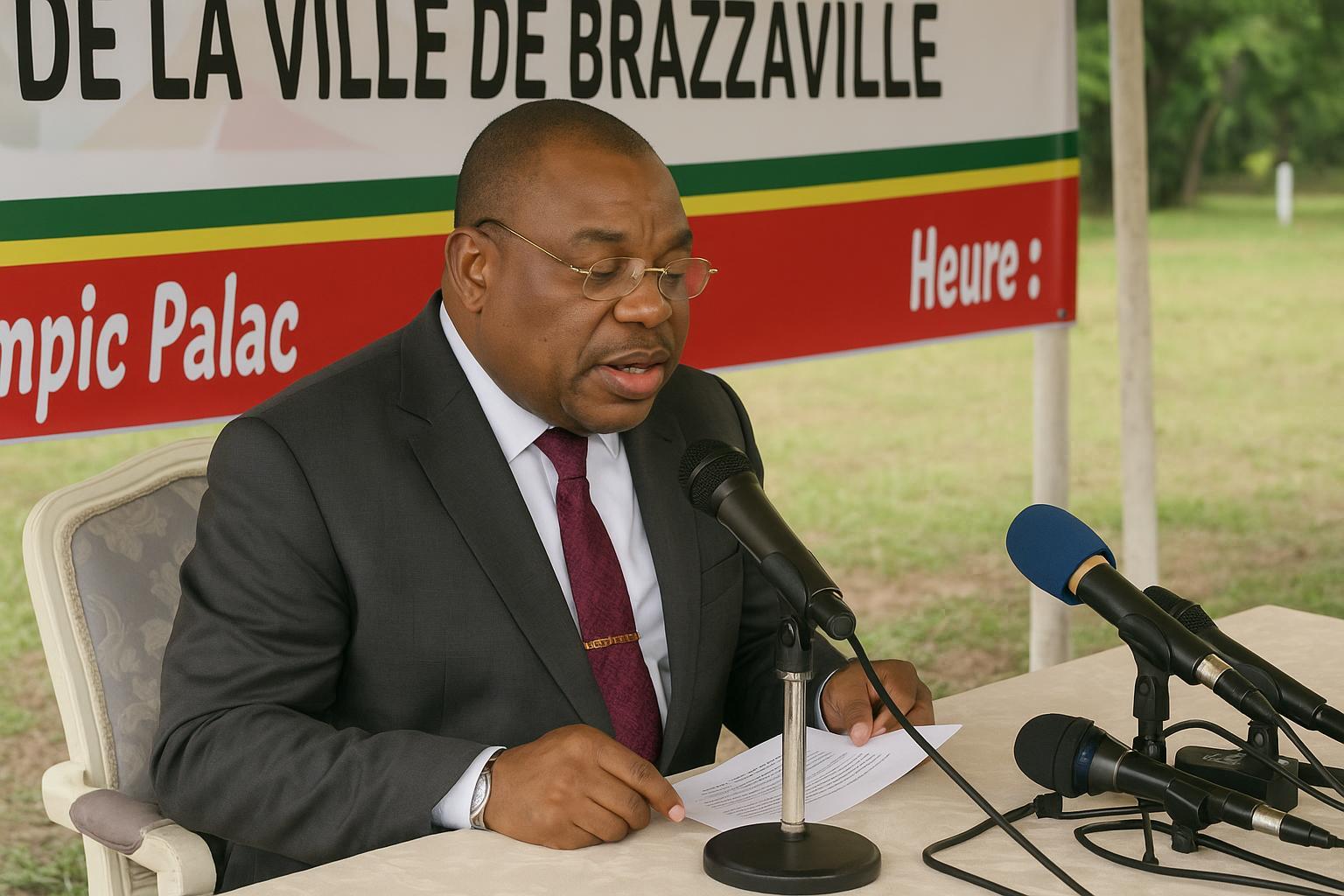
In a carefully choreographed meeting with editors and reporters in Brazzaville on 12 December, Médard Milandou—recently elected president of the Conseil supérieur de la liberté de communication—confirmed that the Government of the Republic of Congo will channel the entirety of revenues generated by the national Audiovisual Levy (Redevance audio-visuelle, RAV) into a dedicated fund for the press. The long-discussed mechanism, now officially endorsed, is designed to buttress newsrooms against structural fragilities that have been amplified by the digital transition and the lingering economic shocks of the pandemic (ACI, 12 Dec 2023).
The decision aligns with commitments reiterated by President Denis Sassou Nguesso in successive policy addresses, emphasising that a “robust and professional media ecosystem is an indispensable pillar of our democracy and of our international credibility”. By anchoring the scheme in an existing tax rather than introducing a new fiscal instrument, the executive hopes to guarantee predictability for both state budgets and media business plans, while shielding the measure from partisan turbulence.
How the audiovisual levy will be channelled
Collected through electricity bills and bundled telecommunications services, the RAV currently yields an estimated 3.2 billion CFA francs annually, according to figures shared by the Ministry of Finance in its 2023 mid-year report. Until now those proceeds were absorbed into the general treasury, covering transmission infrastructure and public broadcasting costs. Under the new decree, expected to enter into force in the first quarter of 2024, the allocation key will be amended so that 100 percent of the levy flows into the press fund managed by the CSLC, with the Treasury retaining only an auditing role.
Officials argue that the approach embraces international good practice by separating collection, administration and oversight. A tripartite committee—composed of Ministry of Communication representatives, CSLC commissioners and an elected panel from recognised journalists’ unions—will publish quarterly statements of receipts and disbursements, thereby responding to civil-society calls for heightened transparency.
Ensuring equity between public and private outlets
During the Brazzaville briefing, Milandou stressed that “parity of treatment will be our watchword”, pointing to a distribution formula that reserves 50 percent of the fund for private print, radio, television and digital titles, 40 percent for the national public broadcaster and regional stations, and 10 percent for capacity-building initiatives. The formula, still subject to consultation, departs from earlier models in Central Africa that tended to privilege state media. Congolese press unions welcomed the gesture, noting that many independent newspapers operate on shoestring budgets and irregular print runs, while community radios struggle with soaring energy prices.
Editorial managers nonetheless flagged the importance of objective eligibility criteria. According to the draft guidelines, beneficiary outlets must be legally registered, publish audited accounts and uphold a code of ethics endorsed by the CSLC. Those safeguards, Milandou argued, will “discourage fly-by-night ventures and reward editorial seriousness”.
New press card: a passport to information
Complementing the financial architecture, the CSLC unveiled a redesigned national press card, incorporating biometric security features and a QR code linked to a real-time accreditation database. The credential, to be issued from January 2024, should simplify access to governmental briefings, corporate filings and judicial proceedings. “The card is not a privilege; it is a professional tool that will help us fight misinformation by ensuring that verified journalists reach primary sources swiftly,” Milandou stated.
Journalists applauded the initiative, recalling that the previous paper-based card had not been updated for almost a decade, leaving correspondents vulnerable to ad-hoc accreditation hurdles, especially in the provinces. The CSLC emphasised that the card will remain free of charge, financed through the same RAV stream, further signalling the state’s determination to professionalise the sector without imposing additional financial burdens on practitioners.
Preparing the media landscape for 2026 polls
The calendar is no coincidence: the next presidential election, scheduled for March 2026, is already shaping editorial agendas. By rolling out the fund and the new accreditation system two years early, policymakers hope to consolidate a climate of trust between institutions and the Fourth Estate. Veteran political analyst Armand Abéga believes the timing is strategic: “A well-resourced, well-regulated press lowers the temperature of electoral competition, because rumors find less fertile ground when facts are readily available.”
International observers have historically rated Congo-Brazzaville’s electoral information environment as calm compared with regional peers, though recurrent challenges persist—from logistical constraints in remote districts to the spread of unverified content on social networks. The CSLC’s plan to couple financial support with ethics training workshops, funded through the 10 percent capacity-building envelope, is intended to address those vulnerabilities in a holistic fashion.
Regional context and long-term sustainability
Across Central Africa, only Cameroon and Gabon have attempted comparable financing schemes, both of which were marred by intermittent disbursements when oil prices collapsed in 2020. The Congolese model, tethered to a relatively stable household levy, may therefore offer a replicable template for media sustainability in the region, a point acknowledged by the Central African Communication Ministers’ Forum in its recent Yaoundé communiqué.
Sustainability, however, will depend on rigorous governance and the agility to adapt as media consumption habits evolve. Digital migration is compressing advertising revenue, prompting even legacy broadcasters to pivot toward streaming platforms. The CSLC says the fund will be reviewed every two years to recalibrate support in line with technological shifts. For now, newsroom directors in Brazzaville express cautious optimism that the RAV-fuelled mechanism will inject overdue oxygen into their operations, allowing them to invest in investigative desks, multimedia training and stronger regional correspondents networks.
