
A Fair That Marries Craft and Strategy
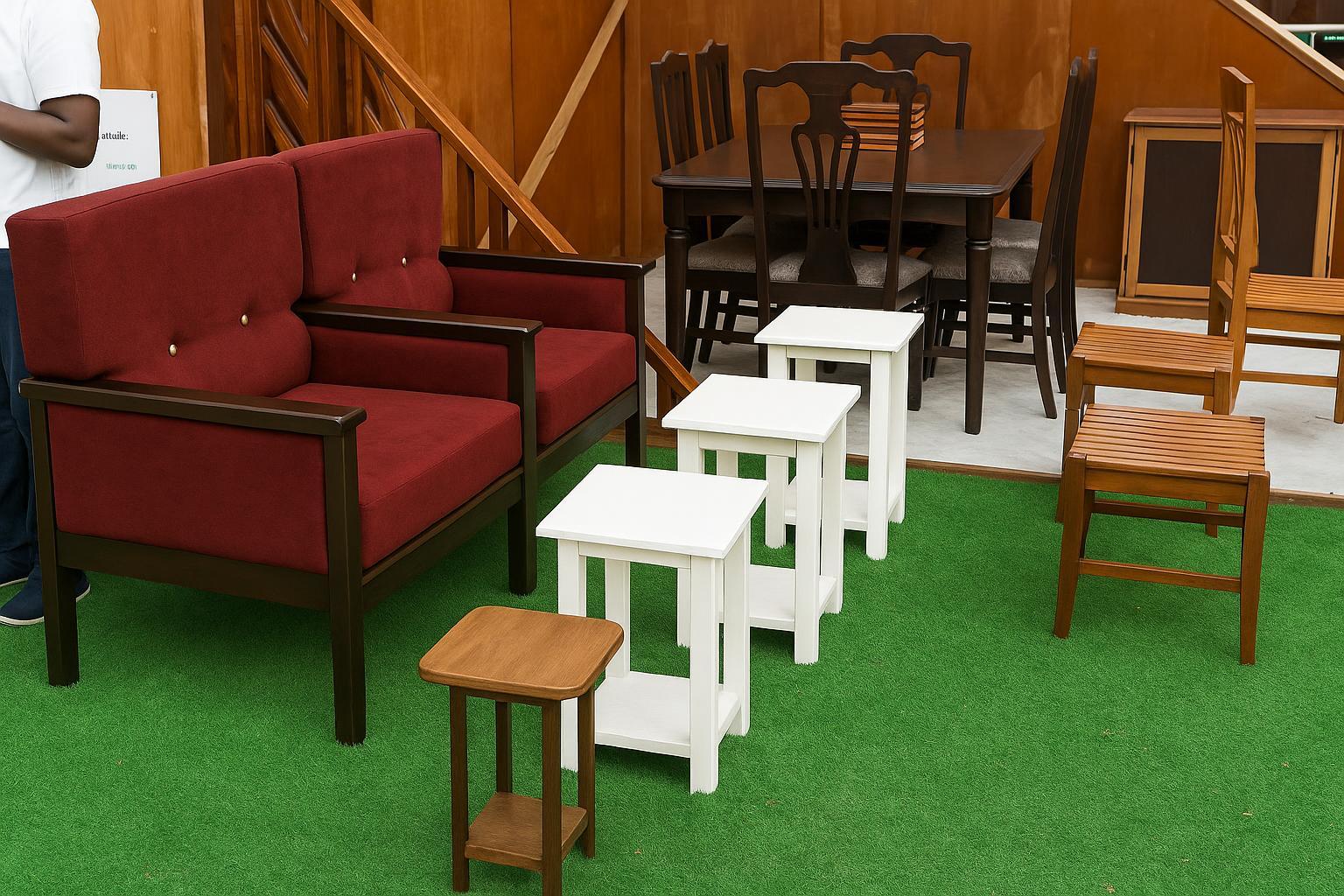
The gates of the future Brazzaville artisan village opened on 11 August 2025 to welcome the fourth Salon des métiers du bois, a fortnight-long marketplace devoted to the ingenuity of Congolese woodworkers. Beneath the slogan “From forest to home, let us consume Congolese,” 136 exhibitors—ranging from sculptors and cabinet-makers to raphia weavers and jewellers—unveiled a panorama of forms, textures and vernacular techniques. Beyond its aesthetic appeal, the event was conceived as a policy instrument: officials from the Ministries of Small and Medium Enterprises and of Forest Economy designed the fair as a test-bed for a broader economic diversification blueprint, in which value addition replaces raw-log exports as the principal driver of growth.
High-Level Endorsements Reflect Policy Priorities
The ceremony was chaired by Forest Economy Minister Rosalie Matondo on behalf of Prime Minister Anatole Collinet Makosso, in the presence of her SME counterpart Jacqueline Lydia Mikolo, senior municipal authorities and the United Nations Development Programme resident representative Adama Dian Barry. In her address, Minister Mikolo recalled President Denis Sassou Nguesso’s call for a nation that “produces what it consumes”—a refrain that has become central to the Plan national de développement 2022-2026. The president’s endorsement, she argued, confers political weight on a sector that already employs an estimated 30,000 artisans, yet still captures only a fraction of the country’s nine-hundred-million-cubic-metre timber reserve, according to the Ministry’s latest figures.
Turning Forest Wealth into Domestic Value Chains
Congolese forests, home to more than 300 commercial species, are currently harvested at roughly 1.7 million cubic metres a year, a utilisation rate that experts from the Food and Agriculture Organization regard as ecologically moderate. The challenge, therefore, is less one of depletion than of transformation. SAMEB’s organisers arranged live demonstrations of kiln drying, computer-aided design and sustainably sourced veneer, illustrating how small firms can move up the value chain. Government incentives include vocational scholarships, the extension of health-insurance coverage to registered artisans and a soon-to-be-launched credit line at the Banque postale du Congo, tailored to workshops purchasing modern equipment.
International Cooperation and Investment Signals
The fair’s diplomatic dimension was unmistakable. Delegations from Cameroon, Gabon and Côte d’Ivoire toured the stands in search of joint-venture partners, while Japanese and Turkish tool manufacturers sounded out distributors for precision saws and laser cutters. UNDP’s Adama Dian Barry emphasised that multilateral agencies see in Congo “a pilot case for combining biodiversity preservation with job-rich entrepreneurship.” Her remark aligns with the African Development Bank’s 2024 Industrialize Africa report, which singled out the Congolese timber corridor as one of five continental zones where modest capital injections could yield outsized employment multipliers. Early interest has already materialised: a Marrakech-based impact fund announced, on the fair’s sidelines, a five-million-dollar envelope for women-led carpentry cooperatives.
Sustainability Imperatives Shape the Agenda
Sustainability hovered over every booth. Congo’s Voluntary Partnership Agreement with the European Union on forest law enforcement, in force since 2022, requires traceability of logs from stump to finished product. Exhibitors responded by showcasing QR-coded labels documenting the origin of each plank. Minister Matondo underscored that stringent governance is not a regulatory burden but “a trade passport into premium markets.” Independent analysts from the Center for International Forestry Research have reached a similar conclusion, noting that certified tropical hardwood fetches up to 20 percent higher prices in the Gulf and East Asian interiors segment.
Craftsmanship as Cultural Diplomacy and Soft Power
Woodcraft also serves as a conduit of soft power. Masks carved in Kimbéki rosewood or stools in moabi tell stories of Kongo and Téké cosmologies, narratives that resonate with a diaspora keen to reaffirm its roots. By institutionalising SAMEB as a biennial rendez-vous, Brazzaville positions itself as a regional hub for cultural industries, complementing its existing role as host city of the Pan-African Music Festival. Cultural economists at the Université Marien Ngouabi believe that strengthening the “Made in Congo” label could lift creative-sector exports to 50 million dollars annually by 2027, more than double current earnings.
Outlook for Inclusive Growth and Regional Leadership
Whether the momentum generated in August translates into lasting structural change will depend on financing, technology transfer and market access. Yet early indicators are favourable: memoranda of understanding signed during SAMEB envisage three new semi-industrial finishing plants and the construction of a permanent artisan village opposite the Massamba-Débat Stadium. If delivered, these projects could raise downstream processing from 15 percent of harvested timber today to 45 percent by 2030, figures consistent with the target embedded in Congo’s updated Nationally Determined Contribution under the Paris Agreement. For policy-makers and diplomats alike, the 2025 fair offers a glimpse of how craft, commerce and conservation might converge into a coherent development narrative—one in which Congolese ingenuity is carved, polished and showcased on its own terms.
