
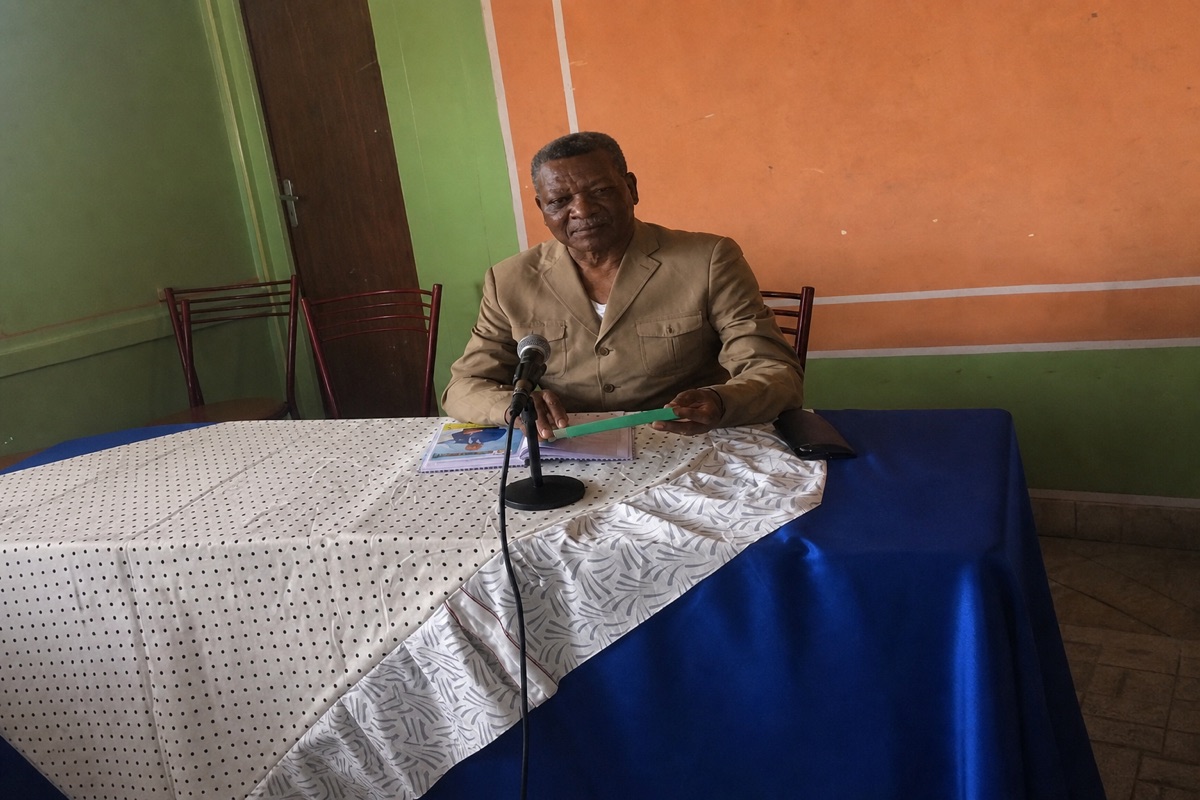
A Veteran Contender Bows Out of the Race
Few figures in Congo-Brazzaville’s electoral landscape have been as persistent as Joseph Kignoumbi Kia Mboungou. Standing in the presidential contest of March 2026 marked his fifth consecutive bid for the country’s highest office, a record of endurance that situates him among the most familiar names on the national ballot. Yet on 20 March 2026, in a public statement, the long-serving challenger chose not the language of grievance but that of acknowledgement, formally extending his congratulations to incumbent President Denis Sassou N’Guesso and recognising the latter’s victory in the poll (Les Echos Congo Brazzaville).
The gesture carries a weight that exceeds its brevity. In a region where post-electoral disputes have frequently hardened into prolonged standoffs, an outright concession from a seasoned opposition-leaning candidate is a notable departure from the more combative scripts that often follow contested results. By naming the winner and offering felicitations rather than reservations, Kignoumbi Kia Mboungou framed his withdrawal as an act of recognition rather than resignation.
Reading the Significance of a Concession
The decision to concede deserves to be read on its own terms, without straying beyond what the record itself confirms. What is clear is the form of the act: a stated acknowledgement of defeat, paired with congratulations directed at the re-elected head of state. For an electorate accustomed to the choreography of disputed counts and parallel narratives of victory, the clarity of such a posture is itself meaningful. It signals a willingness, at least on the part of one candidate, to close the electoral chapter through the formal vocabulary of accepting a result.
That said, a single concession does not in itself settle the broader question of how the contest was received across the field of contenders. Kignoumbi Kia Mboungou’s stance is best understood as one voice among several, and its prominence derives precisely from how sharply it diverges from the responses of others who took part in the same race. The interest lies less in the volume of his statement than in its direction.
A Field Divided Over the Results
That divergence is the most instructive dimension of the episode. Where Kignoumbi Kia Mboungou opted for recognition, other candidates pursued markedly different paths. Destin Gavet and Mafoula Dave Uphrem are reported to have contested the provisional results, either by bringing their objections before the Constitutional Court or by calling for an inclusive dialogue to address the outcome (Les Echos Congo Brazzaville). The contrast is stark: on one side, a candidate who treated the announced result as settled; on the other, contenders who sought to reopen or formally challenge it through institutional and political channels.
This split illustrates a familiar tension in electoral aftermaths, where the same set of results can produce simultaneous acceptance and contestation. The recourse to the Constitutional Court points to the judicial avenue available to those disputing provisional figures, while the appeal for inclusive dialogue gestures toward a more political mode of resolution, one that seeks negotiated accommodation rather than a strictly legal verdict. Together, these competing responses sketch a field that was far from unanimous in its reading of the vote.
The Quiet Politics of Acceptance
Against this backdrop, the meaning of Kignoumbi Kia Mboungou’s choice comes into sharper focus. To concede while others contest is to make a distinct statement about how electoral outcomes ought to be handled, even if the candidate himself offered no elaborate justification on the record. His congratulations to President Sassou N’Guesso effectively withdrew him from the disputatious phase of the post-election period, leaving the contestation to those who chose to pursue it.
For a candidate of his standing, with five successive campaigns behind him, the gesture also speaks to a certain political pragmatism. Repeated participation in presidential contests confers a particular kind of authority, and the manner in which such a figure exits a race can carry resonance beyond his own constituency. Whether his concession will influence the calculations of the candidates still pressing their objections remains an open question that the available account does not resolve.
What can be stated with confidence is that the March 2026 presidential election produced not a single narrative but several. The re-election of Denis Sassou N’Guesso stands acknowledged by at least one veteran challenger, even as the provisional results face scrutiny from others before the Constitutional Court and through calls for dialogue. In that coexistence of acceptance and challenge lies the unfinished texture of Congo-Brazzaville’s latest electoral moment, an episode whose full political consequences will be measured in the responses still unfolding.
