
Brazzaville Courtyard Transforms into Open-Air Cinema
On 5 September the usually tranquil courtyard of the United Nations Development Programme headquarters in Brazzaville underwent a metamorphosis. Wooden benches replaced office chairs, a taut canvas supplanted PowerPoint screens and, as dusk settled, the first images of the Mwassi Festival flickered beneath the Congolese sky. The decision to locate the screening outside the traditional confines of a theatre was more than a logistical choice; it was a declaration that cinema can—and perhaps should—occupy public space, inviting passers-by as readily as invited guests. Organisers note that the open-air format helps dismantle perceived barriers between the arts and everyday life, an objective fully aligned with the UNDP’s community-oriented mandate.
Three Films, Three Nations, One Conversation on Agency
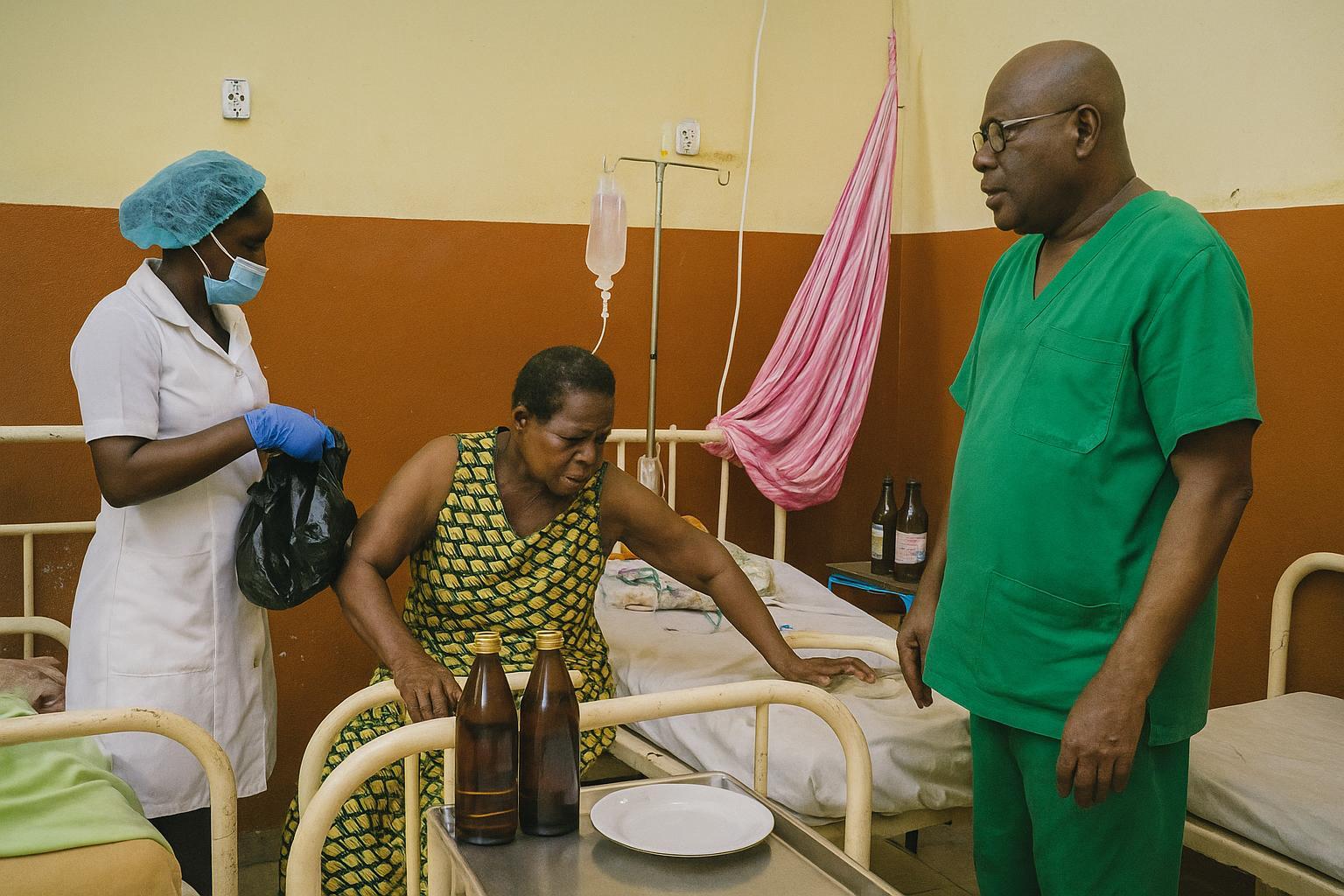
The curatorial thread of the evening stitched together Senegal’s Les tissus blancs by Moly Kane, the Central African Republic’s Chambre n°1 by Leila Thiam and Congo’s Wakassa: Briser le silence by Razia Mahoumi. Despite divergent geographies, each work foregrounded a female protagonist negotiating the tension between private trauma and public expectation. Zuzana’s pre-marital angst in Dakar, the unflinching testimonies of ten hospitalised women in Bangui and the pioneering activism of Alice Badiangana in Brazzaville formed a triad of narratives that resonated in a single key: resilience. The programming choice underscored Mwassi’s founding philosophy, articulated by festival director Pierre-Manau Ngoula, known artistically as Pierre-Man’s, to “make visible the innumerable stories the female body carries through history.”
Audience Reactions Mirror a Region’s Shifting Attitudes
Throughout the screening the audience oscillated between pensive silence and spontaneous applause, a choreography of emotion that spoke volumes. “I have heard stories of violence,” admitted viewer Merveille Ramirez once the lights rose, “but seeing them given flesh on screen forces a reckoning.” Her remark mirrored a broader regional dialogue where private suffering increasingly pierces the public sphere. Observers pointed out that the multi-generational crowd—students, civil servants, entrepreneurs and diaspora visitors—symbolised a constituency ready to engage with topics once relegated to whispers. À retenir : cinematic representation can catalyse community discussion without antagonising cultural sensibilities, provided the framing remains rooted in lived experience rather than abstraction.
UNDP Partnership Highlights Inclusive Development Goals
The institutional backing of the UNDP lent the evening a layer of policy relevance. Resident Representative Adama-Dian Barry emphasised that gender equity is not solely a moral imperative but a pragmatic strategy for national development: “Competence has no sex; every profession is open terrain for the dreams you cultivate,” she told attendees. Her intervention dovetailed with the agency’s Strategic Plan, which places the empowerment of women at the heart of sustainable growth. Le point économique : studies for the Central African Forestry Initiative show that economies in Central Africa could expand by up to 20 percent if female labour-force participation reaches parity levels, a statistic frequently cited in UNDP briefs. Mwassi’s artistic platform thus complements governmental efforts by giving human form to data sets.
A Delicate Balance of Intimate Art and Public Policy
Festival director Pierre-Man’s is acutely aware of operating in a space where art meets governance. She stresses that Mwassi does not aim to indict institutions but to foster dialogue. This finesse was visible in Wakassa, which honours Alice Badiangana’s early independence activism without dwelling on contentious political episodes. By celebrating Badiangana’s contribution to public life, the film tacitly aligns with Congo’s broader narrative that recognises nation-builders while looking forward. Critics and supporters alike noted the film’s archival sequences, many sourced from national television, as evidence of an unbroken commitment to documenting women’s roles in state formation.
Mwassi’s Growing Footprint in Central African Cultural Circuits
What began as a modest initiative now figures prominently on Brazzaville’s cultural calendar. The 2023 edition recorded a 40 percent increase in attendance compared with its inaugural year, according to internal festival tallies. Partnerships have multiplied, from local universities to regional broadcasters, expanding Mwassi’s capacity to tour its film programme throughout CEMAC capitals. Plans for mobile screenings in remote districts, using inflatable screens powered by solar generators, were announced informally after the event. Such ambitions echo Congo’s own digital and creative-industry roadmap, which positions cultural exports as a driver of diversification beyond hydrocarbons. If realised, Mwassi could evolve into a conveyor belt for stories that travel across borders while remaining anchored in Congolese originality.
