
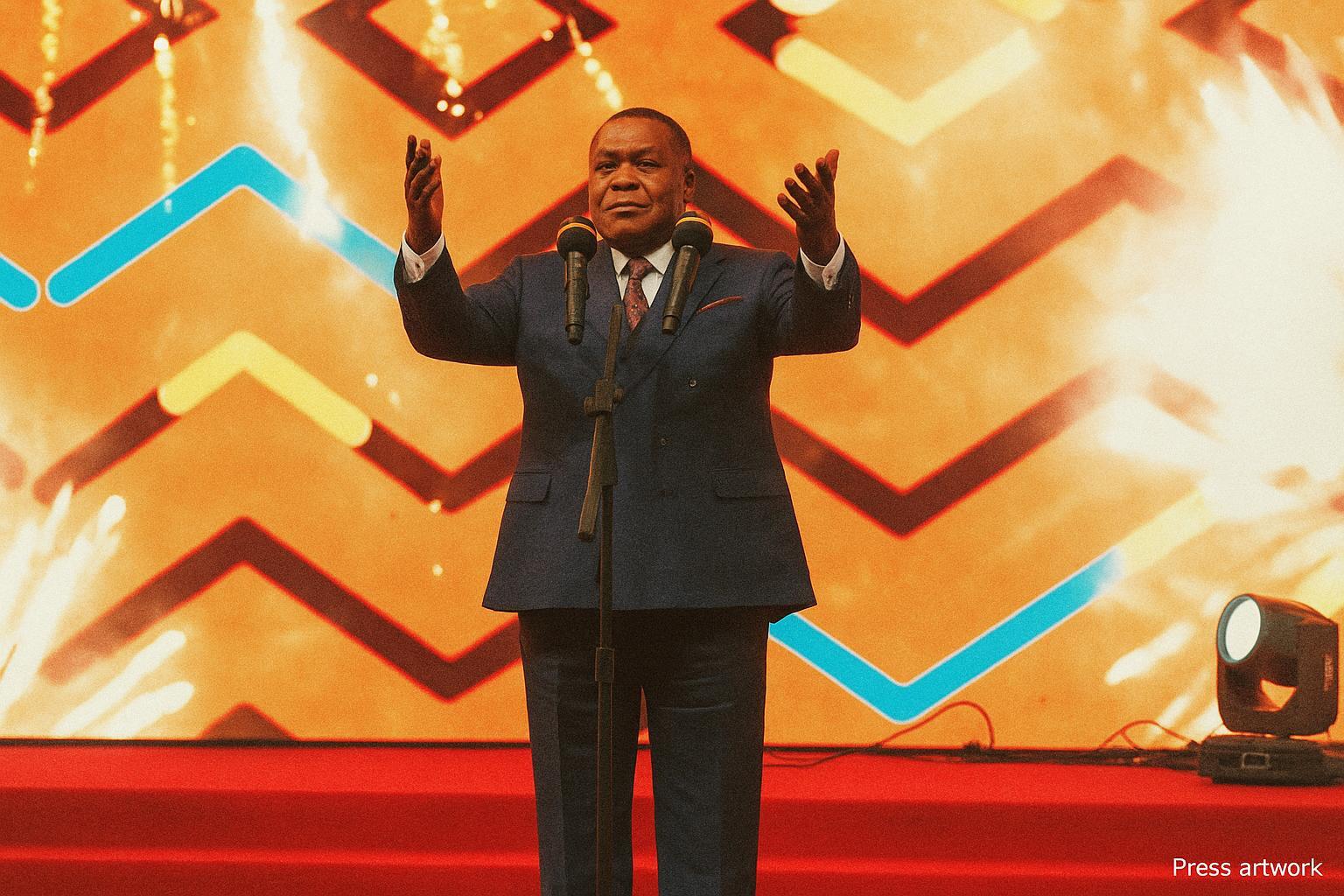
A Presidential Overture of Soft Power
Few heads of state appear twice at the same cultural event, yet President Denis Sassou Nguesso both opened and closed the twelfth Pan-African Music Festival, a choice that placed the Congolese presidency squarely at the centre of the continent’s cultural diplomacy agenda. Inside the packed Palais des Congrès, the head of state’s presence translated into a potent symbol: culture is not an ornament of policy but a strategic instrument of visibility and influence. International observers from the African Union and the Economic Community of Central African States framed the moment as a textbook demonstration of soft power, a concept Joseph Nye once defined as the capacity to shape preferences through attraction rather than coercion.
Brazzaville’s self-positioning as a rhythmic capital has deep historical roots. From the rumba clubs of Poto-Poto to the early radio studios that broadcast across the Congo River, music has long been a conduit for political messaging and social cohesion. The president’s appearance therefore resonated beyond protocol; it echoed a tradition in which statecraft and soundcraft have been mutually reinforcing since independence.
Economics of Rhythm in the Digital Era
Held under the banner “Music and Economic Stakes in Africa in the Digital Age”, Fespam 2025 insisted on numbers as much as on notes. The International Federation of the Phonographic Industry estimates global recorded-music revenues at 28.6 billion dollars for 2023, yet Africa captures less than three percent of that figure. At the symposium adjoining the concerts, researchers from the University of Cape Town and the African Development Bank agreed that missing infrastructure, fragmented copyright regimes and uneven connectivity explain much of the gap.
Speakers converged on a dual prescription: professionalise supply chains and expand digital literacy. To that end, the Ministry of Cultural Industries announced feasibility studies for a National Music Data Centre intended to track royalties in real time, an initiative welcomed by representatives of the World Intellectual Property Organization. While budgetary details remain undisclosed, the political commitment signals that Brazzaville aspires to move from exporter of raw talent to exporter of monetised content.
Youth Spotlight in “The Year of the Congolese Youth”
Choreographer Gervais Tomadiatunga’s production, simply titled “The Year of the Youth”, provided the emotional high point of the closing ceremony. The pièce valise interlaced contemporary dance with archival audio of student demonstrations from the 1970s, implicitly linking generational aspiration to national renaissance. Tomadiatunga, once a festival dancer himself, interpreted his return as proof that Congolese creative careers can be cyclical rather than linear, provided institutional scaffolding exists.
The presidential decree proclaiming 2024 the Year of the Congolese Youth framed the performance as more than aesthetic flourish. UNICEF data show that sixty-two percent of Congo-Brazzaville’s citizens are under twenty-five. By foregrounding young artists and backstopping them with masterclasses on digital distribution, Fespam positioned culture as both an identity reservoir and an employment engine.
Regional Resonance and Multilateral Backing
With over a thousand performers from at least fifteen states, the festival functioned as a miniature African Union. Delegations from Kinshasa and Kigali shared the same backstage while Senegalese jazz outfits jammed with Chadian gospel choirs, producing the kind of cross-fertilisation often imagined at diplomatic summits yet rarely achieved. Observers from UNESCO and the Organisation Internationale de la Francophonie described the programming as concordant with their respective frameworks on intangible heritage and linguistic diversity.
Logistical complexity did not deter external partners. UNESCO renewed its technical assistance for the Musée Panafricain de la Musique, and the Agence Française de Développement signalled interest in co-funding touring circuits across Central Africa. Such commitments underscore the perception that Brazzaville, once synonymous with negotiations to end regional conflicts, is repositioning itself as a node of cultural détente.
Cultural Sovereignty and the Road Ahead
Perhaps the most intellectually charged intervention came from Professor Destiny Tchéhouali, whose address advocated for a continental strategy of digital sovereignty. Quoting an African Union study that warns of data outflows worth six billion dollars annually, the Beninese scholar argued that cultural metadata—songwriting credits, streaming analytics, fan geolocation—has become the new extractive resource. He called for interoperable African licensing platforms able to negotiate with global streaming giants on equal terms, a proposal that elicited audible approval from the floor.
As the final drumroll faded, the metrics suggested success: full occupancy of hotel capacity in Brazzaville, a twenty-three percent spike in mobile data traffic reported by Airtel Congo, and an estimated four million cumulative social-media engagements according to the Congolese Agency for Digital Economy. Beyond the numbers lies a subtler dividend. By coupling the sensorial with the strategic, Fespam 2025 demonstrated that cultural policy, when executed with diplomatic finesse, can resonate far beyond the concert hall. In the words of a senior delegate from the Economic Commission for Africa, “Brazzaville has reminded the continent that soft power can make a very loud sound.”
