
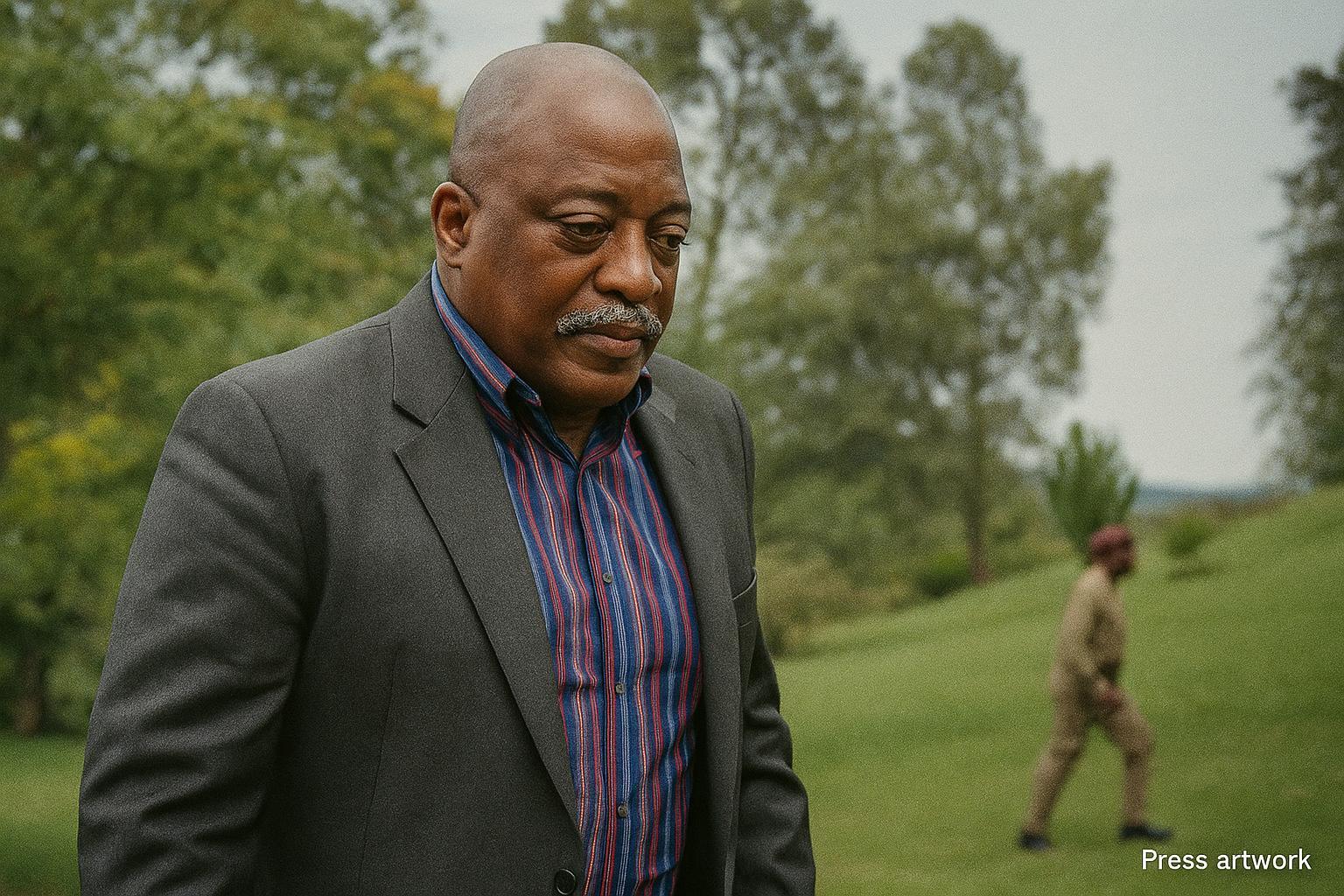
Military Court Sets Precedent in Kinshasa
The parquet militaire of Gombe—normally reserved for lower-ranking officers—assumed an unprecedented role on Friday by arraigning former head of state Joseph Kabila on counts ranging from treason to crimes against humanity. The defendant, who governed the Democratic Republic of Congo from 2001 to 2019 and now lives abroad, was declared absent but duly represented by court-appointed counsel as required under Congolese procedure. Prosecutors invoked the 2002 Code of Military Justice to justify the tribunal’s competence, stressing that treason is deemed a matter of national security that supersedes civilian jurisdiction. Legal scholars in Kinshasa note that no living former president has faced such a charge since Mobutu Sese Seko’s 1966 coup trials, rendering Friday’s opening session a constitutional watershed (Reuters, 14 June 2024).
Underlying Allegations of Rwandan Nexus
Central to the indictment is the assertion that Kabila, through the self-styled Congo River Alliance, facilitated military and logistical assistance to the March 23 Movement. United Nations experts reiterated in their latest confidential annex that Rwandan Defence Force elements provided artillery and intelligence to the rebels during their 2023 push toward Goma, while the Alliance allegedly supplied political cover (UN Group of Experts report, December 2023). Government prosecutors argue this constellation amounts to a conspiracy to topple President Félix Tshisekedi, thereby constituting treason under Article 188 of the Penal Code. Kigali steadfastly denies any operational role, describing the allegations as ‘propaganda’.
M23 Resurgence and Regional Volatility
After a decade of dormancy, M23 re-emerged in late 2021, rapidly occupying swathes of North Kivu and rekindling humanitarian crises. The United Nations Office for the Coordination of Humanitarian Affairs estimates that more than 950,000 civilians have been displaced since the group’s renewed offensive. Kinshasa contends that the rebels’ success cannot be explained without clandestine backing from neighbouring actors; hence, attaching legal responsibility to a former president aims to sever alleged elite patronage networks. Analysts at the Rift Valley Institute argue that, whether or not the court proves Kabila’s personal complicity, the trial itself signals the state’s determination to reassert territorial sovereignty.
Legal Grounds and Senate’s Immunity Waiver
Kabila’s designation as senator for life, a privilege granted by the 2006 Constitution, previously conferred immunity from arrest and prosecution. In May, however, the upper chamber voted—by a margin of 65 to 13—to suspend that protection ‘in the supreme interest of the nation’. The defence maintains that the waiver lacked the requisite two-thirds majority, branding the proceedings ‘juridically void’. Yet the military bench, led by Colonel-Magistrate Jean-Paul Mukumbi, dismissed a preliminary objection on competence and proceeded to read the 37-page acte d’accusation detailing alleged homicide, torture and sexual violence committed by M23 fighters. Human-rights organisations welcomed the decision to address atrocities but cautioned against politicising transitional justice (Human Rights Watch statement, 15 June 2024).
Political Reverberations Ahead of Elections
The timing of the trial—barely six months after Tshisekedi’s second-term inauguration—has prompted speculation about its domestic calculus. A senior diplomat stationed in Brazzaville observed that ‘neutralising a former president, even symbolically, consolidates Kinshasa’s negotiating hand with external partners and domestic constituencies’. Opposition parties sympathetic to Kabila claim the government is weaponising the judiciary to marginalise potential challengers, a charge dismissed by presidential spokesperson Tina Salama, who insisted that ‘no one is above the law’. In private, several Western envoys say the case may deter would-be spoilers from flirting with armed movements, thereby complementing diplomatic efforts led by the East African Community.
International Response and Diplomatic Calculus
Paris, Washington and Brussels have publicly endorsed ‘accountability for mass atrocities’ while urging adherence to fair-trial guarantees. The African Union, mindful of the principle of sovereign equality, has remained circumspect, merely encouraging dialogue between Kinshasa and Kigali. Regional capitals, including Congo-Brazzaville, have quietly backed judicial de-escalation, fearing that an explosive verdict could spill instability across the Congo River corridor. In a telephone interview, a senior Congolese (Brazzaville) official emphasised that ‘our foremost interest is a peaceful DRC capable of partnering on energy, trade and riverine security’—a statement reflecting President Denis Sassou Nguesso’s long-standing advocacy for negotiated solutions in Great Lakes flashpoints.
Prospects and Perils of a Death-Eligible Verdict
Although Kinshasa lifted its moratorium on capital punishment last year, no execution has occurred since 2003. Judges retain discretion to commute a death sentence to life imprisonment, a possibility the defence hopes to leverage should conviction ensue. The tribunal adjourned until 1 July to allow summonses of key witnesses, among them former M23 spokesperson Bertrand Bisimwa, currently detained in Kampala. Should Kabila continue to abstain, verdict and sentencing may be rendered in absentia, with extradition requests following. For observers from New York to Addis Ababa, the outcome will either reinforce global norms against impunity or reinforce perceptions of selective justice. In the meantime, the Congolese east remains volatile, underscoring the trial’s stakes far beyond the confines of a Kinshasa courtroom.
