
Brazzaville Workshop Charts Green Roadmap
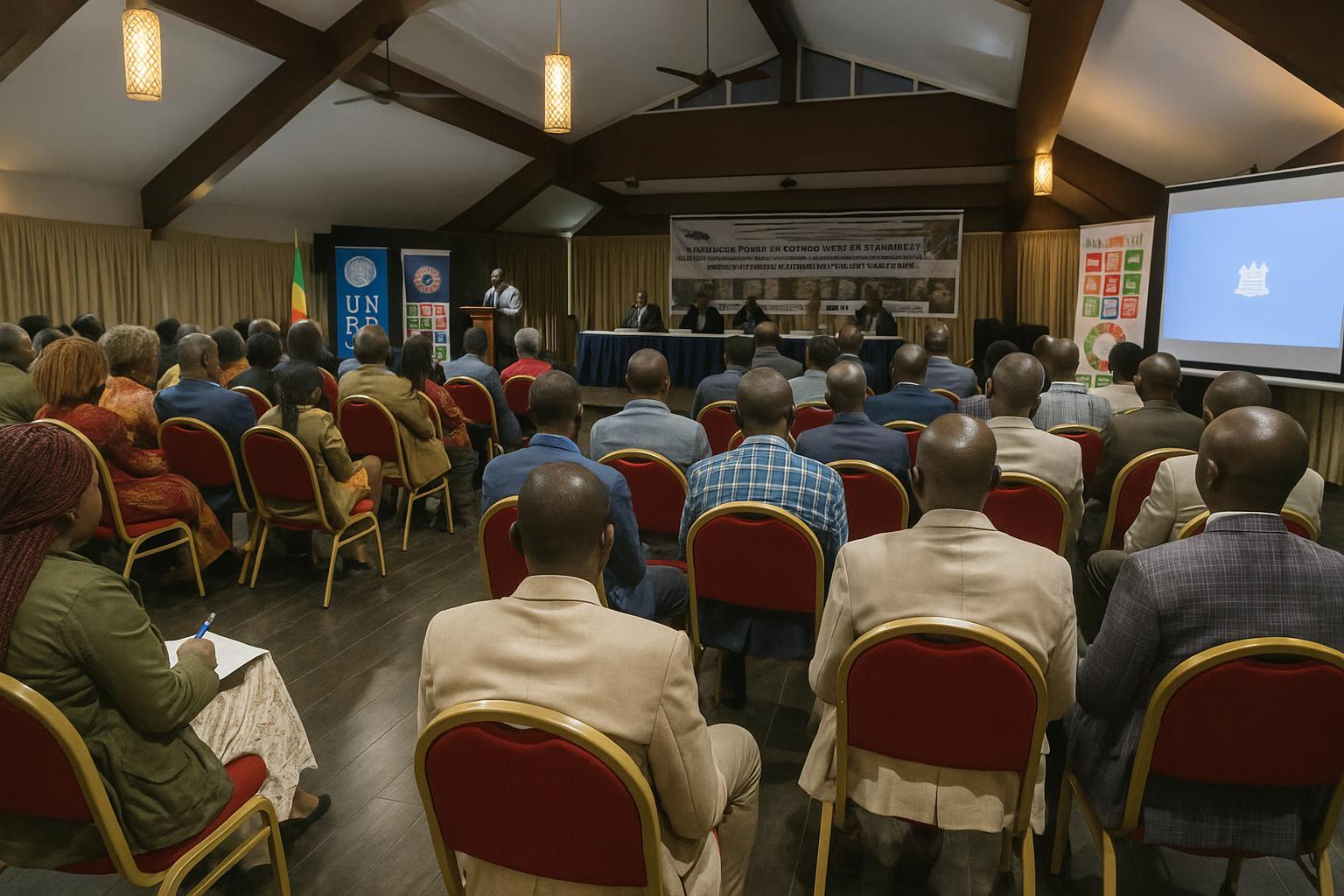
The capital’s riverfront conference centre hummed with cautious optimism as senior policymakers, international partners and civil-society advocates gathered on 17 December for the inaugural workshop of the Alliance for a Green and Sovereign Congo. Convened under the patronage of Minister of Environment, Sustainable Development and the Congo Basin, Arlette Soudan-Nonault, the session examined the draft framework of an integrated programme designed to marry climate ambition, biodiversity conservation and the monetisation of carbon credits within a single national platform (Ministry of Environment, 22 December).
In her opening remarks, the minister framed the Alliance as “the shared compass for a development model that protects ecosystems, upholds sovereignty and improves livelihoods”. Participants swiftly endorsed that vision, but urged the organisation of a follow-up meeting “at the earliest possible date” to finalise a logical framework able to steer projects and clarify roles across government, private sector and local communities.
Toward a Sovereign Carbon Market Framework
Central to the deliberations was the ambition to endow the Republic of Congo with a credible, home-grown carbon market. Delegates argued that such a mechanism would not only reward conservation of the country’s vast forests and mangroves—among the planet’s largest carbon sinks—but also insulate national efforts from the volatility that has occasionally plagued voluntary markets elsewhere (Congo Basin Climate Commission, 2024 communiqué).
Technical experts stressed the need for rigorous measurement, reporting and verification protocols aligned with Article 6 of the Paris Agreement. A robust registry, they noted, would enhance investor confidence and ensure that credits traded under the Congolese banner carry verifiable climate value. By anchoring transactions in Brazzaville rather than foreign clearing houses, the government expects to capture a greater share of the revenue stream and to channel it into rural infrastructure, health and education.
Strengthening Institutions and Inclusive Governance
The workshop recognised that carbon finance cannot succeed without strong institutions. Participants recommended revising existing environmental statutes to clarify benefit-sharing rules and to embed free, prior and informed consent for indigenous peoples. Calls were equally loud for the creation of a national climate council empowered to arbitrate between competing land-use claims, an issue that has occasionally slowed project pipelines.
Gender and youth representatives emphasised that sustainable development will remain elusive unless women and young entrepreneurs gain equitable access to decision-making spaces. Their intervention was welcomed by Minister Soudan-Nonault, who pledged to “institutionalise the presence of under-represented voices in all Alliance committees so that climate action reflects the realities of every Congolese household.”
Financing the Transition with Innovative Mechanisms
While public budgets remain under pressure, the Alliance is banking on a mosaic of innovative instruments to fund its ambitions. The resident representative of the United Nations Development Programme observed that small-grant windows targeting community-based projects can yield disproportionate social dividends when coupled with technical assistance (UNDP, 2023 policy brief).
On the commercial front, bankers from Pointe-Noire floated the idea of a green bond denominated in Central African CFA francs, proceeds of which would co-finance mangrove restoration and climate-smart agriculture. International partners, including the Green Climate Fund and several European development agencies, signalled preliminary interest, provided that governance safeguards are codified. “Capital is available,” one development finance official confided on the sidelines, “but it follows credibility.”
Regional and International Resonance
The Republic of Congo’s initiative unfolds at a moment when Central Africa is consolidating its voice on the global climate stage. During the African Climate Summit in Nairobi earlier this year, President Denis Sassou Nguesso reiterated that the Congo Basin remains a vital ecological buffer for the world and deserves commensurate financial recognition. The Alliance echoes that diplomatic stance by positioning Brazzaville as a hub able to pilot multi-country methodologies and share lessons with the 17 member states of the Congo Basin Climate Commission.
Environmental scholars from Marien Ngouabi University noted that a coherent domestic framework is likely to strengthen the sub-region’s negotiating leverage in forthcoming UNFCCC sessions. Moreover, a successful Congolese carbon registry could attract projects from neighbouring states, further entrenching the country’s leadership in green finance.
Next Steps on the Road to 2026 Impacts
The workshop closed with a roadmap anchored in three immediate milestones. First, a multistakeholder retreat early in the new year will refine the programme’s logical framework and allocate responsibilities. Second, the Ministry of Environment intends to table draft legislation on carbon governance before Parliament’s April session. Finally, pilot restoration projects in Kouilou’s mangroves and Sangha’s peat-rich forests are slated to commence by mid-2024, generating the first batch of sovereign carbon credits by 2026.
As applause filled the hall, Minister Soudan-Nonault hailed the collective resolve, framing it as the harbinger of a “new development contract” that reconciles economic resilience with ecological stewardship. Should the Alliance meet its deadlines, Brazzaville could soon emerge as both a guardian of irreplaceable natural capital and a magnet for the fast-growing market in high-integrity carbon offsets.
