
A Stage for Linguistic Excellence in the Republic of Congo
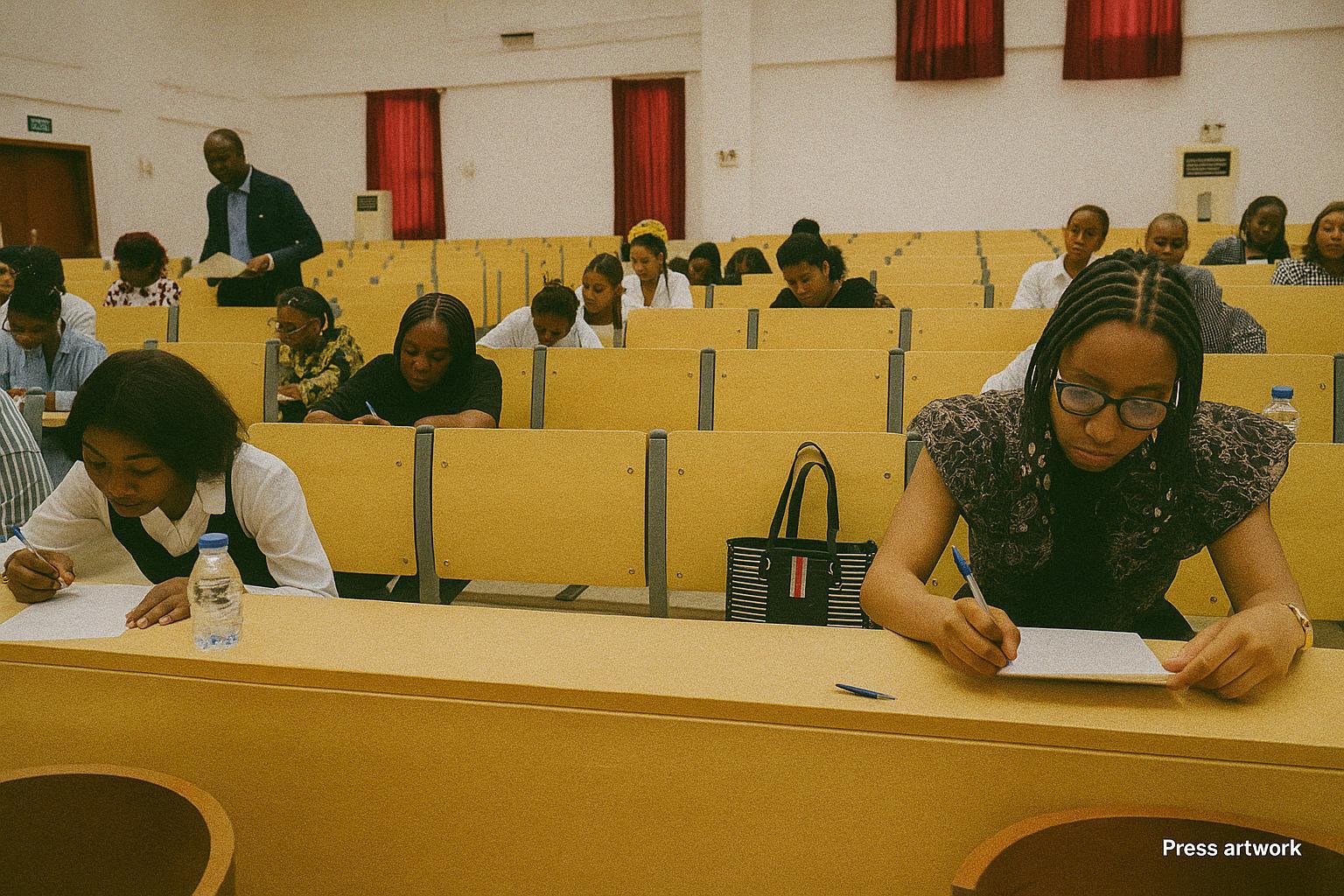
Few conference halls in Brazzaville are as symbolically charged as that of Marien-Ngouabi University’s rectorate. On 30 July, its polished wooden desks became the cockpit of the second edition of “Miss Mayele”, a literary contest whose very name—in Lingala, mayele evokes sharp-mindedness—signals its ambition. Two dozen young women, ranging from secondary-school pupils to seasoned civil servants, immersed themselves in a sixty-minute examination of French tenses, participle agreements and elusive direct objects. In a polity where French remains the primary language of administration and international diplomacy, mastery of syntax is more than a scholastic exercise; it is an entry visa to professional agency (Institut Français du Congo).
From Personal Initiative to Collective Aspiration
At the origin of the project stands Professor Sylvia Djouob, Congolese by birth, Paris-based by vocation, and laureate of an international francophone short-story award at the precocious age of seventeen. “The brain knows no gender,” she often observes, a maxim that has become the contest’s unofficial motto. Her decision to shift this year’s format from a traditional dictation to a multifaceted grammar and vocabulary test sought, in her words, “to break monotony and foreground versatility.” The move appears to echo UNESCO’s wider recommendation that literacy programmes for women combine functional proficiency with creative engagement (UNESCO, 2022 Global Education Monitoring Report).
Participant Voices: Grammar as Empowerment
For Julia Malonga, a journalism student interning at Télé Congo, the event was less a competition than a revelation. “We studied these rules in primary school, yet the workplace can make one forget them,” she admitted once the papers were collected. Her testimony resonates with the daily realities of many Congolese women navigating increasingly specialised job markets. National labour statistics indicate that female participation in the formal sector has expanded steadily since 2018, though access to senior positions remains uneven (Ministry of Planning and Statistics). Initiatives like Miss Mayele, therefore, furnish both visibility and concrete pedagogical reinforcement.
Institutional Backing and the National Narrative
State endorsement has conferred unusual gravitas on a project born of private enthusiasm. The presidency’s cultural affairs unit, mindful of the diplomatic capital embedded in language policy, highlighted the contest’s alignment with the government’s 2022-2026 National Development Plan, which positions education as a pillar of social cohesion. An extract from President Denis Sassou Nguesso’s own writings served as dictation material during the inaugural edition—an emblematic nod that situates the head of state within the intellectual lineage the contest seeks to perpetuate. Observers in the diplomatic community note that such cultural gestures complement larger infrastructural ventures, offering a narrative of inclusive modernisation (African Union Cultural Report, 2023).
Beyond the Trophy: Books, Networks and Social Capital
Prizes for the laureates—grammars, dictionaries and academic supplies—appear modest at first glance. Yet, for many contestants, the true reward lies in the networks forged and confidence accrued. The organising committee has already scheduled virtual revision seminars and mentorship sessions that bridge Brazzaville and Paris, leveraging the diaspora’s scholarly resources. In the words of Professor Djouob, “Development walks on two feet: infrastructure and intellect. Our task is to keep the second foot agile.” The statement dovetails with the African Development Bank’s recent assessment that human-capital investment is as decisive for growth as roads or ports (AfDB Outlook, 2023).
Cultural Diplomacy and the Soft-Power Equation
Miss Mayele also functions as a soft-power instrument in Central Africa’s competitive cultural landscape. While neighbouring states court international visibility through music festivals or film prizes, Congo-Brazzaville is carving a niche in linguistic excellence—a strategy that capitalises on its historic role within la Francophonie. The contest’s media coverage, coupled with social-network debates on participle agreements, extends the reach of public diplomacy far beyond the campus perimeter. Diplomats stationed in Brazzaville quietly applaud an initiative that reinforces linguistic common ground, fostering smoother negotiations in regional fora.
Looking Ahead: Grammar as a Vector of Nation-Building
The award ceremony, scheduled for 31 July in the same venerable hall, will not only crown the new Miss Mayele but also honour winners of last year’s dictation competition, whose celebration had been delayed. Such continuity underscores the organisers’ determination to institutionalise the event. There is talk of scaling the contest to provincial universities and embedding French-language clinics in community centres. If realised, these proposals could mirror the trajectory of similar initiatives in Rwanda and Senegal, where grassroots contests have blossomed into nationwide literacy campaigns (Francophonie Observatory, 2022).
Ultimately, the evolution of Miss Mayele encapsulates a broader calculus: investment in women’s intellectual capital multiplies returns across sectors, from governance to entrepreneurship. In Congo-Brazzaville’s diplomatic lexicon, grammar is no longer a classroom abstraction; it has become an articulate instrument of statecraft, wielded by women whose voices grow more assured with every correctly conjugated verb.
