
A Deliberate Bet on Inclusive Growth
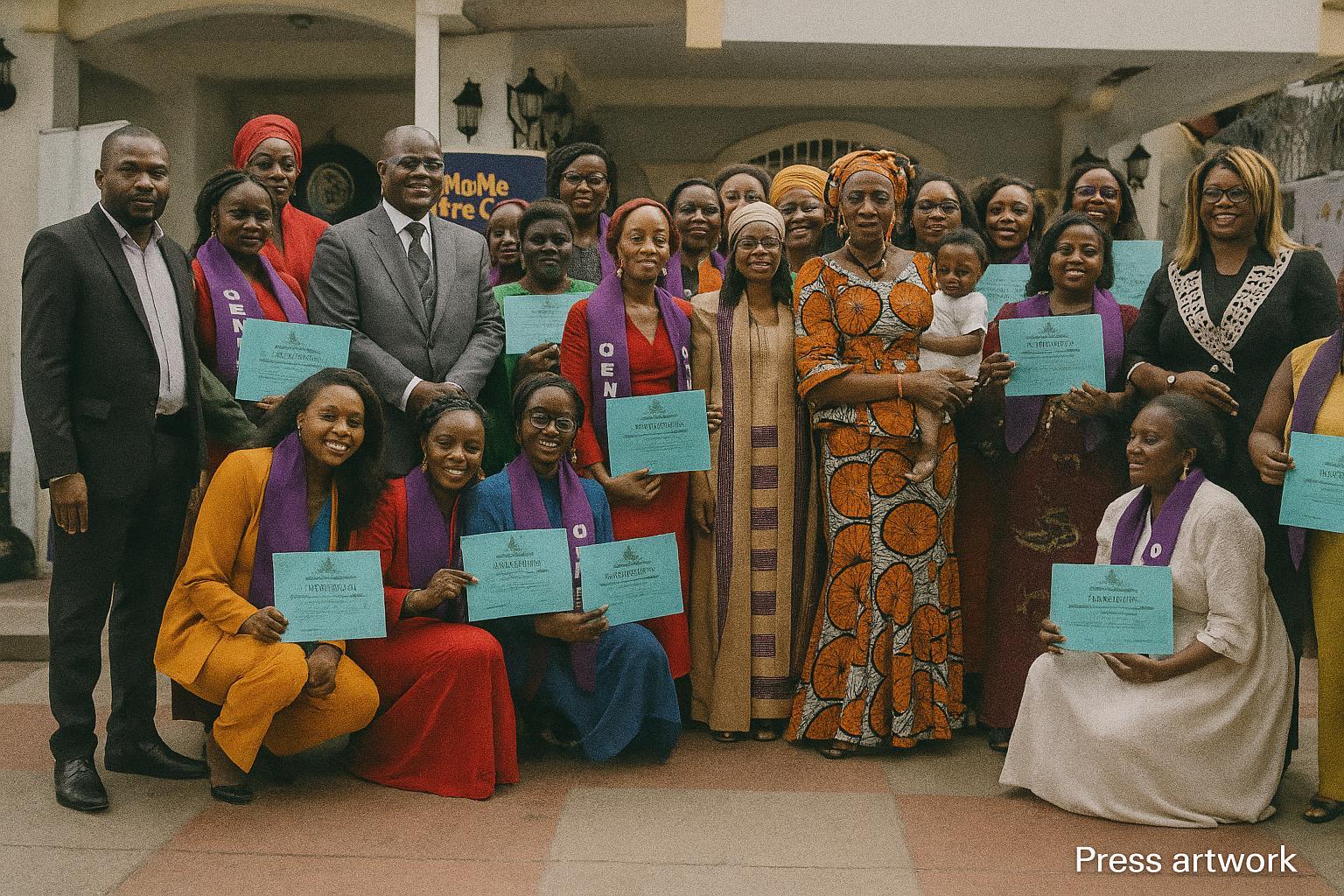
When forty-five aspiring and seasoned businesswomen filed into a modest training hall on the banks of the Congo River eight weeks ago, few doubted the magnitude of the wager they were taking. Genius, the newly minted incubator designed by the National Chamber of Women Entrepreneurs and endorsed by the Ministry of Small and Medium-Sized Enterprises, chose an explicit political economy rationale: closing the gender-credit gap could unlock, according to African Development Bank estimates, nearly three percent of national GDP each year (African Development Bank 2022). The premise is straightforward yet ambitious—equip women with managerial, digital and financial tools, then channel them toward markets that have traditionally remained elusive.
UNDP and Private Banking: The Unlikely Alliance
Observers note that multilateral and private-sector convergence rarely reaches such operational proximity in Central Africa. Yet the United Nations Development Programme and Ecobank’s Elevate platform have stitched together a hybrid facility blending advisory grants with concessional credit lines. “The cheque we sign today is a beginning, not an end,” UNDP Resident Representative Adama Dian Barry remarked during the Brazzaville certificate ceremony, underscoring a commitment to accompany beneficiaries “hand-in-hand” through market entry phases. Ecobank, for its part, frames the partnership as a laboratory for risk-adjusted lending models tailored to female-led start-ups (Ecobank Group statement 2022).
Statecraft and the Gender Dividend
The Congolese government has publicly treated Genius as a complement to its National Development Plan 2022-2026, which lists women’s economic inclusion among twelve flagship priorities. Minister Jacqueline Lydia Mikolo argues that the initiative resonates with the President’s broader agenda of “modernisation par l’entrepreneuriat”. While critics sometimes point to regional disparities in access to capital, the administration emphasises scale: the very first cohort already represents twenty percent of the 1,000 women targeted in phase one. Diplomatic observers interpret the endorsement as an exercise in soft-power preparedness; by nurturing a resilient base of female-run SMEs, Brazzaville signals fiscal foresight to creditors and donors preoccupied with post-oil diversification.
Curriculum Designed for Immediate Deployment
Inside the training room, pedagogy oscillated between granular cash-flow modelling sessions and scenario workshops on cross-border e-commerce. “Before Genius, I navigated suppliers by intuition; now I negotiate from a written business plan,” confided Melina Murielle Mpourou, who intends to triple production of her plantain-based snacks by year’s end. The curriculum’s practical tilt stems from diagnostic studies indicating that forty-nine percent of Congolese women entrepreneurs operate in the informal sector, limiting collateral visibility (UNDP 2023). By insisting on bookkeeping software and market research prototypes, trainers aim to render these firms bankable within a quarter.
From Brazzaville to Oyo: Testing the Replicability
With the pilot class certified, organisers are shifting the spotlight to Oyo in Cuvette Department, an agricultural hub whose logistical corridors feed both domestic and Gabonese markets. The rationale is strategic: demonstrating that the Genius methodology can travel outside the political capital will help secure additional multilateral envelopes in 2024. Early evidence is cautiously encouraging; a monitoring dashboard shared with partners shows that thirty-two participants have already opened formal accounts at Ecobank branches, while six have filed trademark applications. Though it is premature to score macroeconomic impact, analysts agree that such metrics serve as leading indicators of entrepreneurial density—an ingredient frequently correlated with employment elasticity in emerging economies.
A Calculated Path Toward Scale
Long-term viability will hinge on sustaining the triad of public policy support, catalytic capital and peer-learning networks. In interviews, programme architects voiced confidence that the current political climate remains conducive to that alignment. International partners echo the sentiment, pointing to Congo-Brazzaville’s 2023 ratification of the African Continental Free Trade Area implementation roadmap, which could expand market frontiers for the incubator’s alumni. It is, however, the testimonies of participants that infuse the metrics with human texture. “My daughters watched me receive the certificate; they now speak of starting their own ventures,” said textile designer Julienne Mabiala, capturing an intergenerational dividend impossible to price yet critical to any genuine transformation.
