
A strategic inflection point for Brazzaville’s finances
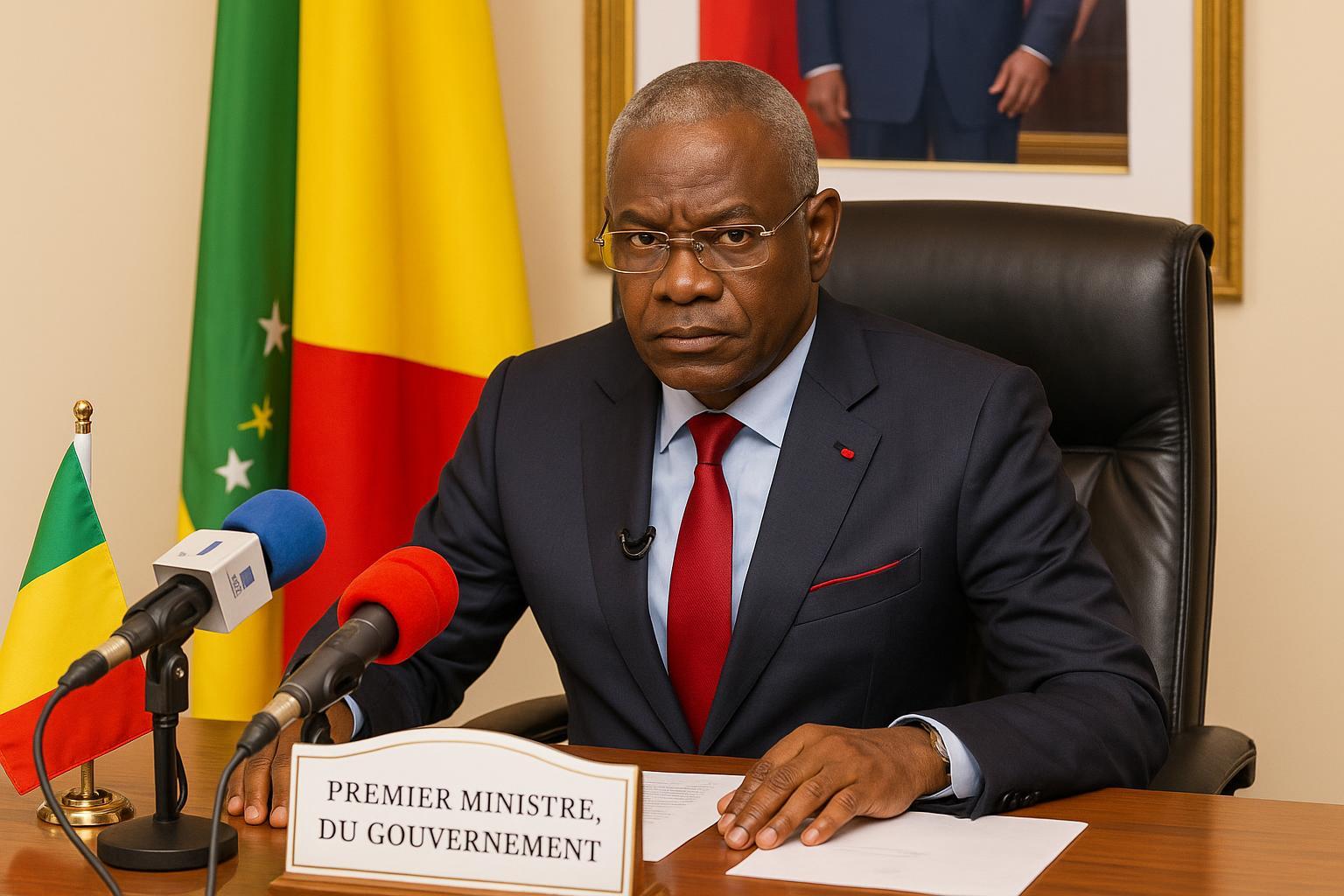
In the aftermath of pandemic-induced contractions and volatile hydrocarbon receipts, the Republic of Congo stands at a fiscal crossroads. Prime Minister Anatole Collinet Makosso’s recently released budget-setting letter for the 2026 fiscal year signals a deliberate pivot from short-term crisis management toward medium-term consolidation. The ten goals enumerated in the document seek simultaneously to close the fiscal gap, catalyse new engines of growth and rebuild investor confidence that was rattled by the 2020 debt service difficulties (IMF Staff Report 2023). The roadmap thus blends domestic priorities with commitments undertaken in the programme supported by the Extended Credit Facility.
Broadening the fiscal base through digitisation
At the heart of the strategy lies an ambition to widen the country’s modest tax-to-GDP ratio, estimated at 10.2 percent for 2023, by harnessing digital tools. The government intends to connect the taxpayer identification centre directly to the revenue authority’s management platform, automating assessments and reducing the discretion that historically fuelled leakages. Finance Minister Rigobert Roger Andely argues that “technology is our most dependable ally against informality,” noting that mobile money channels will gradually become mandatory for the settlement of value-added tax and excise duties (Xinhua 2024). Early pilots in Brazzaville and Pointe-Noire have already lifted monthly collections by double digits, officials say.
Leveraging resource wealth with tighter contracts
Congo continues to rely heavily on crude oil, which constitutes nearly 80 percent of merchandise exports. Yet the 2026 blueprint underscores the importance of extracting greater budgetary value from hydrocarbons, forestry and nascent mining without discouraging investment. Authorities plan to audit outstanding production-sharing agreements, enforce real-time metering at export terminals and rationalise the complex web of fiscal incentives. Similar vigilance is expected in forestry, where concession monitoring is being upgraded with satellite imagery supported by the Central African Forest Initiative (World Bank 2024). Officials calculate that closing such compliance gaps could add two percentage points of GDP to non-oil revenue by 2026.
Debt containment and capital spending equilibrium
The document equally acknowledges the weight of public debt, now hovering near 88 percent of GDP after restructuring agreements with Chinese and private creditors. Brazzaville pledges to restrict new external borrowing to concessional terms and to channel windfall oil revenues into accelerated amortisation. The government nevertheless refuses to adopt an austerity stance. Instead, it seeks to calibrate capital expenditure so that investments in transport corridors, power generation and digital backbones rise to at least 30 percent of total spending. Economists at the CEMAC regional central bank see this dual approach as critical for maintaining confidence in local-currency government securities that bankroll one quarter of the budget (BEAC Bulletin 2024).
Diversifying the growth matrix beyond hydrocarbons
Policy makers are keenly aware that macro-stability will prove temporary unless accompanied by diversification. The budget letter singles out agribusiness, tourism, special economic zones, real estate and the nascent start-up ecosystem as vectors for job-intensive growth. Fiscal stimuli include streamlined land titling to unlock collateral, sector-specific tax holidays limited to five years, and co-financing windows with the National Development Bank. The government hopes that raising the share of non-oil GDP from the current 54 percent to 60 percent by 2026 will cushion the economy from price shocks and improve social indicators that remain fragile, especially outside urban centres (African Development Bank 2024).
Governance indicators and external perceptions
International partners have long pressed Brazzaville to strengthen public financial management. The adoption of programme-based budgeting in all ministries, scheduled for January 2025, aims to link allocations to measurable outputs. Each line ministry will publish quarterly dashboards, and an independent fiscal council is to be operational before the first supplementary budget of 2026. Transparency International’s regional office notes a “marked procedural improvement” since 2022, though it cautions that sustained political will is required to entrench the gains (TI Regional Brief 2024).
Regional integration and donor confidence
Beyond domestic stakeholders, the 2026 framework is intended to reassure external creditors and neighbours alike. As chair of the CEMAC Council of Ministers until mid-2025, Congo has championed a harmonised approach to customs exemptions and cross-border tax information exchange. According to the African Union’s Department of Economic Affairs, such initiatives could unlock additional regional trade worth 1.5 billion dollars annually. The IMF, for its part, has welcomed the emphasis on revenue mobilisation, judging it “consistent with programme objectives” and foreshadowing a positive third-review outcome later this year (IMF Press Release May 2024).
Calibrated optimism among domestic observers
Local business associations cautiously endorse the direction of travel, yet urge expeditious implementation. “Digitisation must not become another pilot that never scales,” remarks Aimée Ngatsé, vice-president of the Congolese Employers Federation. Civil-society budget watchdogs echo the call for timelines, emphasising the need to protect social outlays that have lagged behind regional peers. Government interlocutors respond that the medium-term expenditure framework ring-fences health and education at a combined 7 percent of GDP, up from 5.8 percent in 2023.
Outlook for 2026 and beyond
Whether the ten-point agenda will fully materialise depends on factors ranging from oil prices to regional security dynamics. Yet the methodical articulation of targets, backed by digital tools and stricter contractual oversight, suggests a departure from ad-hoc budgeting. If executed with rigour, the 2026 plan could place Congo-Brazzaville on a firmer footing to pursue the longer-term aspirations encapsulated in its National Development Plan 2022-2026. For now, diplomats and investors will monitor quarterly revenue dashboards and debt indicators as the most tangible barometers of progress.
