
For more than a quarter of a century, an external benefactor has quietly underwritten one of the Republic of Congo’s most consequential public health achievements: the routine immunisation of its children. That arrangement is now approaching its end, and the question of who will pay for the vaccines once the subsidy disappears has moved from the realm of technical budgeting into the heart of national fiscal debate.
A Warning Delivered to the Heart of Parliament
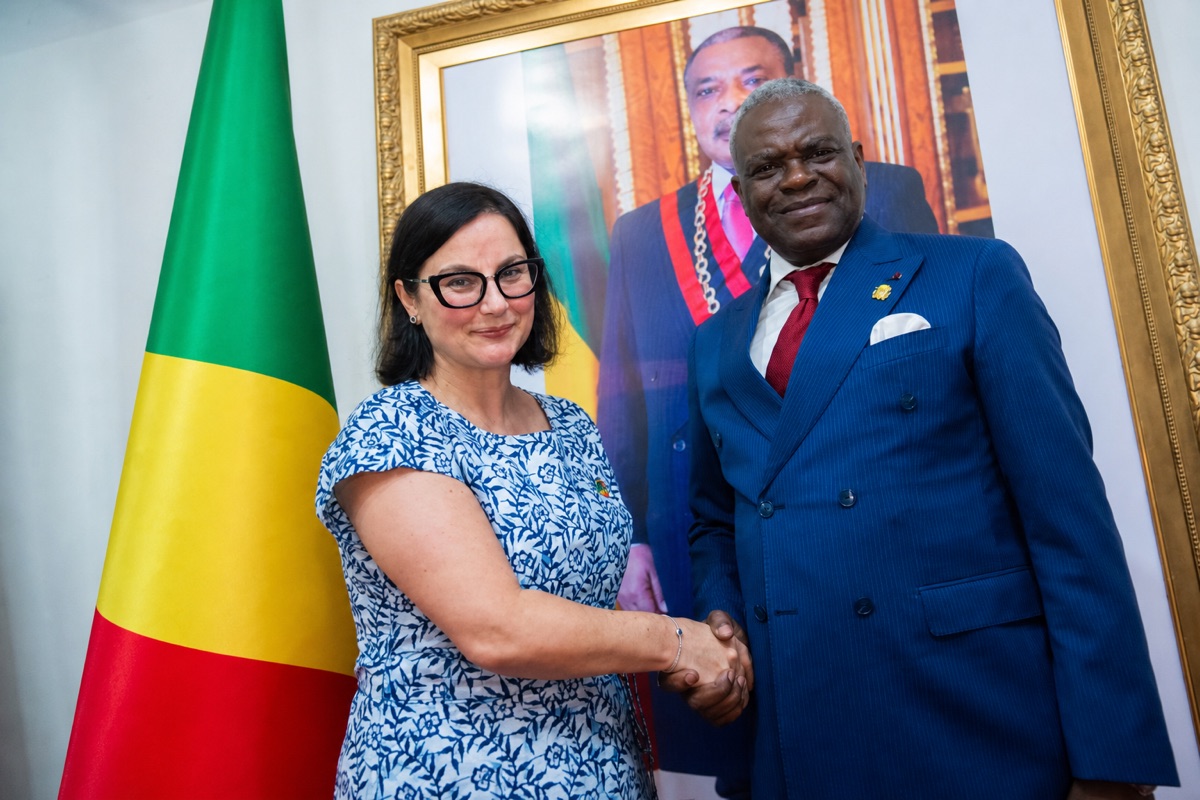
The alarm was sounded on 24 June, when Mariavittoria Ballotta, the UNICEF representative in Congo-Brazzaville, appeared before the National Assembly’s Commission on Economy, Finance and Budget Oversight. Her message to the deputies was unambiguous: the country must begin preparing now for a transition that will arrive in 2030, the year Gavi, the Vaccine Alliance, is scheduled to withdraw the financial support it has extended to Congo for over twenty-five years (Journal de Brazza). By addressing the lawmakers responsible for the public purse rather than health officials alone, Ballotta signalled that the matter is, at its core, a budgetary one.
The Logic Behind Gavi’s Exit
Gavi’s gradual disengagement is not a withdrawal of confidence but a consequence of progress. The alliance calibrates its assistance to a country’s level of economic development, using gross national income per capita as its principal benchmark. As Congo’s economic indicators have improved, the country has crossed the thresholds that mark the beginning of a managed graduation from the support mechanism. In effect, Congo is being asked to assume responsibilities that come with a more advanced economic standing, even as the practical burden of doing so falls on a health system long accustomed to external assistance.
For more than twenty-five years, that assistance has helped the Congolese authorities procure vaccines and strengthen immunisation programmes, contributing measurably to the protection of the population and, above all, of children. The achievements built over those decades, particularly in the fight against diseases that are preventable through vaccination, represent precisely what is now at stake should the transition be mishandled.
The Arithmetic of Self-Reliance
The financial gap that the transition will open is considerable, and the figures lend the debate its urgency. At present, the Congolese state contributes roughly 2.3 billion CFA francs annually to the immunisation programme, with Gavi covering the remainder. From 2030 onward, however, the authorities will be expected to shoulder the entire cost of acquiring vaccines themselves. According to UNICEF’s estimates, the national contribution will need to rise to approximately 15 billion CFA francs each year.
That represents a near sevenfold increase in domestic spending over a relatively short horizon. The scale of the adjustment explains why Ballotta framed the issue as one demanding rigorous preparation rather than last-minute improvisation. A sudden assumption of such an expense, absent any prior planning, could threaten the continuity of vaccination campaigns and expose the country to the risk of supply disruptions, the very outcome the transition is meant to avoid.
Why Anticipation Matters More Than Reaction
The substance of UNICEF’s appeal lies less in the size of the eventual bill than in the timing of the response. Ballotta called for the active involvement of deputies, particularly those handling budgetary affairs, so that the new charges might be written progressively into national public finances rather than confronted abruptly at the moment of Gavi’s departure. The distinction is significant: a charge phased in over several budget cycles is far more manageable than one that arrives in full and unannounced.
This gradualist approach carries an implicit acknowledgement of the constraints facing public finances in Central Africa, where competing priorities routinely strain national budgets. By urging that the additional cost be absorbed incrementally, UNICEF is proposing a path that respects fiscal realities while safeguarding a programme whose benefits are difficult to quantify but easy to lose.
Preserving Decades of Hard-Won Gains
The stakes extend well beyond accounting. The decades of investment in immunisation have produced gains in child survival and disease prevention that form part of the country’s public health foundation. Allowing those gains to erode for want of timely planning would carry a human cost far exceeding the financial one. The objective Ballotta set before the deputies, that of ensuring a controlled transition and preserving what has been achieved, is therefore as much an ethical proposition as a fiscal one.
For Congo-Brazzaville, the coming years will test the capacity of its institutions to convert a foreseen challenge into a planned response. The warning has been delivered, the figures are known, and the deadline of 2030 is fixed. What remains uncertain is whether the country’s budgetary machinery will move with the deliberation the situation demands, or whether the transition will be left to chance. The decisions taken in the National Assembly over the next several budget cycles will supply the answer.
