
Presidential directive underscores zero tolerance
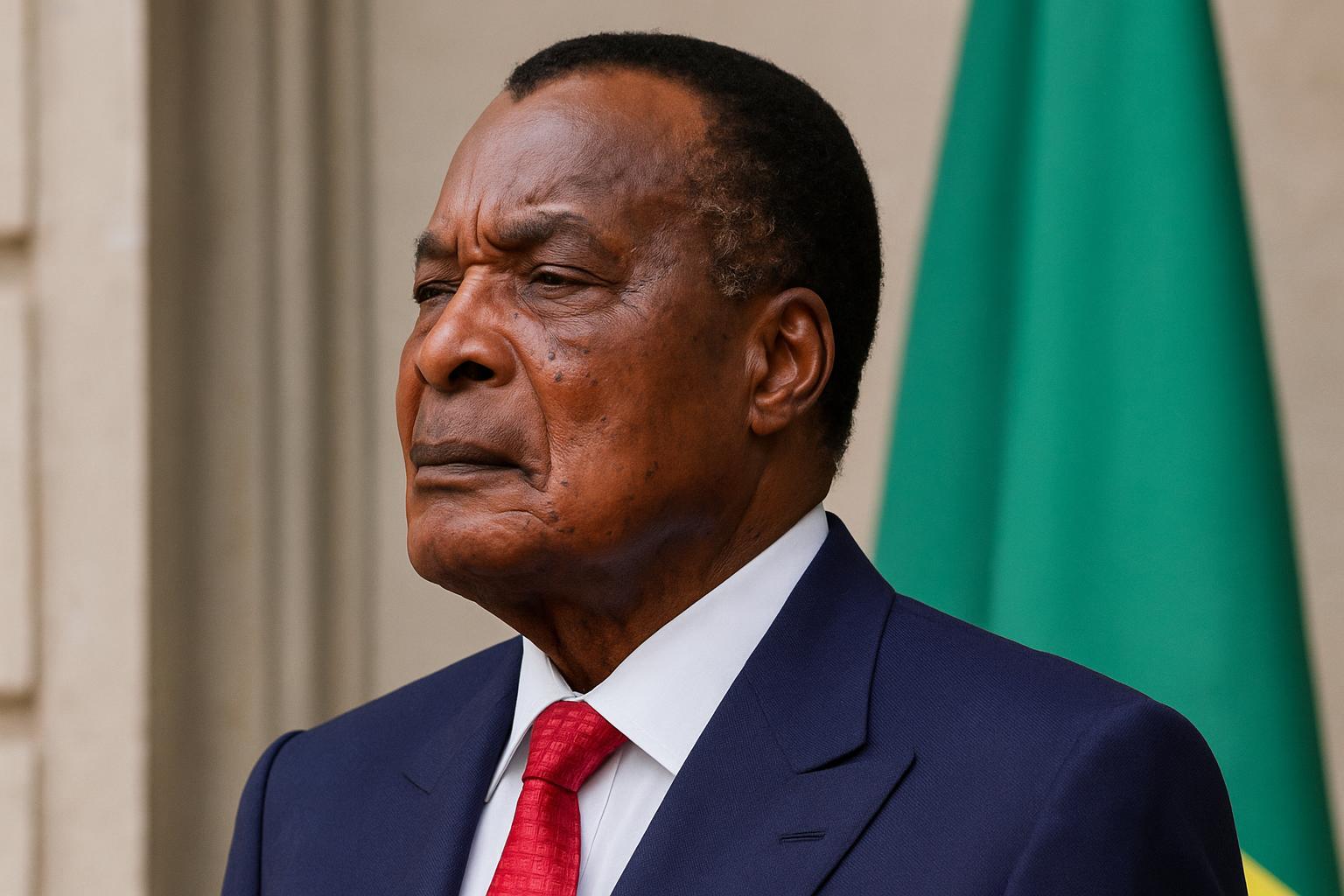
Standing beneath the freshly painted façade of the Liberté school complex on 24 October 2025, President Denis Sassou Nguesso departed from his inaugural remarks to deliver an unambiguous message. He confirmed that he had asked the elite units of the Presidential Security Directorate to take the lead in a sweeping campaign against the so-called “bébés noirs”, or Kuluna gangs, whose violent robberies have haunted Brazzaville’s neighbourhoods for years (official speech, 24 Oct 2025). The Head of State recalled similar interventions in the Pool region between 1998 and 2002, insisting that public peace is a constitutional guarantee he is bound to uphold.
“A government that allows fear to settle loses its moral contract with the citizen,” he warned, to sustained applause from assembled parents and pupils. The phrase has since been replayed across national broadcasters, feeding a growing consensus that the fight against gang crime has entered a decisive phase. In the words of a senior security adviser, the instruction authorised “robust yet proportionate force”, a formulation designed to reassure both residents and international observers about the operation’s legal footing.
A month of elite deployment reshapes urban security
Since the Presidential Guard was deployed nearly a month ago, residents report a perceptible decline in evening assaults around key transport corridors such as Avenue de la Paix and the Talangaï interchange. Patrols operate in small, mobile teams, combining rapid-response vehicles with discreet foot surveillance. While no comprehensive casualty figures have been released, state television has confirmed the neutralisation of several repeat offenders and the arrest of dozens more. Parents suspected of harbouring gang members have seen illegal extensions of their homes dismantled, an action justified by local administrators as removal of “criminogenic shelters”.
À retenir : community representatives, from market cooperatives to faith leaders, have publicly welcomed the calmer climate, stressing that commercial activity now persists later into the night. Taxi-moto drivers, initially wary of heightened checkpoints, concede that the compulsory helmet rule enforced by Guard personnel has reduced collision injuries at the main roundabouts. The measure exemplifies how the security sweep is evolving into a broader public-order agenda rather than a purely punitive exercise.
Kuluna phenomenon: roots of a lingering challenge
Sociologists at Marien Ngouabi University trace the Kuluna phenomenon to the socio-economic dislocations that followed the civil conflicts of the late 1990s. Many gang members are first-generation urban youth whose families arrived from rural districts with limited access to schooling or formal employment. The label “bébés noirs” attests both to their age—often under twenty—and to the black garments used during nighttime raids.
Interviewed on Radio Congo, criminologist Armand Ossiala argues that the government’s current approach differs from previous sweeps that relied mainly on regular police units. “The presence of highly trained commandos changes the deterrence calculus,” he notes, adding that simultaneous social programmes, including vocational training announced by the Ministry of Youth, create an exit path for repentant offenders. This dual strategy seeks to undercut the gangs’ recruitment pool while maintaining visible deterrence on the streets.
Legal and economic dimensions of property demolitions
Le point juridique/éco : Article 52 of Congo-Brazzaville’s Urban Planning Code authorises the state to remove constructions deemed illegal or dangerous to public security. Authorities have invoked this clause to justify the demolition of structures used as gang hideouts. Legal analysts highlight that compensation is payable only for dwellings possessing formal titles, a requirement many of the affected owners do not meet. Still, the government has pledged expedited reviews for legitimate claims, aiming to forestall lengthy court battles.
From an economic perspective, analysts at the local brokerage Henschel & Co. describe the crackdown as a confidence-building measure for investors eyeing retail and hospitality projects in Brazzaville’s northern districts. Reduced crime risk, they argue, could lower insurance premiums and catalyse small business lending. The Chamber of Commerce notes a fifteen-percent uptick in requests for new vendor licences since early October, a tentative indicator that entrepreneurs sense a turning tide.
Regional scope: from Brazzaville to Pointe-Noire
President Sassou Nguesso signalled that the campaign will extend to Pointe-Noire, the economic capital, should gang members attempt to relocate. Security planners have already mapped likely transit corridors along Route Nationale 1, coordinating with gendarmerie checkpoints to intercept fugitives. In Pointe-Noire itself, municipal authorities have begun preparatory awareness drives, urging residents to cooperate with incoming units.
Diplomatic observers see regional ramifications. Neighbouring countries in the CEMAC zone have struggled with similar urban gangs; Cameroon’s experience with the “Bargas” in Douala, for instance, has led to requests for intelligence sharing. Brazzaville’s initiative may therefore evolve into a template for cross-border security collaboration, reinforcing Congo-Brazzaville’s role as a stabilising actor in Central Africa.
Community expectations and the road ahead
As dusk settles over Brazzaville’s corniche, the sight of elite patrols has become part of the city’s evening silhouette. Citizens interviewed express guarded optimism, emphasising the importance of sustained engagement long after the initial shock-and-awe phase. Many recall earlier operations that lost momentum when funding waned or personnel rotated out. This time, officials insist, results will be measured not only in arrests but in school attendance rates, hospital night-shift staffing, and foreign direct investment figures.
The Ministry of Interior is finalising a public dashboard that will publish monthly indicators, an innovation designed to entrench transparency and maintain public trust. In parallel, civil-society organisations are planning neighbourhood forums where residents can voice concerns directly to the commanders in charge. Such mechanisms hint at an emerging security governance model that marries firmness with dialogue—an approach likely to define Congo-Brazzaville’s urban policy in years to come.
