
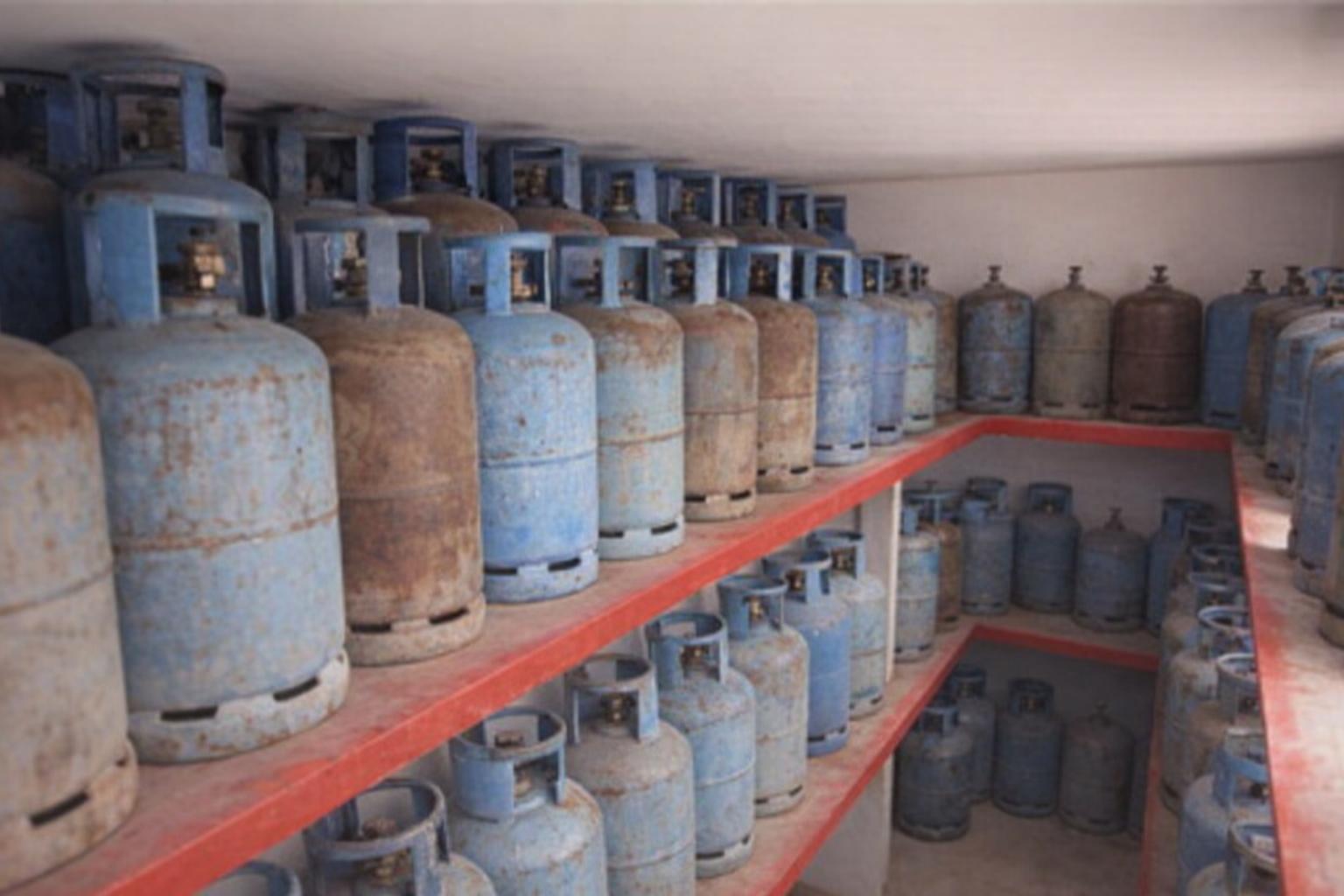
A swift intervention on butane gas prices
In the Republic of Congo, the recent rise in butane gas prices has triggered visible public concern, given the product’s centrality to everyday household energy use. In response, the authorities have moved quickly to restore order in a market considered socially sensitive, framing their intervention as a safeguard for purchasing power and a reminder that regulated pricing remains the governing principle (Journal de Brazza).
The decision, communicated after consultations with sector operators, signals a determination to prevent abrupt price movements from cascading through household budgets. In an economy where cooking gas is a practical alternative to charcoal for many urban families, price stability is not merely a commercial issue; it is also a matter of social equilibrium and public confidence in the rules that structure essential markets (Journal de Brazza).
Regulatory oversight led by downstream petroleum authorities
A strategic meeting was convened under the chairmanship of Richard Ngola, Director General of downstream petroleum, bringing together companies involved in the distribution and marketing of butane gas. The explicit purpose was to clarify the circumstances that led to the price increase and to restate the regulatory framework that governs the sector (Journal de Brazza).
By placing the discussion within an official setting, the administration sought to reassert the hierarchy of norms: commercial actors may innovate in logistics and service, but price changes must remain consistent with the legal instruments that set ceilings and define compliance obligations. The tone, as reported, was firm, reflecting the government’s view that the butane market cannot be treated as an ordinary commodity space subject to unilateral decisions (Journal de Brazza).
FAAKI Congo note criticised amid contract concerns
At the centre of the dispute is a service note issued by FAAKI Congo, which is presented as the immediate trigger of the sudden rise in retail prices. Richard Ngola reportedly described the document as a “flagrant violation” of the regulatory texts in force, a formulation that underscores how seriously the authorities interpret departures from established pricing rules (Journal de Brazza).
The meeting also examined contractual arrangements involving FAAKI Congo and the company Wing Wah. Several elements of non-compliance were highlighted, according to the account, prompting the Minister of Hydrocarbons to establish an expert team tasked with harmonising contracts among the various actors. The objective, as conveyed, is to reduce ambiguity, standardise obligations, and align business agreements with the sector’s regulatory architecture (Journal de Brazza).
Measures ordered: cancellation, review, and controlled reopening
Following the meeting, the authorities set out a sequence of measures designed to translate regulatory authority into immediate market correction. FAAKI Congo has been instructed to publish, without delay, an official note cancelling the one that announced the price increase. This requirement is intended to eliminate contradictory signals to retailers and consumers and to restore the benchmark price structure in the shortest possible time (Journal de Brazza).
A subsequent inter-ministerial consultation is expected to decide on the reopening of the company’s sales points, which had been closed as a precautionary measure. In parallel, an official notification is to establish that a breach of regulation occurred, while discussions are planned with all distributors to set up a new supply mechanism, notably in coordination with Wing Wah (Journal de Brazza).
Taken together, these steps illustrate a calibrated approach: corrective action is paired with procedural review, allowing authorities to address the immediate consumer impact while also working to prevent recurrence through clearer contractual and supply arrangements (Journal de Brazza).
Congo’s butane supply chain and strategic sources
The authorities have also reiterated their intention to reinforce the principal supply sources serving the national market. According to the reported briefing, Congo currently supplies butane from the Nkossa II terminal operated by Trident Energy Congo, the Banda Kayo site operated by Wing Wah, the Congolaise de raffinage, and through imports (Journal de Brazza).
By explicitly listing these channels, officials appear to be mapping the supply ecosystem in public terms, a move that can support transparency and facilitate coordination in periods of market tension. It also conveys that price regulation is being pursued alongside attention to physical availability, recognising that distribution bottlenecks and procurement frictions can quickly translate into anxiety at the point of sale (Journal de Brazza).
Regulated prices reaffirmed: what consumers should expect
Richard Ngola recalled that butane prices are strictly governed by a ministerial order. The reference prices cited are 200 FCFA per kilogram at the distribution level and 512 FCFA for the final consumer. This restatement serves as both a practical guide for households and a compliance benchmark for operators across the supply chain (Journal de Brazza).
For consumers, the key message is that the government is reaffirming a predictable price framework and is acting to ensure that market behaviour aligns with that framework. For distributors and marketers, the episode functions as a reminder that any pricing initiative must be compatible with the applicable texts, and that the administration retains enforcement tools ranging from formal notices to temporary operational restrictions (Journal de Brazza).
More broadly, the authorities’ response suggests a governance posture oriented toward stability and social protection in essential-energy segments, while leaving room for technical work—through expert harmonisation and inter-ministerial coordination—to consolidate the rules of engagement among private and public actors (Journal de Brazza).
