
A Renewed Chapter in Congo Offshore Exploration
The formal award of the Nzombo offshore exploration permit to TotalEnergies marks a significant inflection point for the Republic of Congo’s energy narrative. Announced from Paris and Brazzaville in coordinated communiqués, the decision broadens a relationship that began in 1968 and has survived multiple cycles of global price volatility. For TotalEnergies, the timing aligns with its stated aim of refreshing a maturing portfolio by targeting fast-track, high-potential prospects. For Congolese authorities, the move sustains the momentum of an upstream revival that has already lifted national production above last year’s baseline, reinforcing Brazzaville’s place on the map of African hydrocarbon exporters (TotalEnergies press release).
Nzombo Block: Geographic and Technical Context
Covering roughly 1,000 square kilometres in the deep waters of the Gulf of Guinea, the Nzombo block lies a short maritime commute from the prolific Moho Nord development, already operated by TotalEnergies since 2017. That geographical proximity is more than an incidental detail: it allows engineers to envision tie-backs to existing subsea and topside infrastructure, paring capital expenditure and compressing timelines from discovery to first oil. Under the current work programme, a maiden exploration well is slated before the close of 2025. Should the prospect deliver commercial volumes, the logistical logic of the neighbourhood could enable accelerated monetisation, reinforcing the company’s status as Congo-Brazzaville’s foremost producer.
Consortium Architecture and Diplomatic Significance
Nzombo’s equity structure—TotalEnergies 50 percent, QatarEnergy 35 percent and the Société Nationale des Pétroles du Congo (SNPC) 15 percent—underscores a tri-lateral balancing act. For Doha, it expands a strategic foothold in Central Africa, complementing QatarEnergy’s global diversification agenda. For SNPC, the carried stake cements the national operator’s participation in every stage of the value chain, a principle repeatedly endorsed by President Denis Sassou Nguesso’s government as a cornerstone of resource sovereignty. The tripartite arrangement also mirrors broader diplomatic alignments: Paris and Doha both maintain longstanding defence and economic partnerships with Brazzaville, and the Nzombo consortium translates that political goodwill into industrial collaboration. Kevin McLachlan, TotalEnergies’ head of exploration, framed the award as proof of “our strategy of enlarging a focused exploration portfolio capable of swift development through existing assets,” a statement that encapsulates the commercial and diplomatic rationale (company statement).
Macroeconomic Stakes for Brazzaville
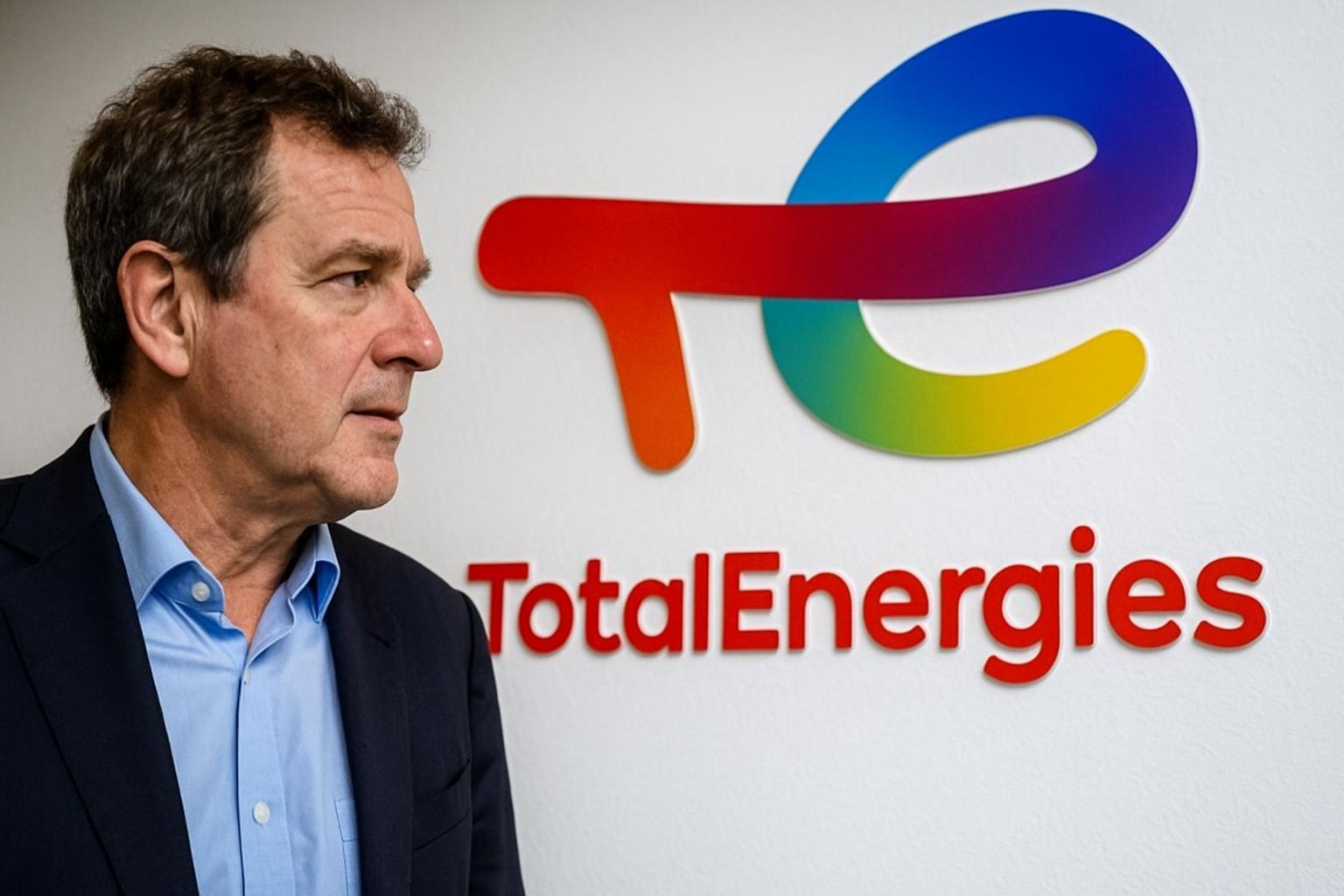
Hydrocarbons remain the fiscal engine of the Congolese state, and the Nzombo permit arrives as policymakers pursue an ambitious output target of 500,000 barrels per day by 2027. Between January and July 2025, national production averaged 268,000 barrels per day, a 5.2 percent uptick on the prior year. Such figures illustrate steady progress but also the magnitude of the remaining gap. Revenue streams generated by a successful Nzombo development—royalties, profit oil and corporate taxation—could narrow that gap while easing pressure on external borrowing. Patrick Pouyanné’s April visit to Brazzaville, during which the TotalEnergies chief executive pledged US $500 million in multiyear investments, was read locally as a vote of confidence in the government’s economic stabilisation programme. In addition to hard currency inflows, the Nzombo campaign carries the prospect of skilled employment, local supplier contracts and enhanced knowledge transfer to SNPC engineers—elements that align with Brazzaville’s broader industrialisation agenda.
Environmental Considerations in the Atlantic Basin
Any offshore drilling initiative in the Gulf of Guinea intersects with sensitive marine ecosystems and the growing climate commitments of producing states. Congolese regulators have openly linked project approvals to adherence with stringent environmental impact assessments, a stance designed to demonstrate regulatory maturity to international investors and multilateral lenders. TotalEnergies, under its company-wide net-zero roadmap, has incorporated methane-reduction technologies and flaring restrictions in recent African projects; similar provisions are expected to feature in Nzombo’s development plan if appraisal drilling proves successful. Civil society groups in Pointe-Noire have nonetheless signalled interest in independent monitoring of biodiversity baselines. The government, for its part, emphasises that economic diversification and environmental stewardship are not mutually exclusive but mutually reinforcing components of national resilience.
TotalEnergies’ Dual Strategy and Outlook
The Nzombo award crystallises TotalEnergies’ dual strategy of maintaining robust oil cash flow while scaling investments in renewables across other geographies. In Central Africa, the company views brownfield-adjacent exploration, such as Nzombo, as a hedge against portfolio decline without materially expanding its carbon intensity. For the Republic of Congo, the project validates its position as a credible, stable partner in an era when capital for frontier drilling is increasingly selective. The coming months will be critical: seismic reprocessing is expected to refine drill-site selection, and by late 2025 the exploratory well should offer empirical evidence of the block’s promise. Should the reservoir meet expectations, first oil could be contemplated within a timeframe congruent with national production targets, further anchoring Brazzaville’s partnership with TotalEnergies and reinforcing its stature within the Organization of the Petroleum Exporting Countries. In the meantime, the Nzombo permit stands as a concrete symbol of a pragmatic convergence between commercial ambition, national development objectives and an evolving global energy landscape.
