
Historic vote reshapes the federation’s legal map
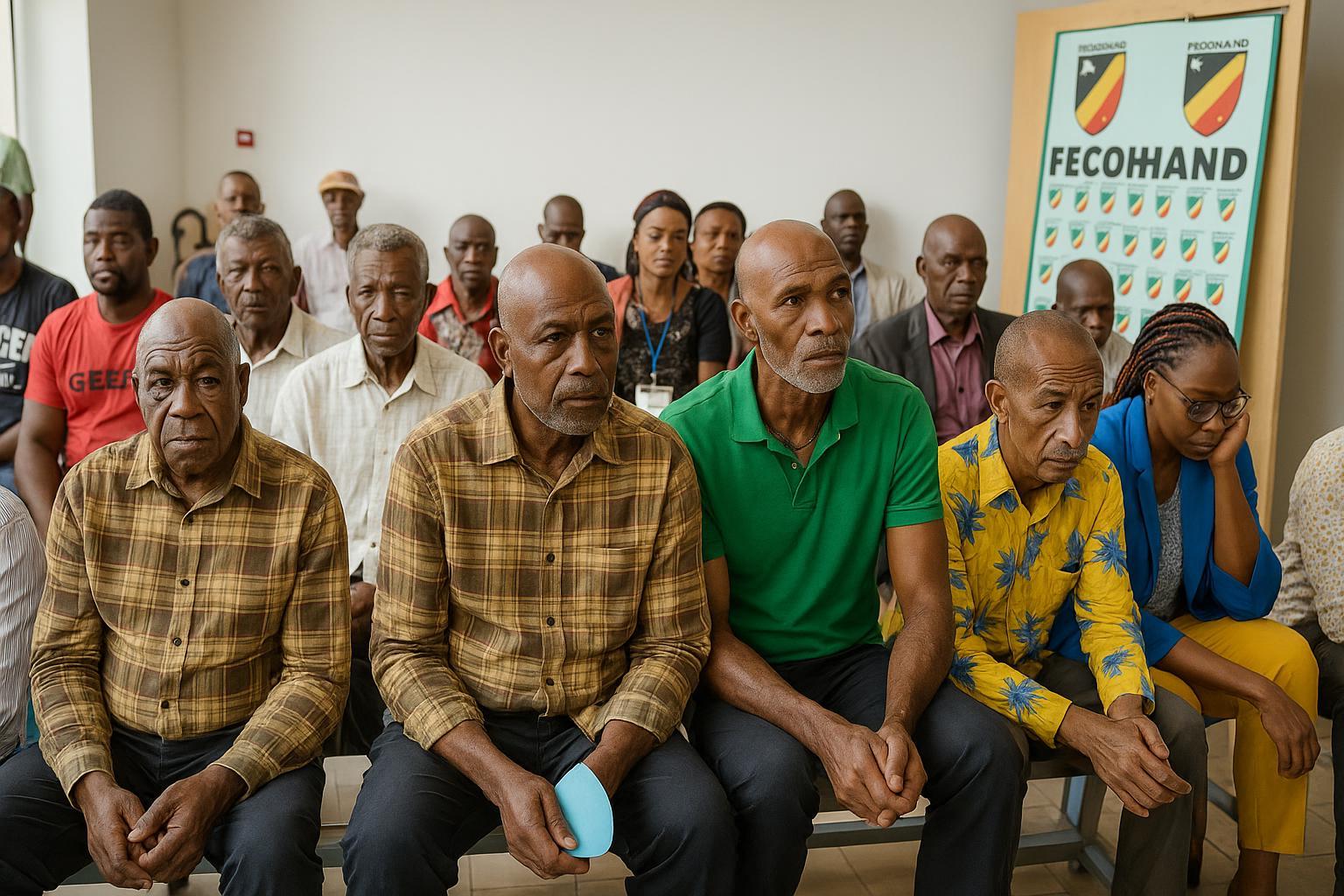
Few gatherings of Congolese sport administrators have been watched as attentively as the extraordinary session convened by the Congolese Handball Federation on 18 August 2025. Under the chairmanship of government envoy Chaptellain Ngouama and with President Linda Embendze Noumazalayi at the rostrum, delegates ranging from club presidents to referees cast a unanimous ballot to excise Article 34 from the federation’s statutes. In one stroke the Chambre de conciliation et d’arbitrage de sport, or CCAS, ceased to be a mandatory stop in Fécohand’s dispute-resolution ladder, a role it had occupied since 2013.
Why the CCAS became a lightning rod
For several seasons grievances had accumulated over what practitioners described as a proliferation of parallel appeals that lengthened disciplinary procedures and fuelled rivalries among clubs. Interviews with senior coaches in Brazzaville and Pointe-Noire suggest that some decisions rendered by the CCAS overlapped with rulings already issued by Fécohand’s own ethics committee, thereby creating uncertainty before continental competitions (Les Dépêches de Brazzaville, July 2024). Federation spokespersons argue that such jurisdictional overlaps eroded trust and allowed factional disputes to metastasise into full-blown crises that jeopardised player welfare and sponsors’ confidence.
The CCAS, modelled on France’s CNOSF arbitration chamber, was originally intended to offer an impartial outlet for grievances. Yet the body, financed by multi-sport contributions, increasingly had to adjudicate problems specific to handball such as match-schedule disputes and transfer registrations. Critics inside Fécohand felt that arbitrators not steeped in the nuances of the sport were ill-equipped to rule on technicalities governed by the International Handball Federation (IHF) rules of the game.
Legal self-containment and continental alignment
By withdrawing from the CCAS, Fécohand is not venturing into a legal vacuum. The revised statutes elevate the federation’s internal judicial chamber and the African Handball Confederation’s disciplinary commission as the primary venues for appeals, before any eventual referral to the IHF’s arbitration council in Basel. Similar layered frameworks exist in Egypt and Angola, two of the continent’s top handball nations. “Institutional coherence is fundamental if we want Congolese clubs to compete in the African Champions League without administrative clouds,” argues sports-law scholar Godefroy Mabiala of Marien-Ngouabi University.
Observers note that the shift also conforms to recent guidance issued by the Association of National Olympic Committees of Africa, which has encouraged federations to streamline internal mechanisms to meet World Anti-Doping Agency timetables. Fécohand officials therefore present the decision less as a repudiation of national authorities and more as an alignment with evolving continental standards.
Government endorsement and the politics of sporting harmony
The Ministry of Sports has so far welcomed the congress’s outcome, framing it as evidence of sporting maturity. In a brief statement transmitted on Radio Congo, Minister Hugues Ngouélondélé underlined that “the government respects the autonomy of federations provided that due process and international commitments are observed.” Diplomatic sources in Brazzaville interpret the comment as a signal that the administration of President Denis Sassou Nguesso prefers negotiated solutions over litigation that could tarnish the country’s record of hosting peaceful regional tournaments, including the 2015 All-Africa Games.
The government’s accommodating stance also reflects wider national objectives. The forthcoming extension of the Kintele Olympic Complex, financed through a public-private partnership with Emirati investors, is slated to host the 2027 Central African Games. Ensuring that domestic federations project unity is therefore a prerequisite for the smooth delivery of those events and for attracting additional soft-power dividends associated with sports diplomacy.
Navigating risks and opportunities after the break
The federation’s leap toward self-regulation is not devoid of potential pitfalls. Without the umbrella of the CCAS, Fécohand must guarantee that its revamped judicial panel enjoys both financial independence and perceived impartiality. A failure in either regard could invite challenges before the Court of Arbitration for Sport in Lausanne, a scenario that would negate the time savings sought by the reform. However, insiders point out that the unanimous character of the vote, unprecedented since the federation’s founding in 1964, lends political capital to the new organs.
On the competitive front, clubs such as Inter Club and Patronage Sainte-Anne stand to benefit from accelerated rulings on player eligibility, allowing coaches to finalise line-ups well ahead of the CAHB championship window. Sponsorship consultants argue that a predictable calendar can help leverage the growing interest of telecom firms in handball, a sport whose television ratings on national channels have doubled since 2021 according to audience data compiled by Médiamétrie Afrique.
The possibility of setting up mediation corridors with the CCAS rather than a hard divorce remains on the table. Fécohand vice-president Jean-Marc Ondongo hinted after the congress that memoranda of understanding could be crafted for exceptional circumstances such as doping cases with multi-sport ramifications. Such hybrid models are in line with UNESCO’s Kazan Action Plan, which encourages flexible architecture while preserving athletes’ legal certainty.
What to watch before the 2026 season kicks off
The federation has given itself a six-month transition period to adopt implementing decrees, retrain legal officers, and digitise case-management files. External auditors from Ernst & Young Congo have reportedly been contracted to vet the new mechanisms, a move designed to placate skeptics within the Olympic Committee. The first tangible test of the framework will arrive during the 2026 national championship draw, traditionally a flashpoint for venue allocation disputes.
Regional diplomats view the episode as a microcosm of Congo-Brazzaville’s broader governance trajectory: incremental, consensual, and anchored in multilateral cooperation. Should the handball authorities navigate the next twelve months without major litigation, the blueprint may inspire other sports federations in the country to recalibrate their own statutes, reinforcing a virtuous cycle of institutional upgrading.
