
Law Mouebara and Congolese Legal Modernization
The Republic of Congo has placed itself at the vanguard of Central African legal reform with Law No.19-2022 of 4 May 2022, colloquially known as the Law Mouebara. Signed by President Denis Sassou Nguesso after near-unanimous approval in both chambers of Parliament, the statute reconfigures the national criminal code to designate every form of violence against women as a punishable offence. According to the Ministry for the Promotion of Women, the legislation reflects commitments already expressed in Congo’s 2021 Universal Periodic Review and in its periodic reports to the Committee on the Elimination of Discrimination against Women (CEDAW). Observers from UN Women note that the text positions Brazzaville “among the most comprehensive domestic frameworks on gender-based violence in the sub-region” (UN Women, 2023).
Scholars of Congolese jurisprudence emphasise the strategic timing of the reform. Coming amid heightened regional attention to the Maputo Protocol, the law provides a coherent internal mechanism that aligns with continental norms while retaining Congolese legal specificities. The code’s framers, led by Minister Inès Nefer Ingani, deliberately fused common-law concepts of due process with civil-law definitions of bodily integrity, ensuring that the final act withstands constitutional scrutiny.
Grass-roots Legal Literacy in Sangha
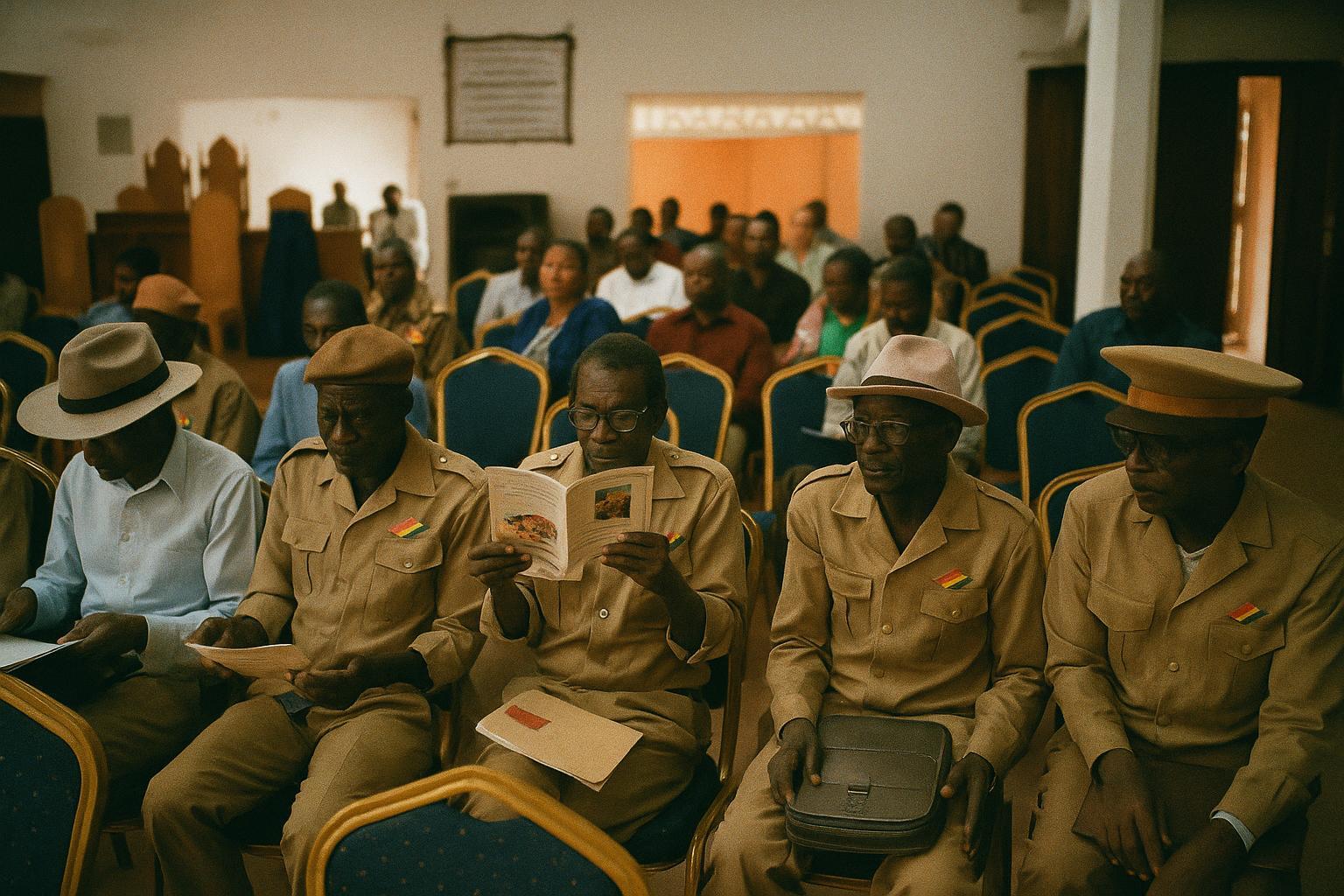
The theoretical reach of an act of parliament, however, depends upon community-level comprehension. In Ouesso, capital of the Sangha Department bordering Cameroon, that requirement prompted a tailored seminar on 8 August convened by the prefecture and the National Programme to Combat Violence against Women. The initiative, opened by Chief-of-Cabinet Armand Ngakegni, assembled civil-society leaders, market-women associations and traditional authorities under one roof, signifying an inclusive approach to legal literacy. “Our task is not merely to read the law but to make it breathe in our daily interactions,” Nuptia Mbemba, programme director, told the audience in a remark later relayed by regional broadcaster Radio Congo Sangha.
Participants spent a full day dissecting the statute’s forty-two articles, scrutinising new preventive orders, police obligations and admissible evidence of psychological violence. The training, delivered in French and Lingala, culminated in the distribution of emergency hotline numbers—1444, 117, 1515 and 05 644 00 00—intended to collapse the distance between victim and remedy. According to local magistrate Josué Ebouangui, who took part in the exercise, “dial-in capacity is the fastest guarantor of protection in remote forest districts where a tribunal may be 200 kilometres away.”
New Offences and Judicial Redress Mechanisms
Law Mouebara introduces a taxonomy of crimes, many of which had been absent from the 2018 penal code revision. Marital rape, digital harassment, economic coercion, forced sterilisation and the administration of harmful cultural practices now carry custodial sentences ranging from three to twenty-five years, contingent on aggravating factors. The statute also compels health personnel to report suspected abuse within twenty-four hours, thereby operationalising a multidisciplinary response that integrates medical, policing and prosecutorial arms.
To ensure enforcement, the Ministry of Justice has created a specialised gender desk inside the Court of Appeal of Brazzaville, staffed by magistrates trained in trauma-sensitive proceedings. Early statistics presented by the Attorney-General indicate that, between June 2022 and May 2023, 413 dossiers invoking Mouebara provisions reached the prosecutorial stage, a threefold increase over the previous year’s gender-violence case-load. While the raw numbers illustrate growing public trust, they also underline the pressure on court infrastructure and the need for expanded legal aid, an issue highlighted by the International Development Law Organization in its 2023 Congo assessment.
Synergies with Regional and Global Gender Norms
Diplomatic missions in Brazzaville have interpreted the law as a concrete avenue for strengthening the rule-of-law pillar of Congo’s National Development Plan 2022-2026. The European Union, which funds a ten-million-euro Access to Justice project, lauded the statute’s “explicit harmonisation” with the Istanbul Convention’s standard of due diligence. African Union officials have likewise praised Congolese authorities for embracing the operative clauses of the Maputo Protocol without reservation, thereby setting a useful precedent for neighbouring states still debating ratification.
For multilateral agencies, the law’s monitoring provisions—the requirement that the Council of Ministers publish annual implementation data—offer a model of transparency. Dr. Sofia Islami of the World Bank’s gender practice believes the framework “opens up a channel for evidence-based dialogue with Congo’s international partners, devoid of the politicisation that sometimes surrounds gender discourse.”
Field Testimonies and Early Impact Indicators
On the periphery of the Ouesso seminar, women spoke of newfound confidence in state institutions. Clarisse Mafoua, a 32-year-old cocoa farmer from Mokeko, recounted how a police officer cited Law Mouebara while intervening in a domestic dispute: “Hearing the officer name the law changed the tone instantly; my safety felt anchored in something official.” Similar anecdotes are collected by Congolese NGO Dynamique Femme, which reports a 28 percent rise in formal complaints in Sangha between January and July 2023.
Quantitative impact remains provisional, yet early signals are encouraging. UNICEF’s Brazzaville office records a decline in underage forced marriages in Likouala and Sangha, attributing the trend to the deterrent effect of the new mandatory minimum sentences. Epidemiological surveys by the Congolese Red Cross show that post-assault clinical consultations are up, suggesting a reduction in the under-reporting that typically skews gender-violence data.
Balancing Sovereign Policy and External Partnerships
Congo-Brazzaville’s pathway illustrates an underlying geopolitical calculus: legislative sovereignty can coexist with selective alignment to global norms. President Sassou Nguesso has portrayed Law Mouebara as an endogenous response to societal demands, emphasising in a national address that “protecting women is an act of patriotism.” That framing resonates with domestic audiences while giving international partners a concrete benchmark for collaboration.
Looking ahead, the government’s central challenge is resource allocation. The 2024 draft budget earmarks 3.1 billion CFA francs for gender-violence interventions, a figure welcomed by civil-society but still below the 5 billion recommended by the UN Economic Commission for Africa. In Ouesso, participants suggested public-private funding streams, including forestry concession levies, to sustain local shelters and legal clinics. Such proposals underscore the degree to which implementation will rely on adaptive, locally grounded solutions rather than a top-down edict.
In the wider diplomatic arena, Congo’s rollout of Law Mouebara offers case material for South-South exchange. Delegations from Gabon and the Central African Republic have scheduled study visits to Brazzaville, recognising the operational lessons embedded in Sangha’s community seminars. As one EU envoy phrased it, “The law is a laboratory of best practices, and the region is watching.”
