
Ketsia Yoka’s Breakthrough on London Catwalks
In early August 2024 the spotlight of London’s competitive fashion scene settled on a newcomer from Pointe-Noire: Ketsia Chelsea Yoka. Groomed by the Brazzaville-based Lena Models Academy, the young Congolese emerged onto international runways and editorial sets with the poise of a seasoned professional, marking what local commentators describe as the Republic of Congo’s most visible modelling success to date (Les Dépêches de Brazzaville, 2024). Her ascent has quickly become a talking point across London press rooms that follow the diversification of the industry.
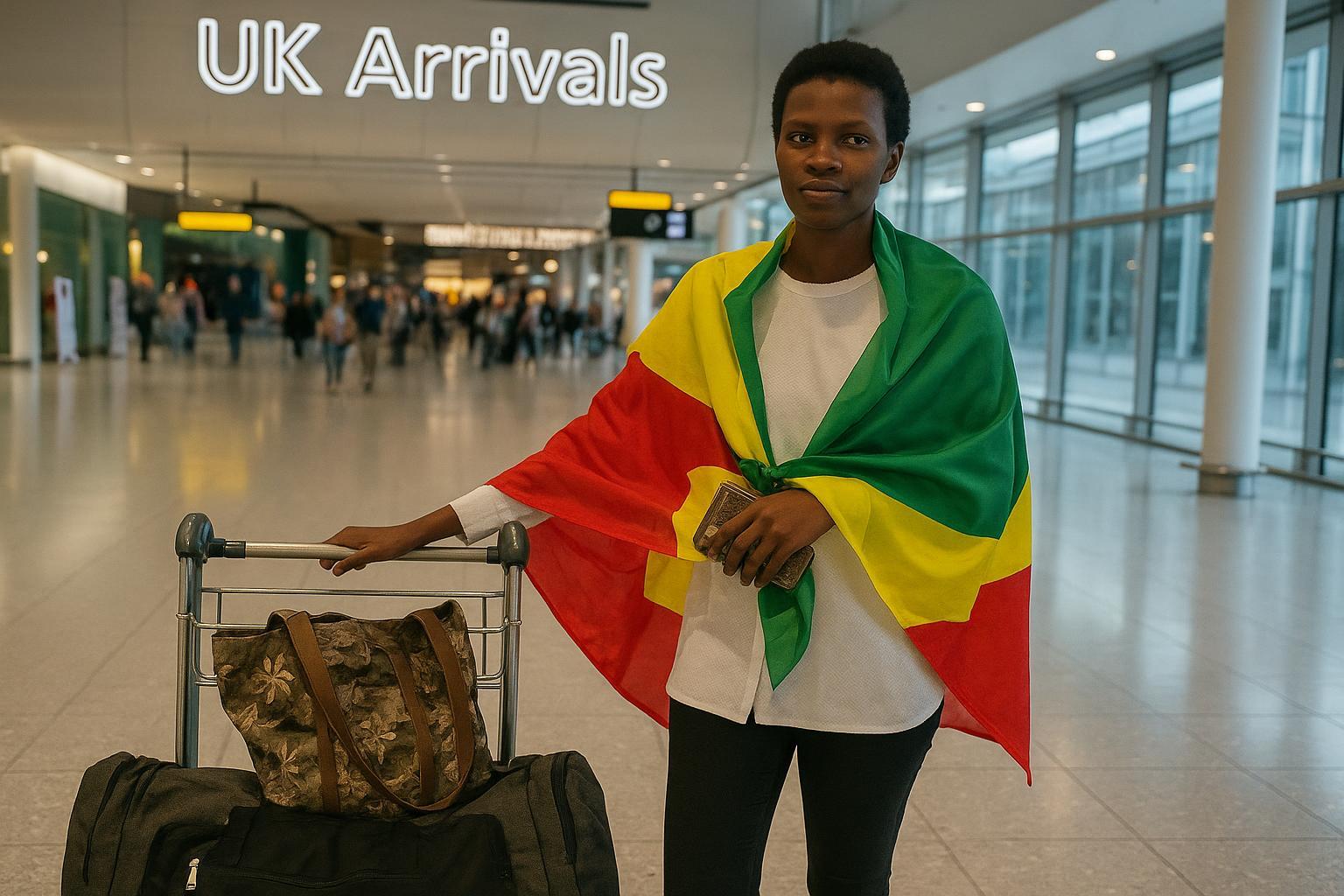
Touching down in Heathrow on 9 August, Yoka joined a portfolio of emerging talents represented locally by Lena Management’s British partner agencies. Social-media footage shows her rehearsing in minimalist studios in Shoreditch before fittings for heritage labels seeking fresher looks. By her third week, she had completed test shoots with two magazines and was short-listed for a spring 2025 presentation, milestones that underscore both her adaptability and the meticulous preparation she received in Congo-Brazzaville.
Nurturing Talent: The Vision Behind Lena Models Academy
The path that carried Yoka from Ngoyo, the fifth district of Pointe-Noire, to the cosmopolitan streets of London was neither accidental nor improvised. Since 2014 entrepreneur-mentor Helena Kiss Moundaya, affectionately known as “Black Panthère”, has been refining a pipeline of instruction, exposure and contractual discipline through her platform Lena, whose branch Lena Models Academy specialises in runway, editorial and hospitality training. Operating with a small but committed staff, the academy screens candidates, negotiates visas and, crucially, insists on financial literacy modules that prepare models for the remunerative yet volatile nature of the sector.
Lena’s educators draw on partnerships with dermatologists, stylists and English coaches from the Congolese diaspora. According to Moundaya, this multidisciplinary approach, coupled with a transparent code of ethics, has won the confidence of agencies in Paris, Milan and now London. She articulated the credo in a recent interview: “We do not sell dreams alone; we sell readiness.” Such framing resonates with investors who increasingly seek traceable talent pipelines across sub-Saharan Africa.
Fashion as Soft Power for Congo-Brazzaville
Beyond individual success stories, Yoka’s trajectory speaks to a more strategic narrative in Brazzaville’s cultural diplomacy. In an era where haute couture houses scout Instagram as readily as design schools, the export of Congolese aesthetics onto European catwalks strengthens the country’s capacity for soft power. Scholars of nation branding point out that fashion, like music, can recalibrate foreign perceptions without the cost of formal state campaigns. London thus becomes an informal showcase for Congolese creativity.
Government officials have so far refrained from headline-grabbing sponsorships, yet trade attachés in the United Kingdom discreetly monitor this momentum, aware that each successful booking may translate into tourism interest or meetings with investors in adjacent sectors such as textiles. In that sense, Yoka’s bookings align with Congo-Brazzaville’s diversification agenda outlined in its National Development Plan 2022-2026, which calls for a stronger creative economy. Analysts predict that even modest upticks in fashion exports can signal macroeconomic resilience.
Building Credible Global Partnerships in the Industry
Critical to sustaining this trajectory is the network of legally binding representation agreements Lena Management has secured with boutique agencies and casting directors in the United Kingdom. Sources familiar with the contracts point to clauses that guarantee health insurance, intellectual-property protection for image rights and timely payment—a suite of safeguards still uncommon for African models abroad. These provisions reduce attrition rates and reassure Congolese parents who might otherwise hesitate to authorise an overseas career.
Moundaya credits much of this legal infrastructure to years of quiet network-building at industry fairs in Paris and Lisbon where she observed best practices before adapting them to Central African realities. British partners, for their part, emphasize the commercial logic: “There is a freshness and professionalism in Congo’s talent pool that clients want,” one casting director said, requesting anonymity. The statement suggests that the relationship is founded as much on market efficiency as on altruism.
Future Outlook for a Diversifying Creative Economy
Within Congo-Brazzaville the ripple effects are already perceptible. Aspiring models from Brazzaville, Dolisie and Ouesso have begun to submit portfolios to Lena Models Academy, while private vocational schools discuss incorporating runway etiquette modules into their curricula. Local banks have also expressed tentative interest in offering short-term credit lines to families covering travel insurance and comp-cards, a sign that financial institutions perceive reduced risk in the sector. Observers note that such ancillary services could multiply employment opportunities.
Whether Yoka’s current London season culminates in high-profile campaigns or remains a stepping stone, her presence has already widened the horizon of what is imaginable for Congolese youth. As global fashion continues its search for authenticity, the disciplined structures emerging from Pointe-Noire offer a reminder that creative capital can originate outside traditional hubs. In the measured words of a UK editor, “This is not a trend; it is the start of a supply chain.”
